


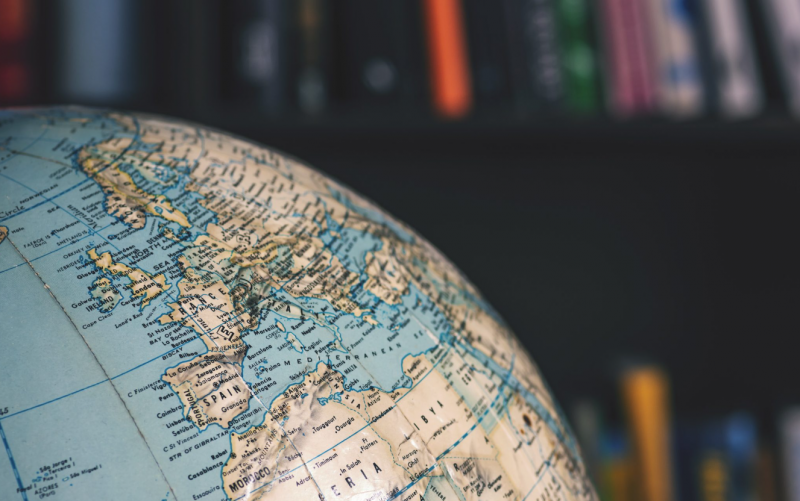
The sizes of countries around the world vary immensely. Some countries span millions of square kilometers, while others cover only a few. The ranking of the largest countries is typically based on total area, including land and inland water bodies. However, there are slight differences among sources depending on how borders and waters are accounted.
Russia holds the first position by a clear margin, followed by Canada, China, and the United States. Brazil, Australia, India, Argentina, Kazakhstan, and Algeria complete the list of the world's ten largest countries by area.
List of the World's Top 10 Largest Countries by Area:
1. Russia
Russia tops the list of the world's largest countries, covering approximately 17.1 million square kilometers. It spans Europe and Asia, making it the only country to cover such a vast area across two continents. Russia's diverse landscapes and climates range from European plains to Siberia, mountains, polar regions, and extensive coastlines on several seas and oceans.
2. Canada
Ranked second globally, Canada has a total area of around 10 million square kilometers. Known for its expansive natural diversity, Canada boasts forests, mountains, plains, lakes, and Arctic regions. It has the world's longest coastline, stretching from the Atlantic to the Pacific and Arctic oceans. Despite its vast size, most Canadians live in the southern regions near the U.S. border, while the north remains sparsely populated and colder.
3. China
China ranks third or fourth globally, depending on the source and how the area is measured, covering roughly 9.6 million square kilometers. Its vast geographical diversity includes mountains, plateaus, deserts, broad plains, and coastal areas, with climates ranging from cold northern regions to warmer, more humid southern areas.
4. United States
The United States covers about 9.8 million square kilometers when water bodies are included, competing with China for the third spot, depending on accounting methods and sources. Its geography varies significantly, comprising deserts, mountains, forests, plains, coastal areas, and spans from the Atlantic to the Pacific, including Alaska and Hawaii.
5. Brazil
Brazil is the largest country in South America, with an area of around 8.5 million square kilometers. Brazil features a substantial part of the Amazon rainforest, along with plains, plateaus, and extensive coastal areas, providing significant ecological diversity and abundant natural resources.
6. Australia
Australia ranks sixth globally, with an area of approximately 7.7 million square kilometers. It is both a continent and a country, marked by vast deserts in the interior and milder coastal regions where most Australians reside. Australia's unique biodiversity includes indigenous fauna and flora found nowhere else on Earth.
7. India
India, ranking seventh, covers around 3.3 million square kilometers. Its broad geographical and climatic diversity ranges from the Himalayas in the north to coastal and oceanic areas in the south, featuring plains, mountains, deserts, forests, and tropical regions. Despite its smaller area compared to countries like Russia and Canada, India boasts a very high population density.
8. Argentina
Ranking eighth, Argentina covers approximately 2.8 million square kilometers. Its elongated shape from north to south contributes to diverse climates and terrains, including the vast Pampas plains, the Andes mountain range, icy southern regions, and deserts, as well as forests in different parts of the country.
9. Kazakhstan
Kazakhstan ranks ninth globally, with an area of about 2.7 million square kilometers, making it the largest landlocked country in the world. Kazakhstan is dominated by vast steppes, deserts, semi-deserts, mountains, and lakes, and it holds a strategic position in Central Asia between Russia, China, and several regional countries.
10. Algeria
Algeria rounds out the top ten, with a total area of around 2.38 million square kilometers. It is Africa's largest country by area, stretching from the Mediterranean coast in the north to the depths of the Sahara desert in the south. Most of Algeria's population and urban centers are in the north, near the coast, offering a mix of coastal and desert environments.
What is the Largest Country in the World?
Russia is the largest country in the world, with its area surpassing 17 million square kilometers, far exceeding Canada's size, which ranks second. Most of Russia's vast lands are in Asia, with some parts lying in Europe, making it the largest transcontinental country by area.
What is the Largest Arabic Country by Area?
Algeria is the largest Arabic country by area, covering approximately 2.38 million square kilometers. Algeria ranks tenth worldwide among the largest countries, with a significant portion of its land being part of the Sahara desert. Other large Arabic nations by area, such as Saudi Arabia, Libya, and Sudan, do not make it into the top ten globally.
See Also:
Most Solar Energy Producing Countries