


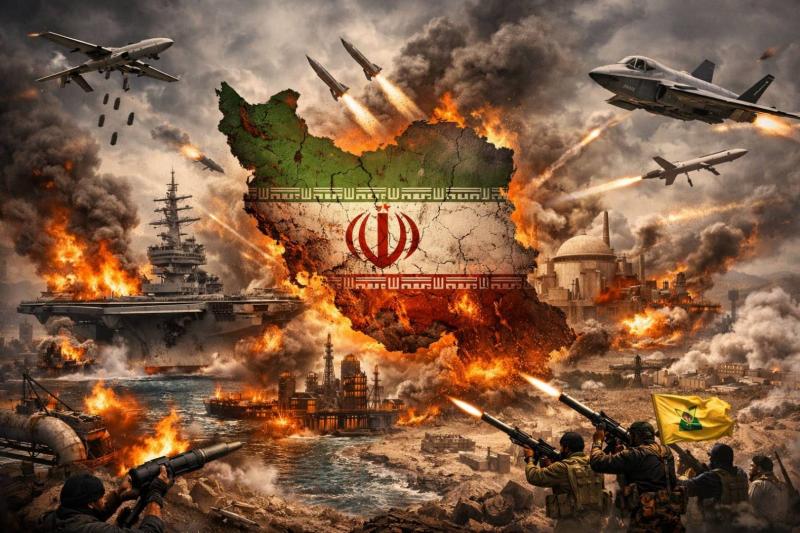
U.S. President Donald Trump has issued a stark warning to Iran over potential retaliation against American military strikes near the Strait of Hormuz, threatening a "much stronger and wider attack," while emphasizing that the "bigger strike" has yet to be executed.
Trump revealed on social media that American forces are conducting "extensive and powerful" operations against Iranian targets near the strategic passageway.
The President justified the military actions by accusing Iran of attempting to plant naval mines in the strait and launching eight missiles towards a U.S. base in Jordan.
Trump gave a direct warning to Tehran: "If the failed Iranian state retaliates against this highly justified attack, they will be targeted again with a far more severe and expansive assault."
Raising the rhetoric, Trump noted that the major attack "has not yet been executed," warning it could lead to widespread destruction within Iran.
These statements coincide with the U.S. Central Command, CENTCOM, announcing the resumption of military operations against Iranian Revolutionary Guard targets.
Following the American announcement, Iranian media reported explosions heard in several areas, including the vicinity of Qeshm Island, the cities of Bandar Abbas and Sirik in Hormozgan Province, as well as Chabahar and Konarak in Sistan and Baluchestan.
This escalation marks a new chapter in the enduring conflict between Washington and Tehran, dating back to when war broke out on February 28, 2026, involving the U.S. and Israel against Iran. The conflict’s consequences led to the closure of the Strait of Hormuz, a crucial route for global energy exports and trade.
At that time, Iran countered with attacks on Gulf states and what it claimed were U.S. and Israeli targets in the region, until a ceasefire was reached.
On June 18, Washington and Tehran signed a memorandum of understanding to end hostilities and reopen the Strait of Hormuz to navigation. However, implementation stalled amid disagreements over the waterway's security and the deal's terms.
Military tensions reignited in July, leading to Tuesday's announcement by the U.S. Central Command of resuming strikes inside Iran, bringing the prospect of open confrontation to the forefront, especially given Washington's threats of broadening its operations if Tehran retaliates.