


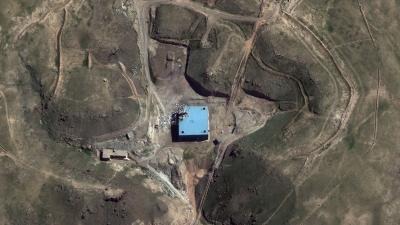
An UN report revealed that the previous Syrian authorities, under Bashar al-Assad, failed to disclose nuclear materials, facilities, and activities, including a nuclear reactor under construction in the Deir ez-Zor province in eastern Syria, which should have been reported under the country's international obligations.
According to the report, obtained by the Associated Press, International Atomic Energy Agency (IAEA) inspectors conducted visits to several Syrian sites in August, conducting inspections and audits to ascertain the nature of activities and facilities present there.
Based on the inspection findings, the IAEA concluded that the former Syrian authorities did not declare nuclear materials, facilities, and activities, in violation of the safeguards agreement tied to the Treaty on the Non-Proliferation of Nuclear Weapons.
The report mentions undisclosed sites, including a reactor under construction in Deir ez-Zor, a facility designated for fuel manufacturing, and another site for storage.
The new findings bring the issue of Syria's nuclear activities, which have been under international investigation for years, back into focus.
The AP noted that for years there have been suspicions that Syria operated a broad and undisclosed nuclear program during Assad's regime, which included the construction of a reactor in Deir ez-Zor with assistance from North Korea.
The facility remained out of sight until 2007 when it was destroyed in an Israeli airstrike. Following this attack, the facility's remnants were removed and the site leveled, leaving the IAEA's questions about the site's nature and activities unanswered.
The investigation saw significant progress in 2024 when IAEA inspectors took samples from the site, later announcing the detection of uranium particles in the samples collected.
In their latest step to verify the site's nature, IAEA inspectors visited the Deir ez-Zor site on August 29 to follow up on the ongoing excavations there.
The agency stated that inspections conducted by its inspectors revealed a cooling infrastructure consistent with those used in nuclear reactors, providing additional support for their assessment of the facility's nature.
It confirmed in its report that "the cooling infrastructure now unveiled matches that of a nuclear reactor".
The new findings provide the IAEA with additional evidence in a long-running investigation into the nature of the Syrian site destroyed by Israel in 2007. They also raise questions about the extent of undisclosed nuclear activities conducted in Syria during Assad's regime.