


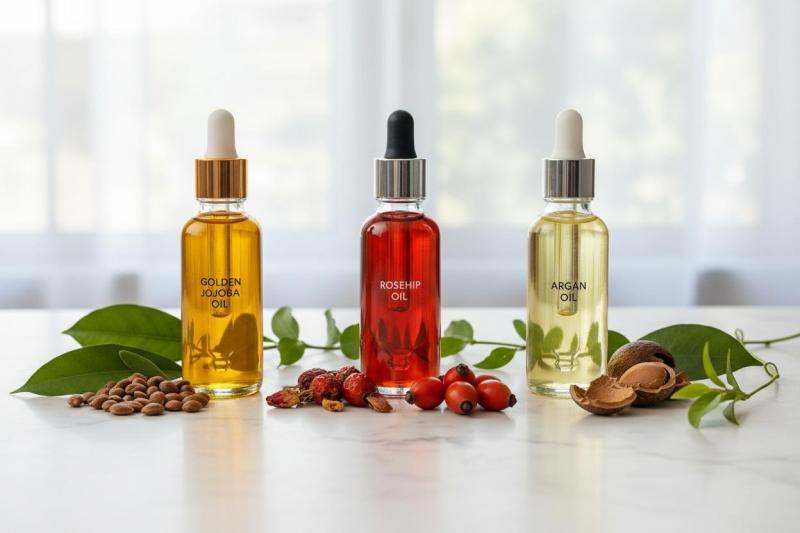
Natural oils have long been a staple in skincare routines due to their ability to minimize water loss from the skin surface and create a smoother texture. However, choosing the right oil depends on more than just its popularity. Each oil offers unique properties, catering to different skin needs such as dry, oily, combination, or sensitive skin.
From jojoba and argan oils to rosehip seed and avocado oils, there are plenty of options to incorporate into your skincare regimen. Yet, labeling an oil as "natural" does not imply it suits everyone or addresses all skin concerns. Therefore, it’s wise to try the product on a small area first. Always opt for oils designed for cosmetic use from reliable sources.
Top 10 Natural Oils for Your Skin
1. Jojoba Oil
Jojoba oil is a popular choice in skincare due to its lightweight texture and easy application, providing moisture and softness without weighing down the skin. Suitable for combination or oily skin, it works well after cleansing, particularly on dry areas.
Ideal For:
- Combination skin
- Oily skin needing hydration
- Normal skin
- Dry body patches
2. Argan Oil
Renowned in skincare and haircare, argan oil is rich in fatty acids and antioxidants like Vitamin E. It enhances skin texture and diminishes dryness, especially when used sparingly post-cleansing.
Ideal For:
- Dry skin
- Normal skin
- Mature skin
- Dry, rough areas
3. Rosehip Seed Oil
Rosehip seed oil contains fatty acids and antioxidants, supporting skin health and appearance. It’s not a miracle cure for wrinkles or scars, so use it sparingly if your skin is sensitive or prone to acne.
Ideal For:
- Dry skin
- Normal skin
- Mature skin
- Additional hydration needs
4. Sweet Almond Oil
Frequently used in moisturizers, sweet almond oil soothes dry skin and smooths texture. Avoid if you have allergies to almonds or nuts without consulting a specialist.
Ideal For:
- Dry skin
- Normal skin
- Full-body hydration
- Rough areas
5. Coconut Oil
Coconut oil offers moisturizing benefits for dry areas but can clog pores, making it unsuitable for oily or acne-prone skin.
Ideal For:
- Body
- Hands
- Feet
- Very dry areas
6. Olive Oil
Used traditionally in skincare, olive oil suits some dry skin types but not sensitive or acne-prone facial skin. Limit use and favor specialized formulations for sensitive skin issues.
Ideal For:
- Dry skin
- Body hydration
- Rough areas
7. Avocado Oil
Avocado oil is richer and used in dry skin products for deep hydration. Use minimally on the face to monitor reactions.
Ideal For:
- Dry skin
- Rough skin
- Body hydration
- Very dry areas
8. Hazelnut Oil
With a lighter texture, hazelnut oil suits combination or oily skin. Don’t rely on it for acne treatment; select products with care for acne-prone skin.
Ideal For:
- Combination skin
- Normal skin
- Preferring lighter oils
9. Macadamia Seed Oil
This nutrient-rich oil offers hydration and elasticity for dry or sensitive skin tolerant to oils. Choose pure, fragrance-free varieties to avoid irritation.
Ideal For:
- Dry skin
- Normal skin
- Body
- Rough areas
10. Evening Primrose Oil
Rich in linoleic acid and other fatty acids, evening primrose oil supports skin hydration. Distinguish topical application from dietary supplements to avoid interactions with medications.
Ideal For:
- Dry skin
- Normal skin
- Moisturizing products
Choosing the Right Oil for Your Skin Type
No single oil is best for all women or skin types. Follow general guidelines as below:
For Dry Skin
Richer oils may suit like:
- Argan oil
- Avocado oil
- Sweet almond oil
- Macadamia oil
Apply a small amount on slightly damp skin to lock in moisture.
For Oily Skin
Prefer lighter, non-comedogenic formulations without overusing oil.
Try lighter oils like jojoba for better results. Skin response varies among individuals.
For Combination Skin
Use light oil on dry areas only, avoiding thick layers on oily zones. Jojoba oil is commonly favored.
For Sensitive Skin
Select gentle, fragrance-free products and avoid naturally irritating components.
Avoid trying multiple oils simultaneously to identify irritants if reactions occur.
Do Natural Oils Lighten Skin?
There’s no guarantee that natural oils lighten or change natural skin tone. Their benefit lies in enhancing skin smoothness and luminosity through moisturization, not in pigmentation treatment.
Do Natural Oils Erase Wrinkles?
Some oils may improve skin texture and contain antioxidants, yet hydration doesn’t equate to wrinkle removal. Oils aren’t substitutes for proven treatments or sun protection, crucial to counteracting UV damage and premature aging signs.
Applying Oil to Skin: Best Practices
Follow these steps when testing a new oil:
- Gently cleanse skin.
- Apply a small amount of oil.
- Distribute gently without excessive rubbing.
- Start with once-daily use.
- Monitor skin response over subsequent days.
Test any new product on a small area before broad application, especially if your skin is sensitive.
Common Mistakes with Natural Oils
Misuse could lead to skin issues, so avoid these mistakes:
- Using excessive oil.
- Applying heavy oil on acne-prone skin.
- Directly applying concentrated essential oils to the skin.
- Ignoring irritation or redness.
- Using unknown-source products.
- Believing oil replaces sunscreen.
- Mixing multiple new oils and components simultaneously.
Conclusion
The top 10 natural oils for skin include jojoba, argan, rosehip seed, sweet almond, coconut, olive, avocado, hazelnut, macadamia, and evening primrose oils. Selecting the best oil depends on skin type and intended use, with dry skin favoring richer oils, oily skin preferring lighter solutions, and sensitive skin steering clear of fragrances and irritants. Always conduct a patch test with new products and discontinue use if noticeable irritation or allergy symptoms arise.
Also Watch