


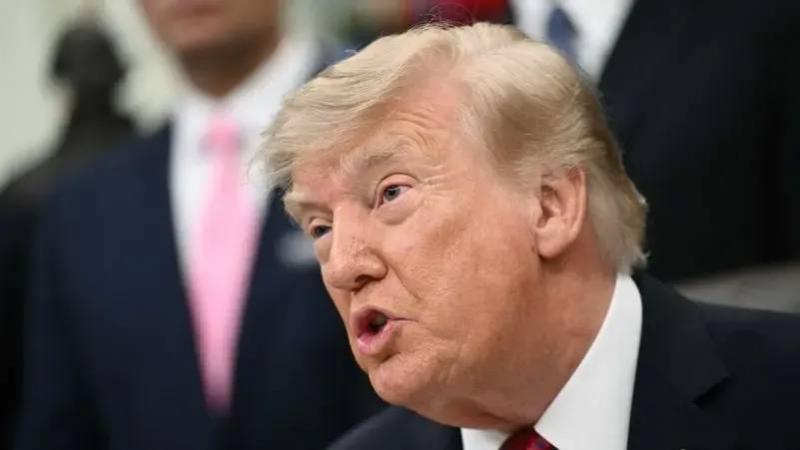
U.S. President Donald Trump has asserted that he is not trying to force Iran back to the negotiating table, dismissing media reports suggesting that his administration is pushing Tehran toward a new agreement amid escalating military and economic tensions between the two nations. He questioned, "When will the Iranian people rise up and fight?"
On his platform "Truth Social," Trump stated, "I am not trying to force Iran to sit at the negotiating table," criticizing a report by "ABC News" that discussed this matter.
He added that he is no longer interested in what he described as a "worthless" deal with Iran, considering the current situation more favorable for the U.S. than returning to a negotiation path that does not meet Washington's objectives.
Trump expressed a preference for the status quo due to what he described as "almost complete" control over the Strait of Hormuz and the "complete collapse" of the Iranian economy, adding that Tehran is "merely delaying the inevitable," in his words.
The U.S. President's statements reflect a harsher tone towards Iran, especially as they come hours after Treasury Secretary Scott Beisner announced that Washington will continue economic pressure until Tehran is ready to reach an agreement.
"When Will Iranians Rise?"
Trump went beyond military and economic issues, questioning in his post, "When will the Iranian people rise up and fight?" This comment adds a domestic political dimension to the pressure Washington is exerting on Tehran.
In contrast, Trump's statements do not indicate a formal U.S. declaration of closing the door on diplomacy permanently, but they suggest that the President currently sees no need to press Iran for a quick return to negotiations.
Attempts to reach an understanding between Washington and Tehran have faltered, with Beisner stating that previous memorandum efforts failed because Iranians were not prepared to reach an agreement.
Trump's remarks follow a wide wave of American strikes inside Iran. U.S. officials said the operation targeted around 100 sites, with the U.S. Central Command announcing strikes against air defenses, radar systems, naval facilities, mine-laying capabilities, and communications sites affiliated with the Revolutionary Guard.
Officials disclosed to "Axios" that the U.S. military targeted two Iranian oil tankers as part of a new policy called "Tanker for Tanker," which involves targeting an Iranian tanker for every ship attacked by Tehran.
Washington believes that recent strikes have significantly weakened Iran's offensive capabilities in the Strait of Hormuz, while ensuring the continued movement of ships under U.S. military protection.
While Washington previously placed military and economic pressure within the framework of pushing Iran towards an agreement, Trump's recent statements suggest that the White House is currently betting on maintaining pressure and exhausting Tehran's ability to confront rather than hastening a return to the negotiating table.