


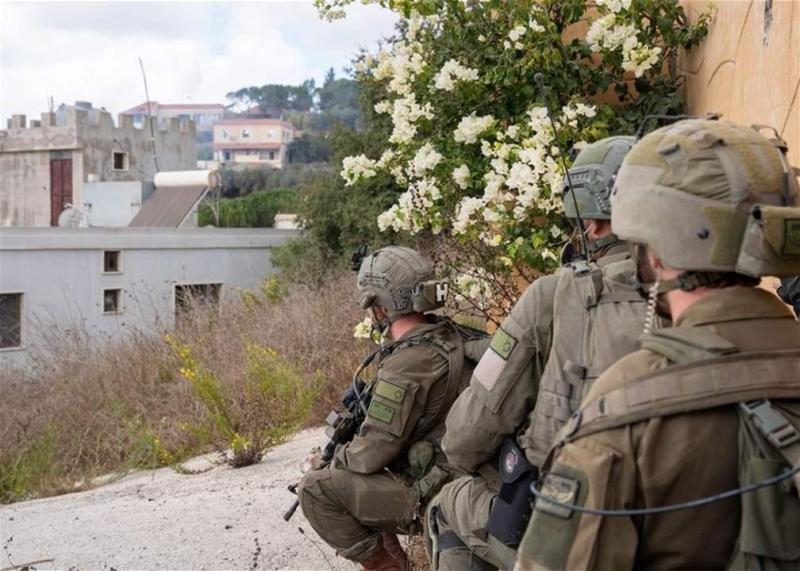
Israel is imposing a strict condition on the Lebanese army in the south: either expand search operations to include homes and private facilities, subjected to an undefined monitoring mechanism, or keep its withdrawal suspended under the pretext of incomplete disarmament.
This pressure was revealed in a report by journalist Elishai Ben Kimon in the newspaper "Yedioth Ahronoth," which stated that the "experimental plan" intended to pave the way for disarming non-state groups south of the Litani, transferring control to the Lebanese army, and then proceeding with the Israeli withdrawal, "is not advancing as expected."
Israeli security sources claimed the Lebanese army faces "legal constraints" that prevent its personnel from searching homes and facilities within villages without justification or a judicial warrant, confining their operations to open lands and public areas.
This Israeli narrative raises broader questions about Lebanese sovereignty: Is Israel asking the army to enter Lebanese homes based on information it provides? Who determines whether a home or civilian facility contains a military infrastructure? Does Tel Aviv retain the right to reject the results of army operations and use this as a reason to delay withdrawal?
According to the public text of the "tripartite framework," the army is supposed to deploy in experimental areas, disarm non-state groups, and dismantle military infrastructure in a verifiable manner, with the United States working with Lebanon and Israel to support the verification process. However, the published text does not grant Israel direct authority over the Lebanese army, nor does it stipulate its right to enforce raids on private property.
"Yedioth Ahronoth" revealed that disagreement persists about which party will monitor the army’s work, the criteria it will adopt, and the conditions needed before Israel agrees to start its withdrawal. There had been a previous proposal to assign monitoring duties to Italian forces, but the plan was never implemented.
The danger of the Israeli proposal lies in turning withdrawal from an obligation to be fulfilled into a conditional pressure card dependent on Tel Aviv’s evaluation of the Lebanese army’s performance. If Israel retains the right to declare inspections or disarmament incomplete, it can extend its military presence, even if the Lebanese state has performed all that its laws and institutional powers permit.
These conditions are exclusively reported in a document relying on Israeli security sources, without an official execution document or a Lebanese official stance to clarify their reality. Thus, the issue is no longer just an experimental plan in the south but a confrontation over decision-making and sovereignty: Will the Lebanese army operate under its country's laws, or will Israeli approval of its performance become a prerequisite for withdrawal?