


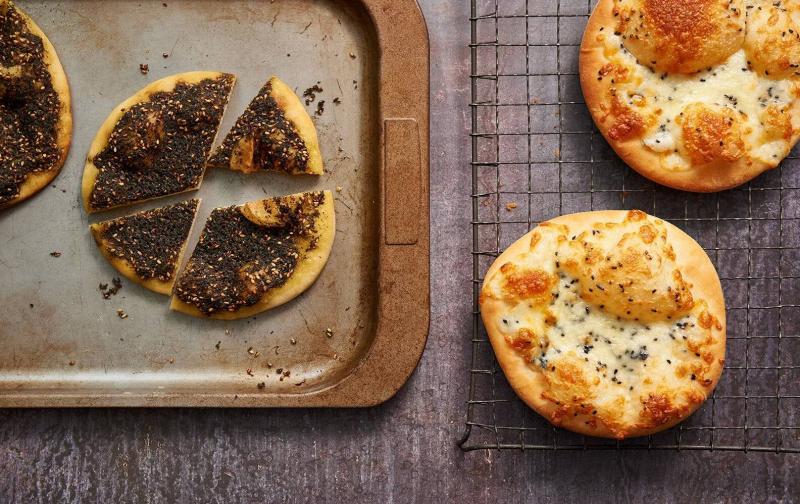
Lebanese manakish are an integral part of Lebanon's daily cuisine. This dish is not just a quick morning meal but has been associated for years with the aroma of hot dough, za'atar, olive oil, and traditional wood-fired ovens.
Manakish vary from region to region, depending on the ingredients, dough preparation, and type of oven used. However, some varieties have maintained their status as staples on the Lebanese table. In recent years, new blends have emerged, combining traditional ingredients with contemporary flavors to offer a twist on this popular meal.
Popular Types of Traditional Lebanese Manakish
1. Za'atar Manakish
Za'atar manakish remains the top choice for Lebanese breakfast. This popular option is seldom absent from any manakish bakery. The traditional za'atar mix consists of dried thyme, sesame seeds, sumac, and olive oil. The success of this manakish relies on the quality of its ingredients and the oil ratio.
Many Lebanese prefer the strong flavor of za'atar accompanied by virgin olive oil, providing the dough with a golden color and a delightful aroma after baking. It can also be enjoyed with fresh vegetables like mint, cucumber, radish, and olives, adding a refreshing balance between the aromatic za'atar and the acidity of the sumac.
2. Cheese Manakish
Cheese manakish is the favorite for lovers of rich and stretchy flavors. It can be prepared with different types of cheese depending on the recipe and oven. Akkawi cheese is used after soaking to reduce its saltiness, or kashkawan cheese can be used for a meltier texture.
A successful cheese manakish features melted cheese inside with golden crispy edges, especially when baked in a high-temperature traditional oven. Additionally, some vegetables or olives can be added as desired, but many manakish enthusiasts prefer it with cheese alone to preserve its basic flavor.
3. Half-and-Half Manakish
For those struggling to choose between za'atar and cheese, the half-and-half manakish is a perfect solution. This type combines one half topped with za'atar and olive oil and the other with cheese, offering two different experiences in one meal.
Some might opt to blend the ingredients rather than separate them, creating a mix that combines the saltiness of the cheese with the aromatic and sour flavor of za'atar and sumac.
This is why "half-and-half" has become one of the most practical choices when ordering manakish with friends or family, especially when preferences at the table differ.
Rustic Manakish with Strong Flavors
4. Kishk Manakish
Kishk manakish is particularly associated with wintertime and rural cuisine. Traditional Lebanese kishk is prepared from bulgur and yogurt, fermented, dried, and then ground before being used in various recipes depending on the region.
When making the manakish, kishk can be mixed with onions, tomatoes, and olive oil for a rich layer with a distinctive sour flavor that differs from za'atar and cheese manakish, making it ideal for those who appreciate robust traditional Lebanese dishes.
5. Muhammara Manakish
The muhammara manakish offers a unique experience for lovers of rich and spicy flavors. Its blend incorporates sweet or hot red peppers with onions, pomegranate molasses, tahini, and sesame, offering a combination of sweetness, acidity, and heat.
Some enthusiasts prefer adding kashkawan cheese to the muhammara, especially for those wanting to tone down the pepper's intensity and add a creamy texture to the manakish. The heat level can be adjusted depending on the amount of hot pepper used, resulting in variations from one bakery to another.
6. Lahm Bi Ajeen
Although sometimes classified separately from manakish, lahm bi ajeen (meat with dough) holds a significant place in Lebanese bakeries, often served as a thin disc similar to manakish.
The topping typically consists of finely minced meat with onions, tomatoes, and spices, baked at high temperature until the dough becomes thin and crispy.
Recipes vary across Lebanese regions, and it can be garnished with a squeeze of lemon juice or a touch of pomegranate molasses after baking. This version is more filling than za'atar or cheese manakish, making it an ideal option for a late breakfast or a light meal during the day.
Innovative Manakish Blends Worth Trying
7. Bulgarian Cheese with Vegetables
The Bulgarian cheese manakish combines salty white cheese with fresh vegetables, offering a different experience from traditional manakish. The cheese is baked with the dough first, then the manakish can be opened to add tomatoes, cucumber, mint, and black olives.
This method provides a diverse texture, combining warm dough with salty cheese and crunchy vegetables, making it a suitable choice for those seeking a dish that combines both hot and cold ingredients.
8. Sausage with Cheese Manakish
For meat lovers and fans of bold flavors, sausage with cheese manakish is one of the most satisfying blends. It relies on slices of seasoned sausage with kashkawan cheese, baked until the cheese melts and intertwines with the sausage's rich flavor of garlic and spices. This manakish suits those who prefer a hearty breakfast and can be enjoyed with fresh vegetables or yogurt to balance the strong flavors.
How to Choose the Right Dough for Manakish?
The taste of the manakish doesn't depend only on the topping; the type of dough plays a key role in the experience. If you prefer a light and crispy manakish, order it on thin dough, a great choice especially for za'atar, cheese, and heavily stocked mixes.
If you prefer thick edges and a tender interior, opt for traditional dough baked in a wood-fired oven. Wood-fired ovens give the manakish a distinctive flavor and a hint of smokiness, while some modern ovens offer more uniformity and quicker preparation.
What to Eat with Lebanese Manakish?
The Lebanese manakish experience isn't complete without a set of simple side dishes. Among the most popular are mint, radish, cucumber, olives, and tomatoes, served alongside yogurt or cold ayran.
The traditional drink that many prefer with manakish is hot mint tea, especially with za'atar or cheese manakish. For lovers of spicy flavors, a touch of hot pepper or some chili can be added to the sandwich for an enhanced taste.
Tips for the Perfect Manakish
Here are some small details that can make a significant difference in your manakish experience:
- Choose a bakery that maintains high and stable heat during baking.
- If you like a crispy texture, opt for thin, rolled dough.
- For traditional flavors, try za'atar with olive oil and fresh vegetables.
- When ordering cheese, choose Akkawi for those who like a salty and firm flavor or kashkawan for a more melting texture.
- Try kishk and muhammara if you're exploring less traditional Lebanese flavors.
- Enjoy the manakish hot right after it comes out of the oven for the best texture.
In Conclusion, the secret to the perfect manakish isn't just in the topping, but in the quality of the dough, the oven, and the baking technique. Visiting a traditional Lebanese bakery and enjoying manakish hot is an experience that encapsulates the flavor of Lebanon in one meal.
See Also
Best Falafel in Beirut