Between those eager to return to their home country of Syria after years of displacement, and those refusing to leave due to the benefits and assistance provided by international organizations concerned with Syrian refugees, the early stages of the second voluntary return have started, possibly easing the burdens on the Lebanese state. The town of Arsal, located on the outskirts of the eastern Lebanon mountain range near the Syrian border towards the western Qalamoun, has shouldered the biggest burden of Syrian displacement that began in 2013. It became a destination for those fleeing from war, hosting the largest number of camps, with the number of displaced Syrians reaching 70,000, more than double the number of its original residents. Displacement has brought various negative economic, social, and health impacts, including the spread of cholera in Lebanon through these camps, particularly through those returning from visits to their families in Syria.
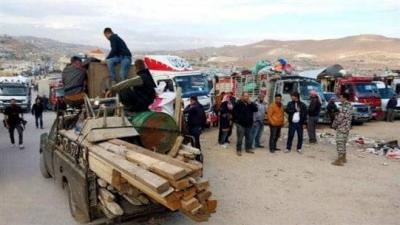
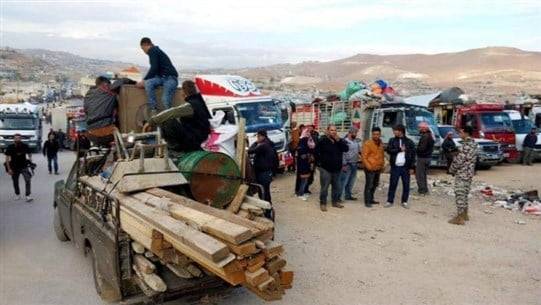
After a long wait and years since the first voluntary return of the displaced, the early hours of yesterday saw the beginnings of the second return convoys making their way to Syria from three crossings, the most significant being from Arsal. After registering with the General Security, nearly a hundred families (more than 700 individuals) gathered in the Wadi Hmeid area of Arsal, where vehicles ready to transport them to Syrian territory awaited, alongside personal vehicles that had brought them to Lebanon, agricultural tractors, and all their belongings, including livestock. From Wadi Hmeid at the outskirts of the town, the journey began towards the Al-Zumurani crossing, established by the General Security for the same purpose, where its personnel verified the names of those leaving to ensure they matched those registered who decided to return to their villages in western Qalamoun, particularly the towns of Flita, Jarajir, Nabek, Deir Atiyah, and others.
The Lebanese Army and the Intelligence Directorate implemented strict security measures and deployed forces at the gathering site of the departing individuals. They increased patrols within Arsal amid heightened readiness at the border points around the town and in the hills, with the presence of Minister of Social Affairs Hector Hajjar overseeing the return process. He had previously visited northern Bekaa and the town of Arsal to review the accompanying field and procedural steps.
After the General Security verified the names, the convoys of cars and trucks took the designated route under security assistance towards the Syrian interior, where the Syrian General Security also established checkpoints to register those returning to Syria. This process continued until late hours despite the cold weather and rain in the region. The number of registered individuals wishing to return outnumbered those who actually left, as some retreated from their decision for reasons that remain unknown. Another journey is expected to launch in the coming days, which may help alleviate the pressures and issues faced by Lebanese towns and areas hosting the displaced.