



Beirut is one of the oldest continuously inhabited cities in the world, with roots extending back thousands of years. The city has witnessed numerous civilizations, each leaving its distinct mark on its architecture and culture.
What sets Beirut apart from other capitals is its unique blend of the old and new. Modern towers and bustling streets coexist with Roman ruins, mosques, churches, and historic palaces that narrate the city's vibrant history.
Roman Ruins in Downtown Beirut
Downtown Beirut, known as Solidere, is home to important Roman ruins dating back to the time when the city was part of the Roman Empire, known for its significant scientific and legal role.
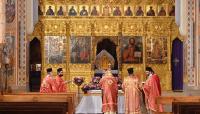
Roman Baths
Located behind the Grand Serail, the Roman Baths are among the city's most notable archaeological sites. These baths were integral to daily life during Roman times, serving as social hubs in addition to bathing purposes. They feature an advanced hypocaust heating system, showcasing Roman engineering prowess. Parts of the site remain preserved today.
Cardo Maximus
One of the major archaeological discoveries in downtown Beirut is the remains of Cardo Maximus, the primary thoroughfare in ancient Roman cities. This street was central to trade and daily life, lined with stone columns that still stand today.
Beirut's Historic Religious Edifices
Beirut boasts significant religious and cultural diversity, vividly reflected in its religious buildings that harmoniously blend Islamic and Christian influences.
Al-Omari Grand Mosque
The Al-Omari Grand Mosque is a significant Islamic landmark in Beirut with a complex history. Originally a Roman temple, it was transformed into a church in the Middle Ages before the Mamluks converted it into a mosque in the 13th century. The mosque's architecture is a unique mix of Gothic style and Mamluk Islamic elements, making it one of the city's most important historic layers.
Saint George's Cathedral
Located near Nejmeh Square, Saint George's Cathedral is one of Beirut's oldest churches, notable for its religious and historical significance. It houses an archaeological museum beneath it containing remains of a Byzantine church and ancient tombs discovered during renovations. This site reflects Beirut's deep Christian history and religious diversity across ages.
Zawiyat Ibn al-Arraq
This Islamic site dates back to the Ottoman era, built in 1517 by Sheikh Muhammad Ibn al-Arraq of Damascus. It served as a place for prayer and education, reflecting the simple architectural style of religious buildings from that period.
Beirut's Heritage Mansions and Palaces
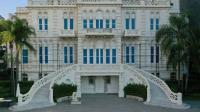
The Grand Serail
Built in 1853 as a military barracks during the Ottoman era, the Grand Serail is one of Beirut's most prominent Ottoman landmarks, located on a hill in Zokak el-Blat. Today, it serves as the Lebanese government's headquarters, illustrating Ottoman architecture with its grand design and strategic location in the heart of the capital.
Sursock Palace
Located in the Ashrafieh district, Sursock Palace is one of Beirut's most beautiful heritage mansions. Built in 1912 by the wealthy Sursock family, it merges Italian and Ottoman architectural styles. The palace eventually became a museum for art and is now a significant cultural center showcasing modern and contemporary art in Lebanon.
Beit Beirut (Barakat Building)
Situated in Sodeco, the Barakat Building is an iconic symbol of Beirut's civil war history. Constructed in 1924 in late Ottoman style, it became a sniper location during the war due to its strategic position. Now restored, it's been converted into a cultural museum documenting the city's memory and historical phases.
Historical Museums and Squares
The National Museum of Beirut
The National Museum is Lebanon's principal guardian of heritage, housing thousands of artifacts spanning from prehistoric to Islamic periods. The museum exhibits statues, tools, jewelry, and inscriptions reflecting the diverse civilizations that left their mark on Lebanon. It's an essential stop for any visitor interested in history.
Martyrs' Square
Martyrs' Square is one of Beirut's most significant historical squares with immense national symbolism. It features the Martyrs' Monument, commemorating nationalists executed by the Ottomans in 1916. The square is a convergence of history, politics, and daily life in Beirut.
In conclusion, visiting these sites isn't just a tour but a journey through time to understand the identity of a city that continues to pulse with life today.
See Also: