


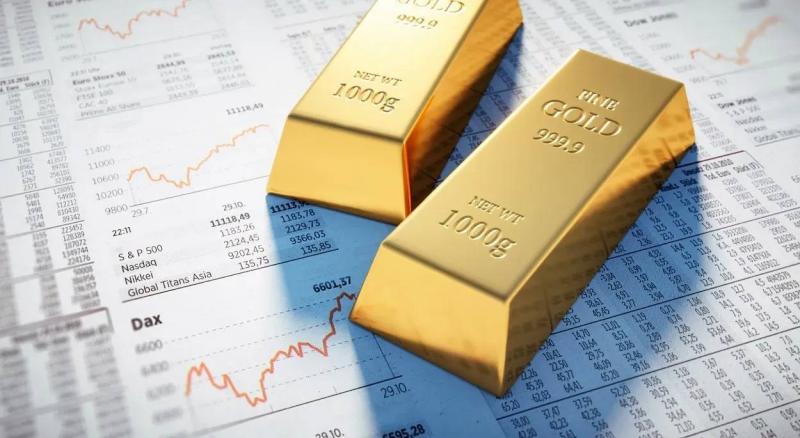
Gold continues to attract the attention of investors worldwide as one of the key defensive assets that markets turn to during periods of economic uncertainty. With growing concerns about inflation, currency volatility, and geopolitical tensions, many are questioning whether gold remains a safe investment and whether current prices still offer good opportunities for future returns.
Historically, gold is known for its ability to preserve value over the long term compared to fiat currencies, which may be affected by inflation and monetary policies. Investors also view it as an effective tool for diversifying investment portfolios and reducing risks during times of economic turmoil.
Why is Gold Considered a Safe Haven?
Gold holds a special place in global financial markets due to its unique properties that have made it a store of value for centuries. Unlike fiat currencies, the supply of gold cannot be increased limitlessly, granting it greater resistance against inflation and maintaining purchasing power over time.
Moreover, central banks in various countries turn to increasing their gold reserves to enhance financial stability and reduce dependence on foreign currencies.
Gold Price Predictions for 2026

Bank of America and J.P. Morgan Predictions
Some estimates suggest that the price per ounce could reach high levels near $6,000 if supporting factors such as inflation and increased investment demand persist.
UBS Predictions
Several analysts expect gold to approach $5,900 per ounce if central banks continue bolstering their purchases of the precious metal.
Goldman Sachs Predictions
The renowned financial institution sets its estimates around $5,400 per ounce for the targeted timeframe.
Morgan Stanley Predictions
Conversely, some forecasts adopt a more conservative view with estimates around $5,200 per ounce. Despite the numerical disparities among institutions, the overall trend reflects a positive outlook on gold in the long run.
Advantages of Investing in Gold in 2026
There are numerous reasons driving investors to add gold to their investment portfolios.
Inflation Protection
Gold is widely used as a hedging asset against the erosion of purchasing power due to rising prices. When inflation rates go up, investors tend to increase their demand for gold as a store of value.
Ongoing Demand from Central Banks
Central banks around the world continue to purchase gold extensively to support their reserves and bolster financial stability. This institutional demand plays a crucial role in supporting prices in the long term.
Hedge Against Crises
Additionally, gold plays a significant role during periods of political and economic crises, as investors turn to it when market risks rise.
Portfolio Diversification
Gold helps reduce investment portfolio volatility as it often moves differently from stocks and some other assets.
Risks of Investing in Gold
Despite its numerous advantages, investing in gold is not without risks that must be considered.
No Regular Income
Unlike stocks that may distribute dividends or real estate offering rental income, gold provides no regular return for investors. Profits mainly rely on price appreciation over time.
Price Volatility
Although considered a safe haven, gold prices can experience periods of sharp corrections and decreases due to changing market expectations or monetary policies.
Storage and Protection Costs
Investing in physical gold entails additional costs related to secure storage and insurance, especially when holding large amounts.
Buying and Selling Margins
Purchasing gold jewelry or certain investment products may incur additional costs due to labor charges or price differentials.
Comparison Between Gold, Real Estate, and Silver
Gold
Primarily used for wealth preservation and protection against inflation and economic crises, it has high liquidity and can be easily bought and sold in most global markets.
Real Estate
Real estate offers regular income from rents alongside potential capital gains in the long term but requires more capital and offers less liquidity compared to gold.
Silver
Silver combines investment and industrial uses but is usually more volatile than gold, making it suitable for investors capable of handling higher risk levels.
What is the Best Way to Invest in Gold?

Gold Bullion
Bullion is one of the most popular options among investors due to lower fabrication costs compared to jewelry.
Gold Coins
Widely used as a saving and investment tool, especially in Arab markets.
Gold-backed Exchange-Traded Funds
These funds offer the possibility of investing in gold without the need for physical storage.
Mining Company Stocks
Investors can benefit from rising gold prices by investing in companies operating in the mining sector, although these stocks carry additional risks related to the performance of the companies themselves.
Important Tips Before Investing in Gold
Allocate a Suitable Portfolio Percentage
Many experts recommend not putting all investments in gold but allocating between 10% and 20% of the total portfolio to diversify risks.
Think Long-Term
Prefer investing in gold with funds you don't need in the short term, as its effectiveness often becomes apparent over the long run.
Choose Low-Cost Products
Bullion and gold coins are more efficient options compared to higher fabrication cost jewelry.
Monitor Economic Factors
Gold prices are affected by inflation rates, interest rates, monetary policies, and geopolitical tensions; hence, continuously monitoring these variables is crucial.
Is Now the Right Time to Invest in Gold?
The decision depends on the investor's goals and financial strategy. If the aim is wealth preservation and hedging against economic risks, gold remains an important option in a diverse investment portfolio.
If an investor is seeking regular income, there might be more suitable assets like real estate or dividend-paying stocks.
In conclusion, gold remains one of the most notable investment assets that have demonstrated the ability to maintain value during inflationary periods and economic instability. A well-considered investment in gold within a balanced financial strategy could represent a suitable choice for many investors seeking long-term stability and protection.
See Also
What is the difference between saving and investing?