


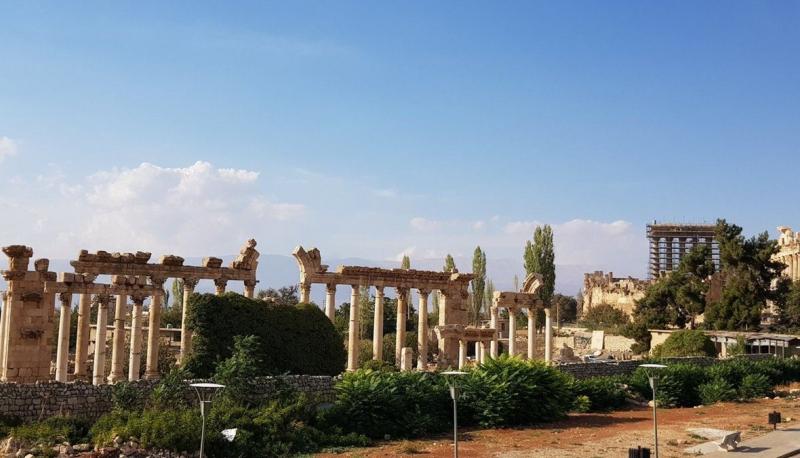
Baalbek, also known as the "City of the Sun," stands as one of the most prominent archaeological destinations in Lebanon and the world. The city is a treasure trove of historical legacy that spans thousands of years, enriched by successive civilizations. However, it's the Romans who left the most remarkable imprint by constructing massive temples that continue to captivate visitors today.
Baalbek's archaeological sites are a major draw for tourists, attracting history and ancient architecture enthusiasts from across the globe.
Top Archaeological Sites in Baalbek:
Baalbek Fortress
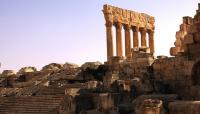
The renowned Baalbek Fortress, the city's historical heart, is an extensive archaeological complex housing some of the greatest Roman temples constructed between the 1st and 3rd centuries AD. Recognized as a UNESCO World Heritage Site, the fortress is famed for its colossal columns and expansive courtyards, epitomizing the grandeur of the Roman Empire.
Temple of Jupiter
The Temple of Jupiter, the largest Roman temple built in the ancient world, now survives as six towering columns reaching about 22 meters high. Known for the massive 'trilithon' stones used in its construction, this site remains one of Baalbek's most awe-inspiring landmarks.
Temple of Bacchus
The Temple of Bacchus is among the best-preserved Roman temples worldwide, with its walls, columns, and engravings remaining in relatively excellent condition. This temple, dedicated to the Roman god of wine and fertility, is distinguished by its intricate decorations and monumental doors showcasing Roman architectural brilliance.
Temple of Venus
Situated outside Baalbek Fortress's main complex, the Temple of Venus stands out for its unique circular design compared to other Roman temples. It was dedicated to the goddess of love and beauty and is notable for its floral decorations and curved columns, lending the site a distinct architectural character.
Stone of the Pregnant Woman
The Stone of the Pregnant Woman is one of Baalbek's famous landmarks, a massive stone block still residing in the ancient quarry that supplied stones for the Roman temples. Measuring over 20 meters and weighing hundreds of tons, this stone is surrounded by local legends explaining its peculiar name.
The Great Umayyad Mosque
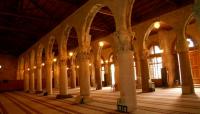
Beyond Roman ruins, Baalbek hosts the Great Umayyad Mosque, one of Lebanon's oldest mosques, dating back to the Umayyad era. Combining Islamic and Byzantine architectural influences, it sits near the archaeological fortress, making it a significant stop for enthusiasts of Islamic history.
Roman Columns and Temple Courtyards
Baalbek's marvels extend beyond temples to include vast courtyards, large columns, and stone arches that leave visitors with a sense of the ancient city's grandeur. These spaces are prime locations for tourist photography and annually host famous cultural and artistic events and festivals.
Conclusion
Baalbek serves as an open-air museum, merging Roman and Islamic history in one locale. Its temples and ruins endure as testaments to one of the region's greatest civilizations. For history and archaeology buffs, visiting this city offers a unique opportunity to explore architectural wonders that have withstood the test of time.
See Also: Famous Traditional Dishes in Baalbek, Top 10 Countries for Medical Tourism, Cheapest Living Areas in Lebanon