


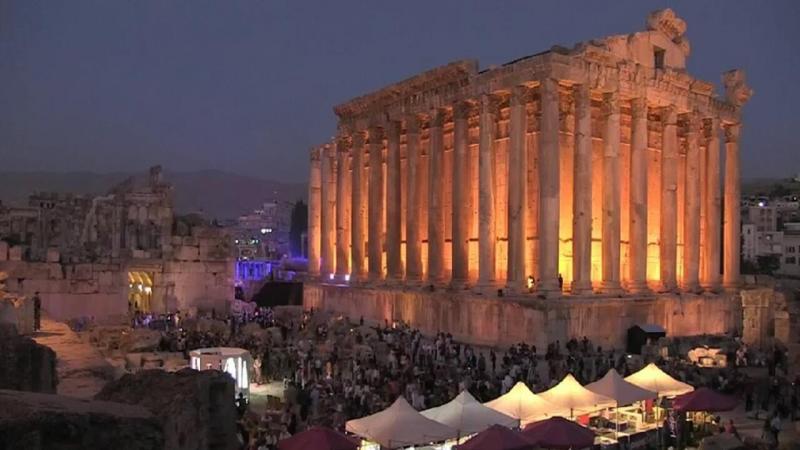
Baalbek city is one of the most significant tourist and archaeological destinations in Lebanon and the world. It is not merely a historical city but an open museum reflecting the grandeur of ancient Roman civilization. Located in the heart of the Beqaa Valley, Baalbek combines deep history with the surrounding mountainous nature, making a visit there a unique experience.
Despite some travelers hesitating because of the distance or general conditions, those who visit Baalbek quickly realize it is worth the visit due to its massive monuments unrivaled in the region, along with the experience of Beqaa hospitality and local cuisine rich with authentic flavors.
Main Archaeological Sites in Baalbek
{{PLACEHOLDER_0}}
Temple of Bacchus
The Temple of Bacchus is one of the best-preserved Roman temples in the world, known for its precise architectural details and stunning stone carvings. Visitors to the temple feel as though they have traveled back thousands of years into a complete Roman civilization.
- Exquisite stone carvings.
- Massive columns still standing today.
- Amazing architectural design reflecting the strength of Roman architecture.
Temple of Jupiter
{{PLACEHOLDER_1}}
The Temple of Jupiter was among the largest in the Roman Empire, and its six famous columns continue to testify to its grandeur.
- Massive scale compared to any other Roman temple.
- Towering stone columns.
- Strategic location within the archaeological complex.
Stone of the Pregnant Woman
{{PLACEHOLDER_2}}
The Stone of the Pregnant Woman is one of the largest carved stones in the world, raising many questions about how it was moved and carved in ancient times.
- Unprecedented size in the ancient world.
- An engineering and archaeological enigma to this day.
- An important part of the history of Baalbek temple constructions.
Baalbek Location and Practical Information
Baalbek is located in Lebanon's Beqaa Governorate, at an elevation of approximately 1,163 meters above sea level, about 83 kilometers from the capital, Beirut.
- Location: Beqaa Valley – Eastern Lebanon
- Elevation: Moderate mountainous area
- Distance from Beirut: About 1.5 to 2 hours by car
- Nature: Combination of valley and surrounding mountains
Best Time to Visit Baalbek
The best times to visit Baalbek are:
- Spring: Mild weather and green nature
- Summer: Suitable for visiting temples and tourist activities
It is advisable to avoid extremely hot or rainy days to easily stroll around the open archaeological site.
Gastronomic Experience and Hospitality in Baalbek
{{PLACEHOLDER_3}}
A visit to Baalbek goes beyond just the ruins, offering a unique culinary experience in the Beqaa Valley, where visitors can taste:
- Famous Beqaa grills
- Freshly baked manakish
- Traditional sweets like namoura
- Authentic Lebanese hospitality
The locals are known for their generosity and warm hospitality, making the experience even more delightful.
Is Travel to Baalbek Suitable?
Despite the challenges some visitors might face in reaching it, a trip to Baalbek is one of the most culturally valuable journeys in Lebanon. It's easily accessible from Beirut via the main road to Beqaa, with frequent daily or half-day tours organized.
Why is Baalbek Worth Visiting?
- Home to one of the world's most significant Roman sites
- Massive, marvelously preserved temples
- Unique cultural and historical experience
- Beautiful nature in the Beqaa Valley
- Distinctive local cuisine
- An atmosphere different from other Lebanese cities
In conclusion, Baalbek is not just a tourist city; it is a complete historical experience that takes visitors into the heart of ancient Roman civilization. From the Temple of Bacchus to the Temple of Jupiter and the Stone of the Pregnant Woman, the city offers an unforgettable archaeological scene, making it one of the most important destinations in the Middle East.
Related Articles