


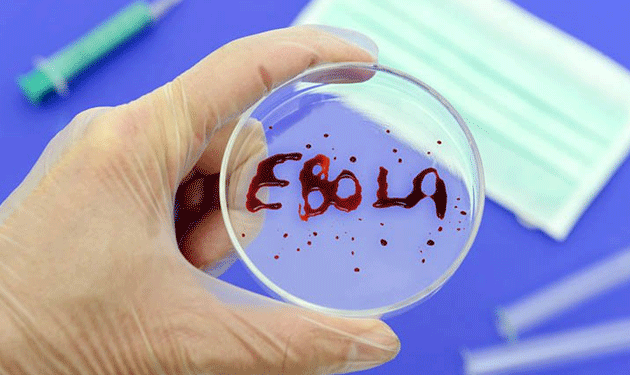
The World Health Organization announced on Thursday the commencement of clinical trials for two new therapeutic approaches to combat the Ebola virus in the Democratic Republic of the Congo. This step aims to find an effective treatment for the Bundibugyo strain, which currently lacks an approved vaccine or treatment.
The study also includes evaluating the efficacy of combining the two drugs to see if this offers improved outcomes for those affected by this strain, amid ongoing disease outbreaks and a rise in cases and fatalities.
Since May, Congolese health authorities have reported over 1,400 laboratory-confirmed cases, with the death toll exceeding 400 by the end of June. The fatality rate stands at 31.2%.
WHO Director-General Tedros Adhanom Ghebreyesus emphasized that patients can recover even in the absence of approved treatments. However, he stressed that developing safe and effective therapies would significantly contribute to saving more lives and enhancing disease control measures.
Amanda Rojek, the study supervisor and an epidemiology professor at the University of Oxford, highlighted the urgent need for treatments tailored to the Bundibugyo strain. She asserted that conducting research alongside field response to epidemics is one of the crucial lessons from recent outbreaks.
Congo's Health Minister Roger Kamba expressed that launching these clinical trials offers a glimmer of hope for patients and their families. He hopes that the study results will save lives during the current outbreak and bolster global readiness to tackle future Ebola waves.