


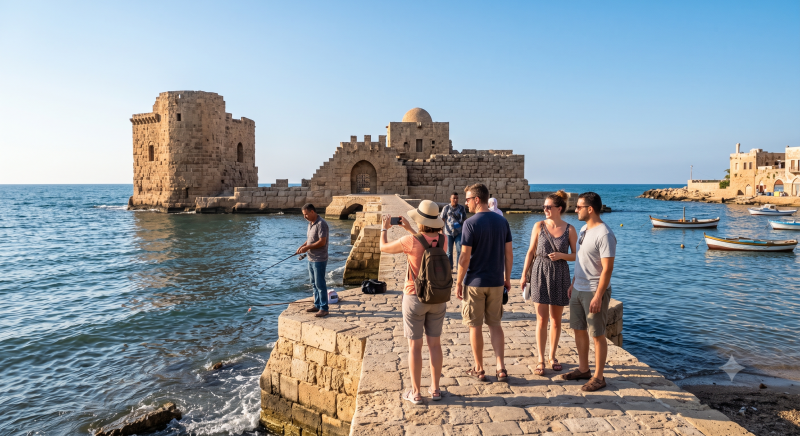
Sidon holds a special place among Lebanese cities. It's not just a Mediterranean coastal city but one of the oldest continuously inhabited cities in history. Civilizations like the Phoenicians, Romans, Crusaders, and Ottomans have all left a rich architectural and cultural legacy here.
Tourism in Sidon extends beyond visiting archaeological sites. Visitors can wander through ancient alleys, discover traditional markets, savor fresh seafood, and enjoy the city’s coastal scenery. Thus, Sidon has become a vital stop on southern Lebanon tourism itineraries.
Where is Sidon?
Sidon is located in southern Lebanon on the Mediterranean coast, approximately 45 kilometers from the capital, Beirut. It can be reached by car in 45 to 60 minutes, depending on traffic, making it an ideal destination for day trips.
Why is Sidon a Top Tourist Destination in Lebanon?
Sidon is distinguished by its diverse attractions, combining archaeological sites, traditional markets, museums, beaches, and seafood restaurants. The city's preservation of much of its historical character offers visitors a unique experience compared to other Lebanese coastal cities.
Top Tourist Spots in Sidon
Sidon Sea Castle
The Sidon Sea Castle is the city's most famous landmark, built by the Crusaders in the 13th century on a small island connected by a stone bridge. The castle offers panoramic views of the sea and the old city, making it a popular spot for photos and exploring Sidon's history.
Sidon's Old Markets
The old markets are the historical heart of the city, with narrow alleys lined with spice shops, soap, sweets, clothing, and handicrafts. Traditional crafts are still practiced here, offering visitors a glimpse into daily life in the old city.
Khan el-Franj
Khan el-Franj dates back to the 17th century and was built to host European traders arriving by sea. Today, it hosts cultural and artistic events and is a major historical building in the city.
The Soap Museum
Located in a historic factory once dedicated to producing traditional soap, the museum showcases the stages of soap-making, the tools used, and natural products inspired by Lebanese heritage.
Debbane Palace
Debbane Palace is a stunning example of Ottoman architecture in Lebanon, featuring decorated rooms, historical furniture, and internal gardens that reflect the lifestyle of that era. It is open to visitors interested in exploring the city's history.
Eshmun Temple
Located just outside the city, the Eshmun Temple is one of the most significant Phoenician archaeological sites in Lebanon. Dedicated to the god of healing, it contains important architectural remnants and historical inscriptions.
Best Activities in Sidon
Besides exploring historical sites, visitors can stroll along the seaside promenade, take photos at the old port, enjoy short boat trips, shop in local markets, and taste traditional Lebanese sweets and fresh seafood.
What to Eat in Sidon?
Sidon is renowned for its seafood and traditional Lebanese dishes like Sayadieh, grills, hummus, moutabbal, fattoush, and kibbeh. Its sweets, particularly the famous kanafeh, are a must-try.
Best Time to Visit Sidon
The best time to visit Sidon is from April to June and from September to October when the weather is mild, ideal for city tours and outdoor activities. Summer attracts more tourists due to beaches and seafood restaurants.
Tips Before Visiting Sidon
Allocate a full day to explore the old city and its main attractions, and wear comfortable shoes for navigating the stone streets in the historical markets. Carry cash for transactions in some traditional stores, especially within the old markets.
Unknown Facts About Sidon
Sidon is one of the world's oldest continuously inhabited cities, with a history spanning thousands of years. It was a major Phoenician center for maritime trade, glass manufacturing, and purple dye production. The city preserves numerous historical sites reflecting this rich heritage.
See Also:
Historical Landmarks of Byblos