


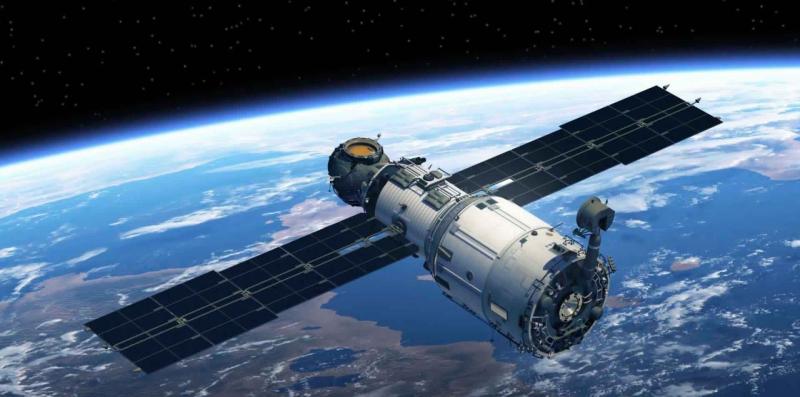
Countries with a substantial number of satellites are at the forefront of advancements in telecommunications, remote sensing, navigation, scientific research, and defense. Recent years have seen an unprecedented surge in the number of satellites, driven by the expansion of private companies and governmental projects. As a result, space has become a new arena for economic, technological, and military competition.
The quantity of satellites mirrors the level of technological progress and investment in the space sector. Governments and companies utilize these satellites for internet services, communications, earth observation, weather forecasting, disaster management, and global navigation.
Why Are Countries Competing to Launch Satellites?
Satellites serve as a strategic infrastructure for nations, supporting modern communication, internet services, broadcasting, and aerial and maritime navigation. They also provide precise data for monitoring environmental, agricultural, and climatic changes.
Moreover, the space sector is accelerating thanks to the entry of private companies, which have reduced launch costs and increased the number of satellites in orbit, resulting in unprecedented growth in this sector.
Top Satellite-Owning Countries Worldwide
1. United States – Over 5,100 Satellites
The United States ranks first globally by a vast margin, with over 5,100 active satellites, primarily due to large-scale commercial communications projects like the Starlink constellation, alongside government, military, and scientific satellites.
2. United Kingdom – Around 653 Satellites
The United Kingdom ranks second with approximately 653 satellites, largely attributed to the OneWeb network specializing in providing satellite internet services.
3. China – About 623 Satellites
China continues to expand its space presence with about 623 satellites, heavily investing in communications, remote sensing, earth monitoring, manned space programs, and defense applications.
4. Russia – 181 Satellites
Russia owns approximately 181 satellites, with many focusing on navigation, military, and research purposes, as well as space communication.
5. Japan – 88 Satellites
Japan advances its space programs through 88 satellites used for scientific research, disaster monitoring, communications, and remote sensing.
6. India – 62 Satellites
India ranks sixth with a total of 62 satellites, benefiting from a rapidly growing space program in communications, navigation, and space exploration.
7. Canada
Canada enhances its space presence with satellites dedicated to communications, environmental monitoring, and scientific research, participating in various international space programs.
8. Germany
Germany possesses a collection of satellites for earth observation, scientific research, and communications, contributing to European space technology development.
9. France
France plays a significant role in the European space sector, utilizing its satellites for communications, meteorology, reconnaissance, and scientific research.
10. Italy
Italy concludes the list of countries with advanced satellite programs that include remote sensing, environmental monitoring, and communications.
Ranking of Arab Countries by Satellite Ownership

1. Saudi Arabia – 17 Satellites
Leading the Arab list, Saudi Arabia owns 17 satellites for communications, remote sensing, and supporting national and research projects.
2. United Arab Emirates – 14 Satellites
The UAE ranks second among Arab countries with 14 satellites, including commercial and scientific ones, highlighted by notable space projects like the Hope Probe to Mars.
3. Egypt – 13 Satellites
Egypt owns 13 satellites, spanning communications, broadcasting, remote sensing, and scientific research, reflecting the development of its space program.
4. Algeria – 6 Satellites
Algeria owns 6 satellites used for earth monitoring, communications, and natural resource management.
5. Morocco – 3 Satellites
Morocco's 3 satellites support land observation, agriculture, and natural resource management.
Uses of Satellites
Countries rely on satellites for various critical areas, including:
-Communications and the internet.
-Television and radio broadcasting.
-Navigation and positioning.
-Weather forecasting.
-Monitoring climatic changes.
-Natural disaster management.
-Border monitoring.
-Scientific research.
-Remote sensing.
-Military and security applications.
Why Does the U.S. Lead By Such a Large Margin?
The U.S. dominance stems from massive investment in both government and private space sectors, along with launching thousands of commercial satellites within space internet projects, bringing the number of U.S. satellites to unprecedented levels compared to other countries.
Meanwhile, countries like China and India continue to expand their space programs rapidly, contributing to global competition in this sector.
The Future of Satellite Race
Experts anticipate a continual increase in satellite numbers in the coming years, with the expansion of space internet services and greater reliance on artificial intelligence and space data analysis.
Additionally, many countries aim to launch small, cost-effective satellites to meet communication, monitoring, and research needs, making space increasingly crowded.
In conclusion, the United States tops the list with the most satellites, followed by the United Kingdom, China, Russia, Japan, and India, while Saudi Arabia, the UAE, and Egypt lead the Arab space sector.
This ranking reflects the scale of investment in technology and scientific research, affirming that satellites have become a crucial element in economic development, national security, and technological innovation. The sector is expected to continue growing in the coming years.
See Also
Top Historical Cities in Lebanon