


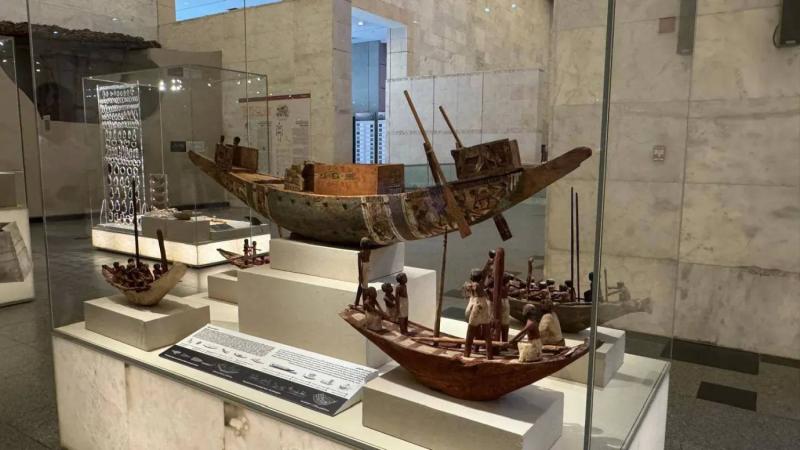
Museums are among the most prominent cultural destinations worldwide. They serve as centers for preserving history, arts, sciences, and human heritage. The number of museums not only highlights a nation's interest in culture but also reflects the strength of its tourism and educational infrastructure, crucial for preserving cultural heritage for future generations.
Countries vary in their rankings depending on the measurement method. Some statistics focus on the total number of museums, while others consider the number of museums relative to the population or geographical area.
The Importance of Museums in Modern Societies
The role of museums extends beyond displaying historical artifacts. They have become educational and cultural institutions combining scientific research with interactive tourism experiences. Museums assist in preserving national heritage, showcasing scientific and artistic achievements, and educating visitors about the history of different peoples.
Moreover, museums bolster the local economy by attracting millions of tourists each year and providing job opportunities in culture, tourism, and education sectors.
Top Countries by Total Number of Museums
1. United States – Approximately 33,082 Museums
The United States leads the world with around 33,082 museums, a reflection of its vast territory and diverse communities. This tally includes extensive museums of arts, history, sciences, and technology spread across various states.
In addition to housing global cultural institutions that attract millions of visitors annually, the U.S. boasts thousands of small local museums in cities and rural areas.
2. Germany – Approximately 6,741 Museums
Germany ranks second with about 6,741 museums, benefiting from a long history in arts, sciences, and industry. German museums vary from historical sites to art galleries and technical museums showcasing industrial development and innovation.
3. Japan – Approximately 5,738 Museums
Japan hosts around 5,738 museums, blending traditional heritage with modern technology. The country is noted for its ancient Japanese art museums and scientific centers featuring technological advancement and Japanese culture.
4. China – Approximately 5,535 Museums
China has experienced significant growth in its number of museums, now totaling approximately 5,535. This expansion is linked to an increasing focus on preserving Chinese history and showcasing ancient civilizations and cultural heritage.
5. Russia – Approximately 5,415 Museums
Russia has around 5,415 museums, distinguished by large collections of artistic works and historical artifacts, including dedicated museums for sciences, space, and military history.
6. France – Approximately 4,811 Museums
France, renowned for its rich culture, has about 4,811 museums. Its famed art and historical museums draw millions of tourists, supplemented by numerous regional museums scattered across its cities.
7. Brazil – Approximately 3,906 Museums
Brazil, with approximately 3,906 museums, reflects the country's diverse cultural and natural spectrum, including history, arts, and folklore museums.
8. Italy – Approximately 3,195 Museums
Italy, with around 3,195 museums, is strongly tied to global artistic heritage due to its deep roots in Roman civilization and the Renaissance.
9. United Kingdom – Approximately 3,183 Museums
The UK, ranking ninth with about 3,183 museums, hosts some of the world's most renowned cultural institutions in history, art, and science.
10. Canada – Approximately 2,245 Museums
Canada, in the tenth position, has about 2,245 museums. These reflect the history of indigenous peoples, nature, sciences, and various cultures.
Countries with the Highest Museums-to-Population Ratio
Sweden – Highest Museum Density Globally
Sweden ranks high in museum density, boasting about 1,600 museums with a rate of approximately 151 museums per million citizens, reflecting the Swedish society's dedication to preserving history, arts, and local heritage.
Switzerland – High Museum Concentration
Switzerland has more than 1,100 museums distributed across cities and towns, a significant number considering its size and population, renowned for its art, history, science, and natural museums.
Why Do Countries Vary in Museum Counts?
Museum numbers are influenced by several factors, including:
- Population size and geographic area.
- The nation's historical background.
- Cultural investment levels.
- Tourism activity.
- Heritage preservation interests.
- Government support for cultural institutions.
Additionally, private initiatives play a crucial role in establishing museums, with organizations and individuals founding specialized art and history museums.
The Future of Museums in the Digital Age
Museums are undergoing significant transformations through the adoption of technologies like virtual reality, digital tours, and artificial intelligence, offering interactive experiences that allow visitors to explore exhibits remotely.
Nonetheless, traditional museums maintain their significance as vital places for historical preservation and direct interaction with artworks and artifacts.
In conclusion, the United States ranks first in total museum count, followed by Germany, Japan, China, and Russia. Meanwhile, countries like Sweden and Switzerland stand out in museum density relative to their populations.
This data underscores nations' commitment to heritage preservation, disseminating knowledge, and promoting cultural tourism. Museums remain key institutions linking the past with the present and fostering cultural awareness.
See Also
Tourism Guide in Sidon