


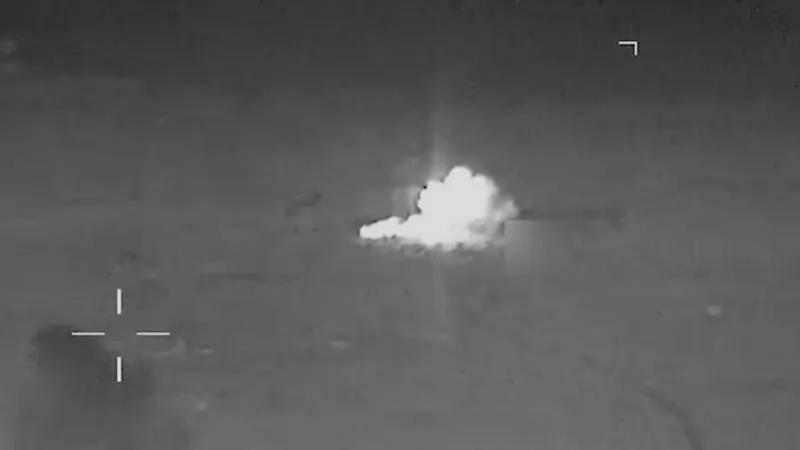
The U.S. Central Command (CENTCOM) announced on Wednesday that its forces conducted a new round of offensive strikes against Iran, targeting more than 80 sites using precision munitions. These strikes serve as a direct response to recent Iranian attacks on commercial vessels navigating the Strait of Hormuz.
In a statement released on the platform "X", CENTCOM detailed that the strikes targeted Iranian air defense systems, command and control networks, coastal radar sites, and anti-ship missile capabilities. Additionally, over 60 small boats belonging to Iran's Revolutionary Guard in the strait and its vicinity were targeted to undermine Iran's ability to continue attacking international trade movements through this vital corridor.
The statement further mentioned that Iran had recently attacked three commercial ships transiting the Strait of Hormuz, namely the oil tanker 'M/T Al Riqaat' flying the Marshall Islands flag, the tanker 'M/T Wedyan' flying the Saudi flag, and the tanker 'M/T Cyprus Prosperity' flying the Liberian flag.
CENTCOM described the Iranian attacks as "unjustified" and a "clear and severe violation" of the ceasefire agreement, which also undermines freedom of navigation.
Furthermore, it asserted that its forces remain prepared to hold Iran accountable if it fails to adhere to or comply with the agreement's terms.
These attacks mark the latest in a series that threatens the ceasefire brokered between the United States and Iran last month, which halted a conflict that began in February with U.S. and Israeli strikes across Iran.
Conversely, Tehran vowed a "decisive" response on Wednesday to the U.S. strikes near the Strait of Hormuz, accusing Washington of repeatedly violating the memorandum of understanding between the two nations. Iranian media claimed Tehran launched missiles at U.S. warships.
The Iranian Foreign Ministry accused the United States of violating the memorandum signed between the two nations. In an official statement, the ministry issued a "serious warning" about the consequences of what it described as Washington's breach of the agreement, asserting that decisive measures would be taken to protect Iran's interests and national security.
In a potential major blow to the agreement, Washington moved on Tuesday to rescind a key waiver that allowed Iran to sell oil on international markets. Oil prices surged more than 3% following the U.S. decision to revoke this sales authorization.