


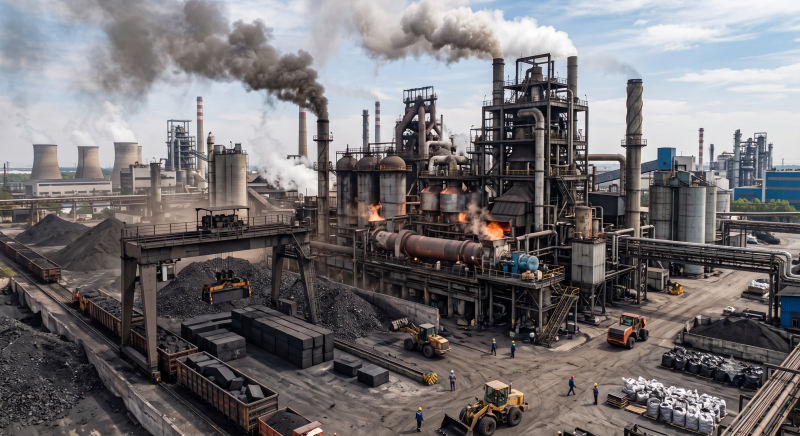
Carbon emissions are among the most pressing environmental challenges facing the world today, as rising carbon dioxide levels in the atmosphere are associated with global warming and climate change. These emissions result mainly from burning fossil fuels such as coal, oil, and natural gas for energy, as well as for powering factories and transportation.
Countries' contributions to carbon emissions vary according to population size, economic strength, and the nature of energy sources used. Some countries have higher emission rates due to intense industrial activity, while their per capita emissions may be lower. Therefore, the ranking of countries differs depending on the measurement method used.
List of the World's Top Carbon Emitting Countries:
1. China
China tops the list of the largest global carbon dioxide emitters, representing a significant share of total global emissions.
This is due to its vast industrial sector and historical reliance on coal for electricity generation, along with being a major manufacturing hub globally.
Conversely, China is investing heavily in renewable energy, particularly solar and wind power, to reduce its dependency on fossil fuels.
2. United States
The United States ranks second globally in terms of total carbon emissions.
Its high emissions are linked to the size of its economy, significant energy consumption, and reliance on fossil fuels in electricity, transportation, and industry.
Nevertheless, the U.S. has seen an expansion in the use of natural gas and renewable energy, along with improved energy efficiency.
3. India
India ranks among the largest sources of carbon emissions globally, associated with rapid population growth and significant industrial expansion.
The Indian electricity sector heavily relies on coal, serving as a primary energy source, despite increasing investments in solar energy and clean sources.
4. Russia
Russia holds a leading position among the countries with the highest carbon emissions due to its significant reliance on oil, natural gas, and coal production and usage.
The energy and heavy industry sectors contribute a substantial portion of its emissions, especially being one of the largest producers and exporters of fossil fuels globally.
5. Japan
Japan is an industrial giant registering high carbon emission levels.
It depends on liquefied natural gas, coal, and oil to meet its energy needs, particularly following energy policy changes post-Fukushima nuclear accident.
6. Iran
Iran ranks high among countries with notable carbon emissions due to heavy reliance on oil and natural gas for energy production.
The heavy industries and transportation sectors also impact emission levels, although the country possesses vast natural gas resources.
7. Germany
Germany is among Europe's biggest carbon emitters due to its large economy and substantial industrial sector.
Despite historically relying on coal, Germany is aiming to increase renewable energy usage as part of its plans to transition to a low-carbon economy.
8. Saudi Arabia
Saudi Arabia is listed among countries with high emissions due to its economy and energy sector's dependence on oil and gas.
The Kingdom is working on developing renewable energy projects and improving energy efficiency within plans to diversify energy sources and reduce emissions.
9. South Korea
South Korea records high carbon emission levels due to its industrial strength and reliance on energy in sectors like automotive, electronics, and petrochemicals.
The nation strives to increase clean energy usage and reduce coal dependency.
10. Canada
Despite its relatively small population compared to major countries, Canada registers high emissions due to the size of its energy sector and industries linked to oil and gas extraction.
The cold climate in many regions also increases the need for energy consumption for heating.
Major Sectors Contributing to Carbon Emissions:
Energy Sector
Electricity generation using coal, gas, and oil is the largest source of global carbon emissions.
Industry
Heavy industries such as iron, cement, and petrochemicals emit significant emissions due to high energy requirements.
Transportation
Cars, planes, and ships generate substantial carbon dioxide amounts from conventional fuel reliance.
Agriculture and Land Use Changes
Deforestation and some agricultural activities contribute to increased greenhouse gas emissions.
The Difference Between Total and Per Capita Emissions
A nation may be one of the largest polluters due to its economy's size and population, but its per capita emissions ranking might differ.
For example, some smaller nations with high-energy consumption may record high individual emissions despite having lower total emissions than larger countries.
See Also:
Top Electricity Producing Countries
Countries with the Largest Natural Gas Reserves
Top Natural Gas Producers