


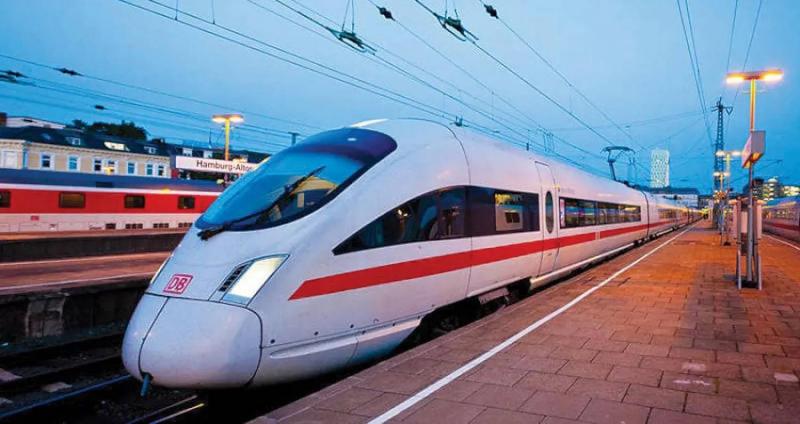
Nations with extensive railway networks have invested for decades in developing their rail systems for both passenger and freight transport. These networks are crucial for supporting the economy, reducing transportation costs, and improving connectivity between cities, ports, and industrial areas.
The goals of railway networks vary by country; some focus on high-speed passenger trains, while others rely on heavy trains for long-distance transport of minerals, agricultural products, and raw materials.
How is the Size of Railway Networks Measured?
The classification of countries is based on the total length of operational railway lines in kilometers, not on the number of trains or stations.
This includes:
- Passenger lines.
- Freight lines.
- Traditional railways.
- High-speed train networks.
Moreover, having a longer network doesn't necessarily mean it's the fastest. Some countries have shorter networks but contain the most extensive lines of high-speed trains.
The Top 10 Countries with the Largest Railway Networks in 2026

1. United States
The United States leads the world with a railway network exceeding 220,000 kilometers, primarily used for freight transport. This network is crucial for sectors like agriculture, energy, and industry to move vast amounts of goods across various states, making it one of the most significant freight rail systems globally.
2. China
China ranks second with a network around 165,000 kilometers long. Moreover, China possesses the world's longest high-speed rail network, connecting hundreds of cities with modern lines that significantly reduce travel time, setting a global benchmark for railway development.
3. Russia
Russia boasts a network exceeding 105,000 kilometers, serving as a vital corridor linking the east and west of the country. The railways are essential for transporting passengers and goods across the vast distances, especially given the country's large geographical span.
4. India
India is fourth with a network roughly 70,000 kilometers long, notable for transporting one of the largest daily passenger volumes worldwide, as millions rely on trains as their primary means of travel between cities.
5. Canada
Canada's network is approximately 49,422 kilometers long, primarily used for transporting grains, lumber, minerals, and natural resources from inland areas to ports and manufacturing centers.
6. Germany
Germany ranks sixth with a network about 39,224 kilometers long, being Europe's largest railway network in efficiency and connectivity. It is famous for its precise services linking major cities and neighboring European countries.
7. Brazil
Brazil's railway network is about 30,600 kilometers long, predominantly used for transporting agricultural products and minerals, particularly iron ore and soybeans, from production areas to ports.

8. France
France has a network close to 27,700 kilometers long, globally recognized for its TGV high-speed trains, renowned as one of the fastest means of transportation in Europe, efficiently connecting French cities and neighboring countries.
9. Australia
Australia's network stretches to about 24,600 kilometers, heavily relied upon by mining companies for transporting iron ore, coal, and raw materials from mines to ports.
10. Argentina
Argentina concludes the list with a network over 18,000 kilometers long. Although its size has shrunk compared to the past, it still plays a crucial role in supporting the agricultural sector and transporting crops to local markets and ports.
Why Do Countries Invest in Railways?
Railways are a key element of modern infrastructure, offering several advantages, such as:
- Lowering goods transportation costs.
- Reducing traffic congestion.
- Decreasing carbon emissions compared to road transport.
- Connecting cities and industrial regions.
- Supporting domestic and international trade.
- Facilitating the movement of millions of passengers daily.
Furthermore, modern train networks contribute to economic development and attract investments.
Who Has the Largest High-Speed Rail Network?
Although the United States has the longest total railway network, China leads the world in high-speed rail, having built thousands of kilometers of modern lines connecting major cities.
In comparison, France, Japan, and Germany are also pioneers in operating highly efficient high-speed trains.
In conclusion, the list of countries with the largest railway networks demonstrates that investing in railways is not only about improving transportation but also serves as a fundamental pillar for supporting the economy, trade, and sustainable development.
While the United States leads globally in network length, China continues to lead in high-speed trains, with countries like Russia, India, and Germany maintaining advanced networks serving millions of passengers and goods daily.
See also
Most Carbon-Emitting Countries