


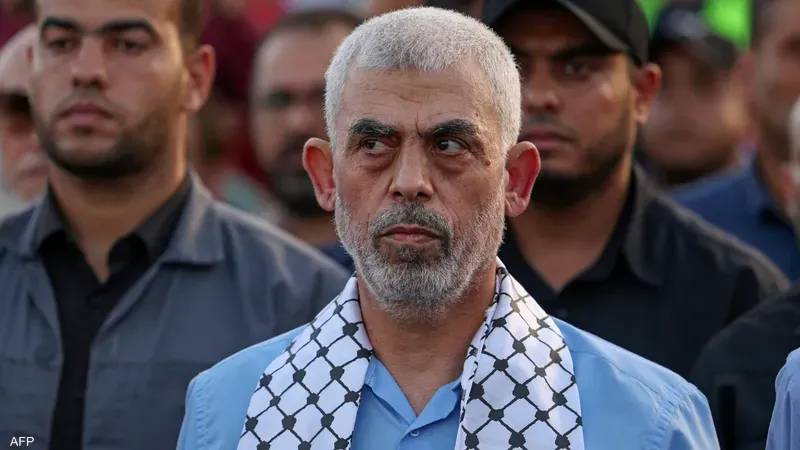
The revelation of a document allegedly penned by former Hamas political bureau chief Yahya Sinwar has sparked extensive debate over the prior estimates leading up to the October 7 attack. Reports indicated that Sinwar anticipated an unprecedented Israeli response but proceeded with the operation regardless.
An intelligence document retrieved by the Israeli military from 2022 suggested that Sinwar had considered the possibility of an Israeli nuclear strike on Gaza in his pre-operation calculations.
The document revealed that Hamas leadership had factored in a response using "all available weapons," banking on causing chaos and opening additional fronts with their large-scale operation.
Jihad Al-Harazin, a political science professor at Al-Quds University, stated during a "Sky News Arabia" broadcast that the revelations align with the reality brought by the conflict. He argued that the October 7 events didn’t yield gains for the Palestinian cause but led to widespread destruction affecting both the Palestinian people and the region.
Al-Harazin added that "if authenticated, the document indicates the operation wasn’t based on precise calculations of its outcomes." He explained that Palestinians faced unprecedented destruction and losses, while Israel exploited the October 7 events to further its plans, raising questions about the decision-making process behind the operation.
He emphasized that any strategic action should precede with clear evaluation of its consequences. He questioned the utility of an operation that resulted in extensive devastation and deteriorated Gaza's infrastructure, with Israel controlling about 70% of the region.
Document Analysis: Between Projections and Reality
Assessing the document, Al-Harazin suggested that the mention of nuclear weapons by Israel was likely metaphorical, representing the degree of force Israel could employ against Palestinians.
He noted that past military engagements, including the 2008, 2009, 2014, and 2021 wars, demonstrated Israel's readiness to use significant destructive force, which should have prompted different assessments of the Israeli response.
Al-Harazin critiqued the unrealistic prediction of the conflict lasting six months to a year, explaining that Israel's retaliation was evident from October 8. He stressed that the priority should have been to remove the pretext that allowed Israeli Prime Minister Benjamin Netanyahu to garner international sympathy, particularly focusing on resolving hostage issues that led to a prisoner release following November negotiations.
Criticism of Evaluations and Advocacy for Palestinian Safety
Al-Harazin also addressed the documents unveiled by Israel, arguing that some were manipulated by Netanyahu for increased pressure and to bolster American support for Israel.
He asserted that predicting a U.S. withdrawal of support for Israel is impractical, given the historical alliance between the two nations, with Washington consistently backing Israel since its inception.
Thus, Al-Harazin called for a realistic reassessment of the situation, advocating that protecting Palestinians should be paramount. He emphasized that the initial month of conflict resulted in displacements, destruction, and shortages of essentials, as Gaza depends heavily on Israeli crossings for necessary supplies. He referenced statements by Israel's defense minister about blocking water, electricity, food, and medicine.
Al-Harazin concluded that maintaining the resilience of Palestinians on their land should be the priority, acknowledging that the displacement plan surfaced early in the conflict. He commended efforts by Egypt, Jordan, the UAE, and others to counter this agenda.
The Practical Impact of the Conflict and Sinwar Document Authenticity
The war's practical outcomes have not been achieved, with negotiations no longer focused on Jerusalem or Al-Aqsa Mosque while Israel retains control of Gaza and expands settlements in the West Bank. The net result has been increased tragedy and destruction.
FIMED's Director, Ibrahim Al-Madhoun, dismissed the authenticity of the document attributed to Sinwar, claiming skepticism about its content and doubting Sinwar would consider such plans.
Al-Madhoun argued that using nuclear weapons in historical Palestine is unrealistic, given the direct impact on Israel itself.
He noted that Sinwar spoke informally about Hamas's resilience for six months to a year, a widely held view based on the belief that Israeli military doctrine avoids prolonged conflicts.
The strategy centered on a deterrence operation followed by a deal to release six thousand prisoners.
Al-Madhoun highlighted that the key surprise was not the Israeli response’s nature but the extent of U.S. involvement, which was not factored into initial plans.
He pointed out that, on October 7, the U.S. shifted from conventional support to active participation, deploying aircraft carriers to the Middle East, setting up a military headquarters in Tel Aviv, and having American political leadership oversee war operations.