


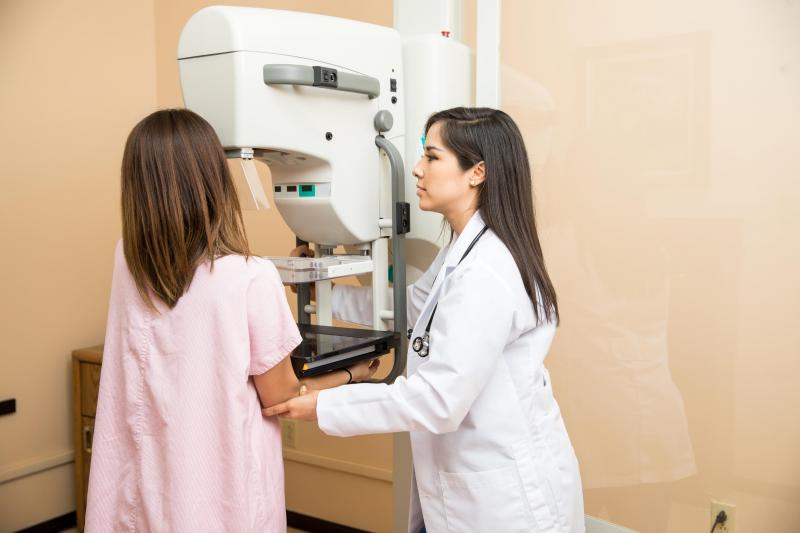
Some women believe silicone implants prevent mammograms or increase examination risks. However, the truth is that a mammogram can be performed normally after breast augmentation. It's actually vital for early detection of any abnormal changes in breast tissue.
Having implants requires informing the radiology team in advance, as the imaging method differs slightly from traditional ones. This ensures more accurate images and prevents hiding parts of the breast tissue behind the implant.
Is Mammography Safe with Silicone Implants?
Yes, mammography with silicone implants is generally safe and is conducted daily for many women worldwide.
Imaging devices are designed to compress the breast for detailed images. While some may feel discomfort during compression, the risk of implant rupture is very low if done correctly by specialized technicians.
How Is Mammography Performed with Silicone Implants?
Eklund Displacement Technique
Radiology centers use a special technique called Eklund displacement shots, the most common way to handle silicone implants.
During this technique:
- The implant is gently pushed back towards the chest muscle.
- Natural breast tissue is pulled forward.
- Additional images are taken of the breast tissue away from the implant.
This method improves image quality and reduces the chance of missing important areas of the breast.
Can the Silicone Implant Burst During a Mammogram?
Rupture of silicone implants during mammography is extremely rare, especially when:
- The radiologist is informed about the implants.
- Exams are conducted in specialized centers.
- Appropriate imaging techniques are used.
Modern implants are designed to withstand high pressure levels. However, it is essential to disclose the presence of an implant before the exam.
Tips Before Undergoing Mammography with Silicone Implants
1. Inform the Radiology Center in Advance
When scheduling the mammogram, inform the center about the silicone implants to prepare the appropriate technique.
2. Choose an Experienced Center
Preferably, undergo the exam in a radiology center experienced with women who have had breast augmentation.
3. Inform Your Doctor About the Implant Type
If you know:
- The implant location (above or beneath the chest muscle).
- The date of the surgery.
- The type of implant.
This information assists the doctor and radiologist in selecting the best examination method.
Do Silicone Implant Carriers Need Additional Tests?
In some cases, the doctor may request additional tests besides the mammogram, such as:
Breast Ultrasound
- To detect lumps or changes in breast tissue.
- Diagnosing some implant issues.
MRI (Magnetic Resonance Imaging)
- Considered one of the most accurate tests for assessing silicone implant integrity and revealing any unseen internal rupture.
When Should You Consult a Doctor After Breast Augmentation?
Consult a doctor if you notice:
- A sudden change in breast shape.
- Persistent or unusual pain.
- A change in breast hardness.
- Swelling or a significant difference between the breasts.
- A new lump.
Does Breast Cancer Follow-up Differ After Silicone Implants?
Silicone implants do not eliminate the importance of routine screenings for breast cancer. Women should adhere to a screening schedule appropriate for their age and risk factors, informing the radiology center about the implants.
ConclusionMammography can be safely performed after silicone implants. Implants are not a barrier to early detection of breast diseases. The key is to select a specialized center and inform the radiologist of the implant to use appropriate techniques like Eklund displacement for accurate imaging while ensuring silicone safety.
See Also