


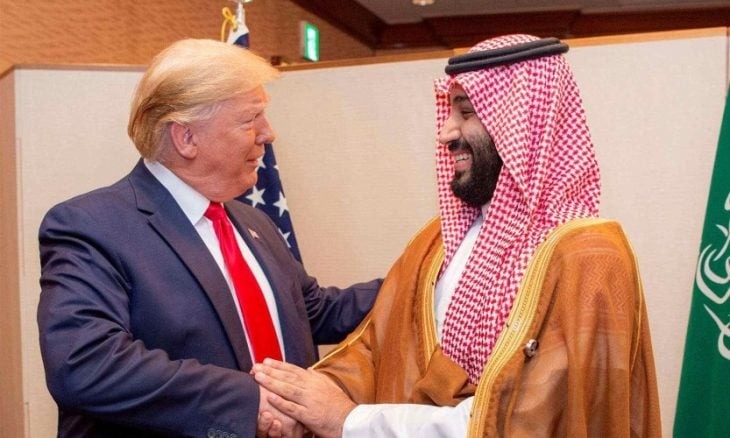
The Israeli Channel 12 has reported, citing a political source, that Saudi Arabia continues to hold fast to a core condition for moving towards normalization with Israel: a 'sincere' political path leading to the establishment of a Palestinian state.
According to the report, this stance reflects Riyadh's repeatedly stated policy and comes at a time marked by rapid developments in the normalization file, especially after shifts in the U.S. position regarding linking the nuclear agreement with Saudi Arabia to the Abraham Accords.
On July 22, the United States and Saudi Arabia signed a civilian nuclear cooperation agreement under Section 123 of the American Atomic Energy Act. This agreement extends for decades, allowing for the consideration of establishing a uranium enrichment facility within the Kingdom in cooperation with Washington, subject to U.S. Congress review upon completion of legal procedures.
The agreement has raised concerns among several nuclear non-proliferation experts and some U.S. lawmakers, particularly in the absence of the International Atomic Energy Agency's additional protocol, which permits surprise inspections. This absence has led to warnings of a potential precedent that may prompt other regional countries to demand similar arrangements.
In a subsequent development, U.S. President Donald Trump announced that the approval of the nuclear agreement would remain tied to Saudi Arabia joining the Abraham Accords. Analysts have considered this a shift from the previous U.S. stance of separating the issues.
The report indicates that this linkage faces significant challenges, given Saudi Arabia's adherence to its position advocating for a clear and credible path to establishing a Palestinian state, a condition at odds with the current Israeli government's stance against such a path.
Channel 12 added that the nuclear agreement has caused concern within Israel, where former Israeli officials have indicated that allowing Saudi Arabia to possess a civilian nuclear program represents a significant strategic development. Analysts believe the agreement's future will remain dependent on the U.S. Congress's position and Saudi Arabia's stance on its normalization condition, in addition to the trajectory of the Palestinian issue.
The details reported by Channel 12 are yet to be officially commented on by Saudi Arabia regarding the claims attributed to an Israeli political source.