


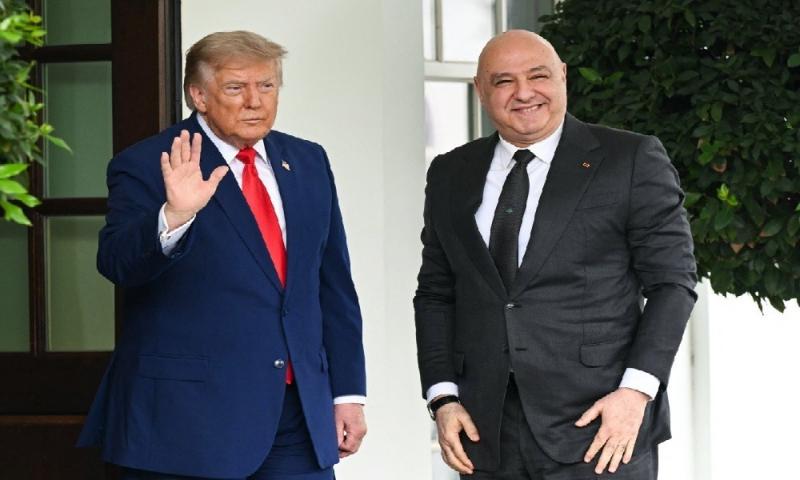
Lebanon has initiated serious talks with the U.S. to sign security and military agreements, potentially culminating in a mutual defense pact. This idea emerged among Lebanese officials and influential figures in the U.S., aiming for direct U.S. protection against any Israeli occupation bolstered by its military achievements.
Lebanon also seeks to counter Iranian influence, a concern heightened by President Donald Trump's discussions on potential Syrian interventions and the handling of Hezbollah by Syrian President Ahmad Al-Shara. The concept involves forming U.S.-trained units in the Lebanese army to disarm Hezbollah, aligning Lebanon under the American sphere, seen as the only viable protector against Israel, Iran, and Syria, while ensuring Lebanon's neutrality.
Such an agreement would involve formal security and military pacts, allowing the U.S. to return to Lebanon by formal request through mutual agreements. An added dimension could be a peace agreement with Israel, possibly incorporating Israel as a partner in these agreements. This approach helps Lebanese supporters of the idea avoid aligning with regional power blocks, deferring major economic and energy decisions, such as Mediterranean oil and gas projects or trade routes, to U.S. discretion.
During the President's visit to the U.S., topics also included financial, military, and logistic support for the Lebanese army, with phased training conducted by the U.S. military in Jordan, Turkey, and beyond. There is also a plan for an international conference to bolster the army, linked to the disarmament issue, focusing initially south of the Litani River before extending further north. President Joseph Aoun's proposals resemble disarmament models like those in Ireland or Colombia, which focus on a lengthy disarmament process tied to Israeli withdrawal from southern Lebanon, reconstruction aid for returnees, and required economic support. U.S. investment in Lebanon, especially in oil, gas, and transit sectors, remains a parallel focus.
Lebanon Seeks U.S. Assurance for Israeli Withdrawal
Share