


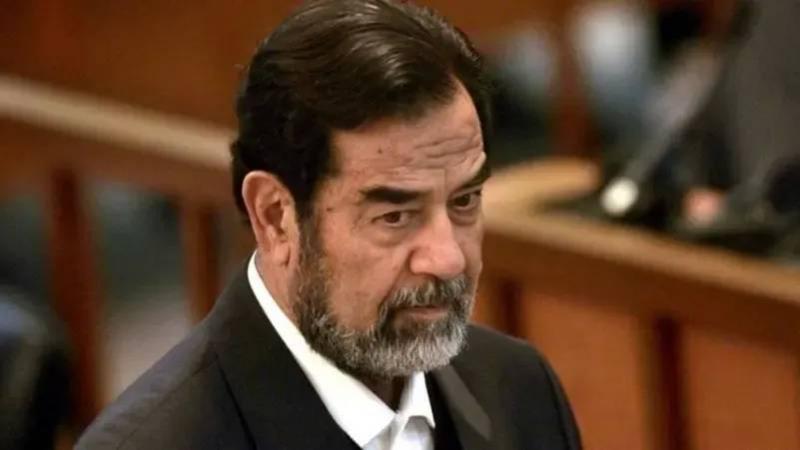
John Nixon, former officer and interrogator with the CIA, has unveiled unprecedented details about his experience interrogating the late Iraqi President Saddam Hussein in an exclusive interview with Al Arabiya’s program 'No Reservations.'
Nixon was the principal intelligence adviser in tracking Saddam following the fall of his regime in 2003. His team played a key role in gathering the intelligence that led U.S. special forces to Saddam's hidden location and subsequent capture.
Nixon spent nearly a month face-to-face with Saddam at the Crooper detention facility near Baghdad International Airport, conducting a series of interrogations that led to conclusions he described as surprising to both the political and military leaderships in the United States.
Intelligence Misjudgments
Nixon stated that the CIA misunderstood Saddam Hussein’s personality, overestimating his control over Iraq’s administration. By the latter years of his regime, Saddam was less involved in daily affairs, relying heavily on his aides.
He affirmed that Saddam did not possess weapons of mass destruction when the U.S. invaded Iraq in 2003. Nixon believes the war decision was based on flawed intelligence estimates and a political desire to overthrow Iraq's regime rather than concrete evidence.
Adding to the controversy, Nixon said the administration of former President George W. Bush relied on inaccurate information about Iraq’s weapons and alleged links between Saddam's regime and Al-Qaeda. The White House, according to Nixon, selectively used information that supported the case for war, ignoring intelligence assessments that contradicted their narrative.
Details of Evasion
On a personal level, Nixon explained that Saddam managed to escape after Baghdad's fall thanks to 'simplicity instead of complexity.' He left the capital in a civilian car with a small number of escorts, having changed his entire personal security team, contrary to U.S. intelligence expectations of a complex escape plan.
He noted that Saddam was extremely secretive and distrustful, concealing his intentions even from his closest aides. Nixon attributed Saddam’s prolonged rule and the difficulty of penetrating his inner circle to these traits.
The late Iraqi president was skilled at thwarting coup attempts before they happened, moving against anyone suspected of disloyalty and relying on effective security forces to monitor adversaries and dissenters within state institutions.