


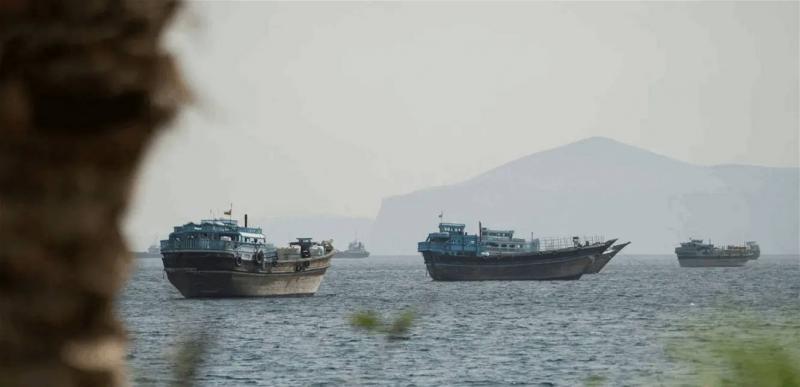
The United States, Iran, and Oman are on the brink of reaching a temporary agreement to reopen the Strait of Hormuz, potentially reinstating a ceasefire between Washington and Tehran and paving the way for further negotiations concerning Iran's nuclear program.
According to Axios, the US aims to announce the deal today, Wednesday, following weeks of negotiations involving several regional parties.
The deal's significance lies not only in restoring movement through one of the world's most crucial maritime passages but also in attempting to prevent a return to extensive military escalation. US President Donald Trump decided on Saturday not to proceed with his threat of a large-scale bombing campaign against Iran, allowing more time for diplomacy.
However, the report notes that failure to reach a near-term agreement could lead Trump to approve major strikes.
The proposed arrangement is a 60-day temporary setup between Oman and Iran in the Strait of Hormuz, with a possibility of extension.
Under this arrangement, ships entering the Gulf would travel via a northern route in Iranian waters, while ships exiting towards the Arabian Sea would take a southern route in Omani waters, coordinated with Iran.
The arrangement doesn’t impose any fees or transit charges during the 60 days.
The proposal also includes working within 30 days to remove marine mines from the central passage of the strait. Once cleared, this passage would later be used for entry and exit traffic under a permanent arrangement being negotiated between Oman and Iran.
The emerging agreement grants Iran some of its demands for a larger role in managing navigation through the Strait of Hormuz, a role it lacked before the war.
However, past experiences make the parties cautious. Three weeks ago, the White House, Oman, and regional mediators believed they had reached an understanding with Iran, only for Iran to resume attacks on ships, leading to two weeks of fighting and bringing the region close to full-scale war.
Behind the scenes, mediation wasn't limited to Oman. Regional sources indicate officials from Qatar, Pakistan, and Saudi Arabia also participated in bridging gaps.
The White House was directly involved in the talks. In recent days, there have been multiple communications between Trump's envoy, Steve Whitkov, Iranian Foreign Minister Abbas Araghchi, and Omani Foreign Minister Badr Albusaidi.
Two regional sources stated that Araghchi agreed in principle to the arrangement over the weekend but still required approval from Iran's top leadership and the Supreme National Security Council.
An American official and a regional source confirmed that Iranian leadership completed the approval process on Tuesday.
If announced, the agreement might provide a temporary resolution to the Strait of Hormuz crisis, yet it won't conclude the issue. It remains a short-term arrangement, dependent on the parties' adherence and mediators' ability to transform it into a lasting understanding.
Hormuz is no longer just an oil route; it's become a bargaining chip at the heart of the conflict and a direct test between diplomacy and potential military actions.