


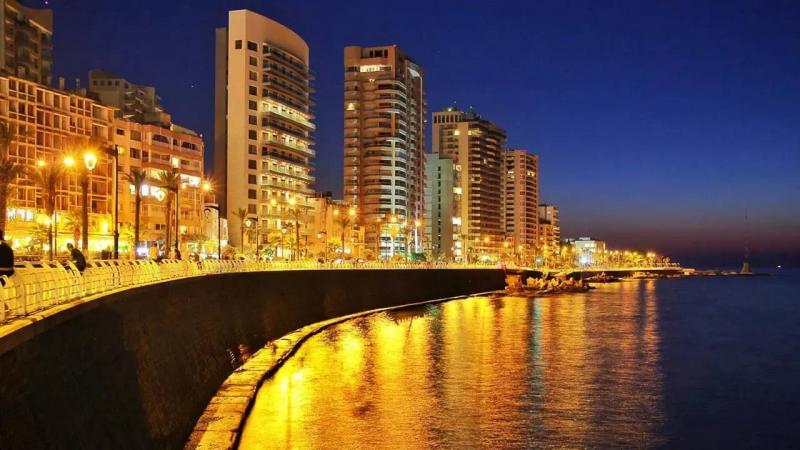
Beirut has a history spanning thousands of years, with civilizations and empires leaving indelible marks on its culture, architecture, and identity. Despite wars, earthquakes, and disasters, the city has repeatedly rebuilt itself and regained vitality.
In addition, the Lebanese capital boasts a unique geographical location, combining the sea and mountains, making it a significant trade and cultural hub in the Eastern Mediterranean throughout history. Here are some key facts that reveal different facets of Beirut’s history and character.
10 Fascinating Facts About Beirut
1. A City of Destruction and Rebirth
Beirut is historically tied to resilience, earning nicknames like “the city that never dies” and “the phoenix.” It has endured earthquakes, wars, and other destructive events, such as the devastating earthquake in 551 AD.
The city has revived and rebuilt multiple times, reinforcing its image as one capable of overcoming crises.
2. Home to a Renowned Roman Law School
During the Roman era, Beirut housed a famed law school, becoming a central hub for legal studies in the ancient world. It flourished, producing prominent legal scholars and shaping the traditions of Roman law.
The law school underscores Beirut’s role as a center for commerce, education, and cultural exchange in the Eastern Mediterranean.
3. Name Linked to Water Sources
The name Beirut stems from an ancient Semitic root referring to wells or water sources, tying to its ancient name found in historical records. The city’s naming reflects the importance of water sources in ancient settlements, revealing part of its historical essence.
4. Among the Oldest Continuously Inhabited Cities
Human settlement in Beirut dates back thousands of years, with archaeological excavations uncovering successive human activities from ancient times. The city’s archaeological sites reveal historical layers, underlining its sustained importance across eras.
Strategically located on the Mediterranean coast, Beirut became a convergence point for trade and cultures, maintaining its significance over centuries.
5. Early Arab City to Welcome Starbucks
Beirut was among the first Arab cities to host Starbucks, illustrating early adoption of global brands in the region. This expansion contributed to Beirut’s image as cosmopolitan and open to global trends, especially in vibrant areas like Hamra.
6. The Rock of Raouché: Natural Wonder
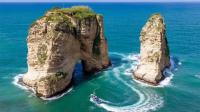
The Raouché Rock, a famed natural icon of Beirut, stands prominently off the city’s coast. Comprising massive rock formations sculpted by nature over time, it’s a popular spot for sunset views and scenic photos.
7. Known as the “Paris of the East”
Before the Lebanese Civil War, especially in the 1950s and '60s, Beirut emerged as a major financial, cultural, and tourism center. It earned the nickname “Paris of the East” due to its European ambiance and cultural diversity influenced by French architecture and education.
8. Crucial Role in Arabic Printing and Journalism
In the 19th and 20th centuries, Beirut became a key center for the Arab Renaissance with flourishing newspapers, publishing houses, and print shops, promoting books, magazines, and new ideas. It played a central role in Arabic writing and translation, reflecting its ongoing cultural significance.
9. Sea and Mountains in a Short Trip
Beirut’s unique geography places the sea and mountains in close proximity, offering rare coastal and mountain experiences. Visitors can enjoy Mediterranean beaches in summer and head to the snow-capped Lebanese mountains for winter activities.
This feature is a major attraction in Lebanon, allowing travelers to easily transition from coastal to mountainous environments.
10. A Crossroads of Civilizations
Situated on the eastern Mediterranean coast, Beirut has always been at the heart of trade and politics, experiencing various civilizations and political powers. From Phoenicians, Greeks, Romans, and Byzantines to Islamic, Crusader, Mamluke, Ottoman, and French Mandate eras, each left a mark on the city’s architecture, language, culture, and ethos.
Why Beirut Boasts Such Historical Diversity
Beirut’s historical diversity stems from its geographical position on the Mediterranean coast, close to crucial trade and maritime routes linking East and West.
This made Beirut a continuous draw for traders, scholars, migrants, armies, and empires, adding layers to its rich historical tapestry, akin to an open book of history.
Beirut: Past and Present
Despite significant changes, Beirut’s history is evident in its neighborhoods, buildings, museums, and archaeological sites.
Beyond Raouché Rock and the waterfront, visitors explore Downtown Beirut, historical areas, Hamra, Gemmayzeh, and Achrafieh, where old architecture blends with modern structures and cultural spaces.
The city’s resilience in rebuilding after crises is central to its image and identity, contributing to its perception as a city that never dies.
In Conclusion, Beirut reveals a different aspect of the Lebanese capital, transcending commercial or touristic definitions. Its long history witnesses the succession of civilizations while its location between sea and mountains adds unique geographic character.
From its Roman law school, printing and journalism to the “Paris of the East” moniker and Raouché Rock, Beirut holds a rare blend of history, culture, and nature, persistently reinventing itself despite changing circumstances.
Also See
8 Things Tripoli is Known For