


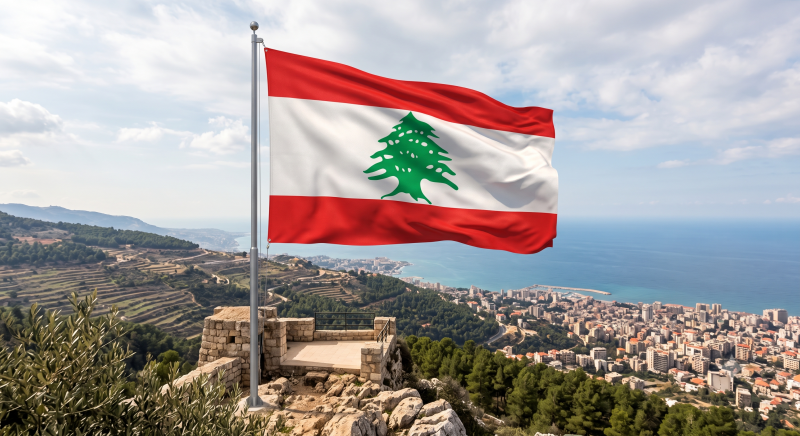
The Lebanese flag is a prominent symbol of the nation, featuring red, white, and green colors with a distinctive green cedar tree in the center, deeply associated with Lebanon.
The current design was officially adopted after independence, becoming a symbol of national sovereignty and Lebanese identity.
Despite its simple design, the Lebanese flag is steeped in a long history of symbols and colors that have appeared throughout the country's history, with the cedar tree being the most notable and unique element.
Key Facts about the Lebanese Flag:
1. The Cedar is the Flag's Iconic Symbol
The flag features a green cedar tree at its center, a symbol linked to Lebanon since ancient times, and mentioned in many historical and religious sources.
In Lebanese culture, the cedar tree represents resilience and eternity, becoming an essential part of the national identity.
2. The Flag Comprises Three Colors
The Lebanese flag consists of three main colors: red, white, and green, with the green cedar in the middle of the white area. The white stripe is sandwiched between two equal-sized red stripes.
3. White Occupies the Central Space
The white part forms the central portion of the flag, broader than each individual red stripe. Lebanese official sources state that white symbolizes the snow covering Lebanon's mountains, while the cedar represents the national emblem.
4. Red and White Hold Symbolic Significance
The red color on the flag is associated with the sacrifices of the Lebanese and independence martyrs, while white symbolizes peace and the snow on Lebanon's mountains.
While popular interpretations of the colors vary, it is preferred to rely on official sources for their significance.
5. Current Design Adopted Post-Independence
Lebanon adopted the current flag design in 1943, coinciding with the independence from the French mandate. This period marks a significant turning point in the flag's history, with the current design symbolizing the independent Lebanese state.
6. Cedar Has a Historical Place in Lebanon
The cedar did not appear on the flag by chance; it has been associated with Lebanon since ancient times and used as a national symbol in different periods.
Lebanon's Cedars are connected to its mountains, natural wealth, and national identity and continue to appear in many Lebanese emblems and institutions.
7. Specific Rules for Flag Design
Lebanese law stipulates specific requirements for the flag's design, including the arrangement of colors and the placement and size of the cedar.
The cedar appears at the center of the white section, should be green, and its dimensions should match the official flag design.
What Does the Cedar Symbolize in the Lebanese Flag?
The cedar is the most symbolic element of the Lebanese flag, linked to the mountainous regions of Lebanon and symbolizing endurance and resilience. It has been mentioned in historical and religious texts, with Lebanese cedar forests gaining fame since ancient times.
Thus, the cedar is more than a botanical element on the flag, transforming into a national symbol featured in official institutions, documents, emblems, and numerous national events.
Ultimately, these 7 facts reveal that the Lebanese flag's simple design carries a collection of symbols tied to the country's history and identity.
The green cedar remains its most prominent symbol, while the design blends red, white, and green as officially adopted during the independence era.
Also see:
Guide to Saifi Village in Beirut
Story of St. Nicholas Stairs in Beirut