


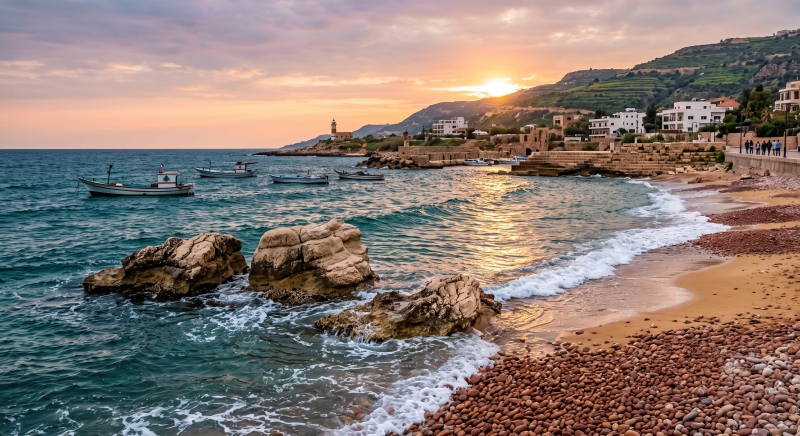
The Mediterranean Sea is a crucial component of Lebanon's geography and identity, stretching along the western border of the country. This coastline boasts cities and towns with a rich history in trade, navigation, and fishing. The coastal landscape varies from ancient ports to beaches and rocky areas.
The significance of the sea in Lebanon surpasses tourism. It is intertwined with the nation's history, economy, and ecological diversity. The coastline hosts natural and historical sites that reflect the longstanding bond between the people and the sea.
Key Facts about the Sea in Lebanon:
1. The Lebanese Coastline along the Mediterranean Sea
Lebanon's western coastline spans approximately 220 kilometers, entirely facing the Mediterranean Sea. The coastal geography is diverse, with sandy areas adjacent to rocky shores, ports, and water frontages, stretching from north to south with numerous coastal towns.
2. Historical Coastal Cities in Lebanon
Several Lebanese cities, like Tyre, Sidon, Byblos, Batroun, and Tripoli, have long-standing connections to the sea. Their significance dates back to Phoenician times when maritime navigation and trade were vital activities, evident in the enduring ancient ports and archaeological sites.
3. Islands and Marine Reserves off the Lebanese Coast
The Lebanese coast encompasses several islands and environmentally significant marine areas, notably the Palm Islands Nature Reserve near Tripoli. This reserve, comprising three islands, provides crucial habitats for birds and marine life and serves as a stopover for migratory birds. It's Lebanon's first marine nature reserve.
4. Varied Lebanese Beaches by Region
Lebanon's beaches are not uniform; they range from sandy to rocky terrains, alongside bays and ports within cities. This geographical diversity is evident from the northern region to the central and southern coasts, offering diverse options for swimming, marine activities, and relaxation during the summer months.
5. The Sea's Tourism and Economic Role
The sea plays an integral role in Lebanese tourism, especially in summer, attracting visitors to coastal destinations for beaches, dining, and marine activities. The sea also supports sectors like fishing, trade, and maritime transport, embedding it within the economic landscape as more than just a leisure destination.
What Makes the Lebanese Coast Unique?
The Lebanese coast is notably diverse within a relatively small geographic area, allowing visitors to transition between historical cities, ports, beaches, and rocky areas quickly. The juxtaposition of mountains and the sea enhances scenic views, merging water and heights into a singular panorama.
Historic cities like Byblos, Sidon, and Tyre add a historical dimension to the maritime experience, with their roots deeply entrenched in navigation and trade from ancient times.
In conclusion, these 5 Facts about the Sea in Lebanon reveal that the Lebanese coast offers more than just a summer retreat. It embodies history, nature, tourism, and economic activities.
From ancient Phoenician cities to islands and marine reserves, the sea remains integral to Lebanon's identity and geography.
See Also:
10 Historic Castles in Lebanon