


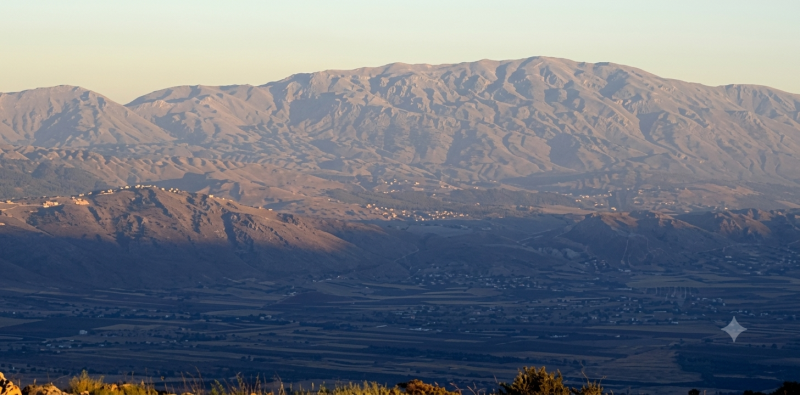
The geography of Lebanon is distinguished by prominent mountainous terrain extending from north to south. It is primarily divided between the western Lebanese mountain range and the eastern Lebanese mountain range. These areas comprise a collection of high peaks, forming an integral part of the country's natural landscape and tourist appeal.
At the top of the list is Qurnat as Sawda, which nearly reaches 3100 meters above sea level. The other peaks are distributed between the western and eastern ranges. Below are the top five peaks in terms of height.
Top 5 Highest Mountains in Lebanon
1. Qurnat as Sawda – 3,088 meters
Qurnat as Sawda is the highest peak in Lebanon, located in the Mount Makmel area of the western Lebanese mountain range in the north. It stands about 3,088 meters above sea level, known for its rugged terrain and substantial height. Large parts are snow-covered in winter, while turning into a destination for hikers and nature lovers in summer.
This peak holds specific geographical and touristic significance, not just because of its elevation but also its location within one of Lebanon's most elevated mountainous areas. In recent years, it has been part of geographical and political discussions regarding the precise height of Lebanese peaks, with the widely cited height being approximately 3,088 meters.
2. Mount Hermon – 2,814 meters
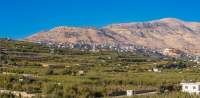
Coming in second is Mount Hermon, also known as Jabal al-Sheikh. Its highest peak reaches approximately 2,814 meters. Located in the eastern Lebanese mountain range, its territory spans the Lebanese-Syrian border towards the Golan Heights.
Standing out with its high elevation and snowy cover in winter, it is one of the most significant natural landmarks in the region. Moreover, Mount Hermon has significant geographical importance due to its strategic location and views over vast areas of the Levant. It is also linked to several crucial water sources in the area.
3. Tallet Moussa – 2,729 meters
Tallet Moussa peaks at around 2,729 meters, residing in the northern part of the eastern Lebanese mountain range. Known for its high mountainous nature and cold winter weather, with snow covering the high peaks.
Its topography is part of the geographical landscape characteristic of the eastern range along the Lebanese-Syrian border. Furthermore, the high peaks are significant for adventure enthusiasts and mountain trips, particularly when conditions are favorable.
4. Mount Sannine – 2,628 meters
Mount Sannine is among Lebanon's most renowned mountains, prominently featured in the country's natural scene. It rises to about 2,628 meters above sea level, situated in the western Lebanese mountain range with a relatively close location to Beirut, offering wide views over different parts of Lebanon, including coastal and Bekaa Valley areas.
It's a known destination for nature and mountain activity enthusiasts, with snow-covered peaks in winter giving it a distinct look compared to other seasons. Besides, Mount Sannine is significant not just for its height but as one of Lebanon's most famous geographical landmarks, visible from vast areas in Mount Lebanon.
5. Mount al-Mistira – about 2,520 meters
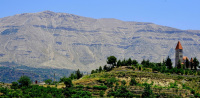
Mount al-Mistira is among the high Lebanese peaks, reaching approximately 2,520 meters above sea level. Located in the western Lebanese mountain range, it features elevated mountainous terrain and a natural environment influenced by winter snow.
The surrounding area forms part of the mountainous nature distinct to Lebanon's interior regions, where rocky peaks intertwine with forests, valleys, and slopes.
The Mountain Ranges with Lebanon's Highest Peaks
Lebanon's mountainous geography is primarily divided into two main mountain ranges. The first is the western Lebanese mountain range running along the Lebanese coast, hosting many high peaks. Meanwhile, the eastern range runs along the Syrian border.
The western range includes notable peaks like Qurnat as Sawda, Mount Sannine, and al-Mistira, while the eastern range contains Mount Hermon, Tallet Moussa, and various other peaks. This geographical diversity endows Lebanon with an extraordinary nature despite its small size, enabling transitions over relatively short distances from coastal areas to mountain heights exceeding 2,000 meters.
Best Time to Visit Lebanon's Mountains
The best time to visit Lebanese mountains varies according to the intended activity. In summer, conditions are favorable for long hikes, exploring mountain trails, and enjoying natural sceneries. In contrast, high peaks become snow-covered areas in winter.
However, the high elevation means weather conditions can rapidly change, especially at peaks exceeding 2,500 meters. Therefore, monitoring weather conditions and ensuring access to the area is essential before any trip planning.
Additionally, trips to high peaks require appropriate preparation, including footwear, protective clothing, water, and navigation tools, with local guide assistance on challenging or unfamiliar routes.
Why Lebanon's Mountains Stand Out Touristically
The significance of Lebanon's mountains doesn't rely solely on height. These areas combine nature, snow, forests, valleys, and panoramic views, making numerous peaks and mountain villages favored destinations for ecological tourism, trips, and hiking.
Moreover, the proximity of some mountainous regions to major cities and towns makes them more accessible compared to many mountain destinations in the area. In winter, some high areas become spots for snow activities, while they witness hiking, camping, and nature exploration in summer.
Comparing Lebanon's Highest Peaks
When comparing the five peaks, Qurnat as Sawda stands out distinctly from the rest, surpassing 3,000 meters. It's followed by Mount Hermon, which is about 274 meters lower, then Tallet Moussa, Sannine, and al-Mistira.
This difference reflects Lebanon's topographical nature, featuring very high peaks alongside less elevated mountainous areas with significant natural and touristic sites. Additionally, a mountain's height doesn't necessarily mean it's the most visited tourist destination, as accessibility, natural scenery, tourist infrastructure, and available activities play key roles in attracting visitors.
In conclusion, the list of Lebanon's top 5 highest mountains reveals a remarkable geographical diversity in a country characterized by its small size and significant mountain elevations. The variation in heights and locations between the western and eastern ranges is a primary element of Lebanon's natural diversity, making high peaks vital for mountain and ecological tourism year-round.
See also
10 Famous Lebanese Desserts