


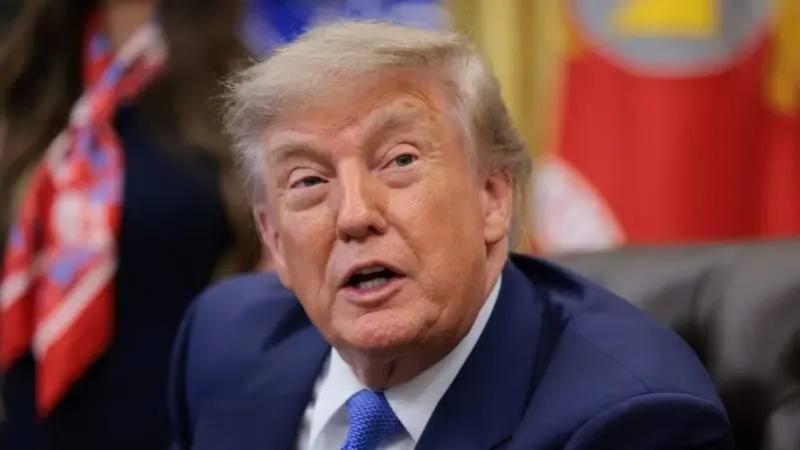
U.S. President Donald Trump announced that the United States controls the Strait of Hormuz and has cleared it of Iranian mines.
Speaking to reporters in the Oval Office, he declared, "The United States Navy is the only force currently controlling the Strait of Hormuz... We've removed the mines from the entire strait."
He further stated that the U.S. would seek compensation for damages caused by Iran.
Compensation Demands
Earlier on Monday, President Trump demanded that Iran pay compensation for the deaths of people he claimed were caused by Tehran during wars, attacks, and protests, escalating the war of words with Iran amid dwindling hopes for an agreement to reopen the Strait of Hormuz.
Trump was responding to Iran's earlier demand for the U.S. to meet conditions, including compensating Tehran for damages over the past five months of the U.S.-Israel conflict with Iran.
On Truth Social, he wrote, "I, in turn, demand compensation from Iran for all the people they have killed or severely injured through their roadside bombs and in numerous conflicts."
Trump also noted that he would include demands for compensation in any future negotiations with Iran, involving families of hundreds of thousands of protesters he alleges Iran has killed.
He mentioned the necessity for Iran to compensate families of those killed on the USS Cole destroyer. He referred to the October 12, 2000 attack on the warship in Yemen, which left 17 American sailors dead, attributed to al-Qaeda, not Iran.
This compensation demand had not surfaced in previous discussions.
Meanwhile, Iran indicated nearing a final agreement with Oman to define new shipping routes through the Strait of Hormuz but reiterated that the U.S. must meet other conditions, including lifting sanctions and military threats, before reopening the strategic passage.
Iran has effectively sealed the strait since the onset of the U.S.-Israel conflict on February 28, leading to surges in oil prices and inflation. Prior to the conflict, about 20% of the world's oil and LNG supplies passed through the strait.
Oil prices surged following remarks from Iranian Foreign Ministry spokesman Ismail Baghaei, as initial optimism over a potential agreement on the strait waned due to Iran's firm stance on conditions.