


When considering tourism in Lebanon, the focus usually turns to well-known spots featured in most travel guides. However, behind these famous locations lie lesser-known places that are often off the tourist radar. Some of these are distinguished by rare natural beauty, while others are linked to unique historical or architectural stories.
The fascinating aspect of these places is how they reflect Lebanon's own diversity. On a single journey, one might transition from a hidden sea cave to an abandoned mountain village, from a pyramid-like home to a deserted train station, eventually leading to a fog-covered forest or a village turned open-air art exhibit.
8 Hidden Gems in Lebanon Even Locals Don't Know About
1. The Blue Grotto in Batroun: A Secret Hidden Among Rocks and Waters
On Lebanon's northern coast, Batroun conceals a series of marine rock formations, some of which can be explored from the sea, offering a completely different experience from traditional cave visits. In certain conditions, these caves appear as natural passages leading to a world separate from the shore.
The site becomes even more enticing when the sea is calm and clear, as sunlight reflects on the turquoise waters within the rocky cavities. This makes the sea caves a hotspot for kayaking, small boat enthusiasts, and nature photographers.
Furthermore, accessing the sea caves by water adds an element of adventure, starting exploration from the sea and ending inside a rock cavity that may not be visible from the land.
2. Abandoned Village of Bjarin, Jbeil: Where Time Stands Still
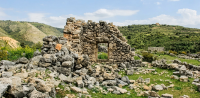
In the mountainous areas of Jbeil, there are less famous ancient villages and sites. Among them is Bjarin, locally known as the abandoned village that maintains old stone buildings and an atmosphere of profound tranquility.
The charm of these places is in their details rather than prominent landmarks. The old stone walls, wooden doors, and spaces reclaimed by nature lend the area a film set-like quality appropriate for historical or mystery stories.
On the other hand, these abandoned villages should not be viewed solely as photography spots, as their buildings bear remnants of rural lifestyles once prevalent in the Lebanese mountains. Each old house could testify to families and communities that once thrived here before changing social and economic conditions led to internal and external migration.
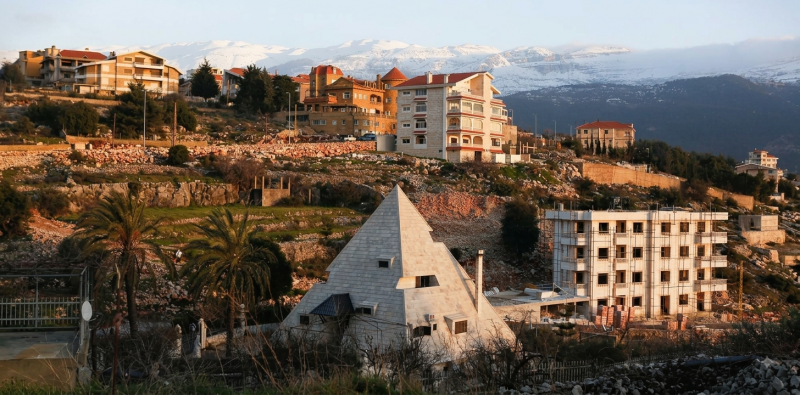
3. The Pyramid House in Miziara: An Architectural Anomaly
In the northern town of Miziara, one finds unusual architectural models that stand out due to their stark difference from traditional Lebanese house styles. Most notably, there is a house designed in the shape of a pyramid, standing out as an architectural element seemingly transported from a distant civilization to northern Lebanon.
The building's unconventional geometric shape makes it interesting, with lines and angles that deviate from the usual Lebanese house designs. The surrounding nature provides an even more surreal backdrop.
Additionally, having such a building in a mountainous area offers a scene that is completely different from the traditional image of Lebanese villages generally characterized by stone, tile, and slanting roofs. Consequently, the place may intrigue photographers and those interested in non-traditional architecture.
4. Tripoli's Abandoned Train Tunnel and Station: When Railways Become a Memory
Lebanese railways hold a long story of ambition and infrastructure that once connected regions within Lebanon and with neighboring countries. However, much of this legacy is now out of service. In Tripoli and its surroundings, visitors can find facilities related to railway history, offering a glimpse into a different phase of transportation history.
These old railway sites feature metal structures and facilities that have succumbed to the elements, with plants beginning to take over surrounding areas. Over the years, the scene has become akin to an open time capsule, especially for photographers seeking industrial and historical abandoned sites.
5. The Underground Crypt in Beirut: An Ancient City Underneath the Modern
Under the bustling daily life in the heart of Beirut lies layers of history beneath modern streets. A prime example is the crypt beneath the Orthodox St. George Cathedral in central Beirut.
The site illustrates how a modern city can conceal the ruins of ancient cities and civilizations under its buildings. It includes archaeological remnants, architectural elements, tombs, and artifacts linked to Beirut's long history, resembling a journey through different time layers.
Many people may pass by the location daily without realizing what's beneath the city. Modern Beirut is just one layer of a lengthy history subject to various civilizations and communities.
Moreover, an archaeological site beneath an active religious building makes the experience more intriguing, showing how historical layers intertwine in one city. This makes the site a must-visit for anyone seeking to discover Beirut's lesser-known past.
6. The Art Village of Rashana in Batroun: When Streets Turn into Open Galleries
In Batroun, Rashana offers a unique experience unlike conventional tourist villages. The village's name is associated with the Basbous family and the art movement that turned Rashana into an open space for sculpture and art.
Sculptures are dispersed in various parts of the village, turning strolling through the streets and buildings into an artistic experience. The works are integrated within the natural and urban landscapes, rather than being isolated in traditional museums.
This particularity is Rashana's charm, as visitors do not need to enter a closed hall to see the artworks. They can discover them while wandering among the trees, buildings, and open spaces. Furthermore, this blend of art and village gave Rashana a unique cultural identity, making it an intriguing destination for sculpture, photography, architecture, and modern art enthusiasts.
7. The Black Palace in Kosba: A Curious Structure from the First Glance
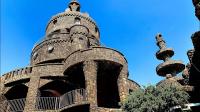
In the Koura region, the town of Kosba boasts a rich architectural history, with several buildings and palaces characterized by diverse designs. Among these is the famously known 'Black Palace,' noted for its dark appearance and striking architectural style.
The dark facades, windows, and towers lend the place a dramatic look, especially when surrounded by trees or when fog envelops parts of the area. It's not surprising that some visitors compare its shape to that of castles in horror films or Gothic tales.
However, the palace's allure doesn't end with its exterior. Over the years, some abandoned buildings in Lebanon have been associated with folklore and local legends, adding a mysterious aspect to the experience.
It is advisable, however, to distinguish between local tales and documented historical facts, as many stories tied to abandoned homes are orally transmitted with details varying from person to person.
8. Al-Azhar Forest in Akkar: A Northern Forest from a Fantasy World
In the heights of Akkar, forested areas grant the region a personality distinct from coastal cities. The forests of Akkar are characterized by oak and juniper trees and dense vegetation, with mountains and fog on certain days creating extremely unique atmospheres.
The experience becomes more captivating in autumn when tree colors change, displaying shades of yellow, orange, and red amidst green expanses. On foggy highland days, paths can appear as if they're part of a fantasy film.
Furthermore, Akkar's forests hold considerable ecological value, known for their broad botanical and natural diversity. Therefore, visiting them should not solely be about photography, but should also include practices that conserve the vegetation and prevent littering or lighting fires outside designated areas.
Why These Places Are Worth Discovering
What stands out in this list is that it doesn't offer just one type of experience. The Blue Grotto offers sea and adventure lovers a unique experience, while abandoned villages provide a taste of history and mystery. The Pyramid House presents an unconventional architectural model, while the train station reveals a part of modern Lebanon's memory.
In contrast, Beirut's crypt opens a window to the buried history beneath the city, Rashana exemplifies the relationship between art and place, and the Black Palace and Akkar forests offer a more enigmatic and natural side.
This diversity is what makes exploring Lebanon off the usual tourist paths an experience worth attention. Almost every area may hide behind its buildings, mountains, or coasts a different story.
Tips for Visiting Lesser-Known Places in Lebanon
Before heading to any abandoned or natural site off the traditional tourist trails, it's crucial to ensure accessibility and its legal status, especially if the site is private property or a historic building not open for visitors.
Additionally, avoid entering dilapidated buildings or tunnels and abandoned structures without understanding the place, as some old structures may be unsafe. At sea locations, monitor the sea conditions and use appropriate safety gear.
In forests and natural areas, it's best to adhere to known paths, avoid leaving trash or damaging plants. This turns the visit from a mere personal adventure into a responsible experience that preserves the place for those who will discover it after you.
In conclusion, these places reveal a completely different side of Lebanon, away from the tourist sites typically featured in pictures and publications. Despite its small geographical size, Lebanon is rich with places that can even surprise those who have lived there for many years.
See also