


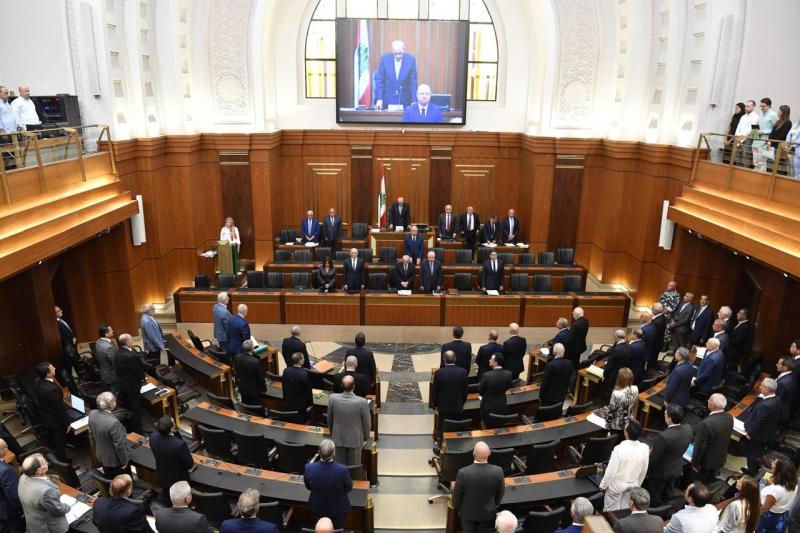
The scheduled legislative session commenced at 11 AM in the parliament, with lawmakers arriving early in the morning. Prime Minister Nawaf Salam also reached the venue amid widespread protests around the parliament building.
Heated Exchanges
As the session began, there were reports of a heated exchange and shouting between Prime Minister Nawaf Salam and Defense Minister Michel Mansi regarding the general amnesty issue. According to sources, some lawmakers believe the protests coinciding with the session are suspicious, particularly since the decision to defer public sector salaries lies with the government, not the parliament. What are the goals behind these simultaneous protests with such a sensitive session?
Positions Before the Session
MP Nabil Badr mentioned that the proposal to abolish the death penalty would pass smoothly, although the general amnesty file is still under discussion. He stated he had communicated with the "Lebanese Forces" and submitted a proposal that he believes has gained acceptance.
Badr indicated that the agreement focuses on separating proposed laws and proceeding to approve them, coordinating with Sunni deputies, the "Democratic Gathering," and concerned blocs.
MP Razi Hajj remarked, "We are committed to the agreement made between the deputies. Our stance is to separate the laws and proceed towards approval, working alongside the Sunni deputies and 'Democratic Gathering' towards this agreement."
Information Minister Paul Marcos explained that the media law came from joint committees, and in response to the Deputy Speaker of Parliament's request, they gathered the concerned unions and conveyed their feedback, especially regarding representation. There was an understanding of these notes, and amendments will be considered.
Meanwhile, public sector employee associations and retired military personnel began a demonstration around Nejmeh Square, with military and security forces deployed and roads leading to the square blocked, causing heavy traffic congestion from Saifi to the "An-Nahar" building. Protesters demand the immediate payment of retroactive salaries and pensions due for six months, rejecting the government's decision to defer payments until August 2027.