


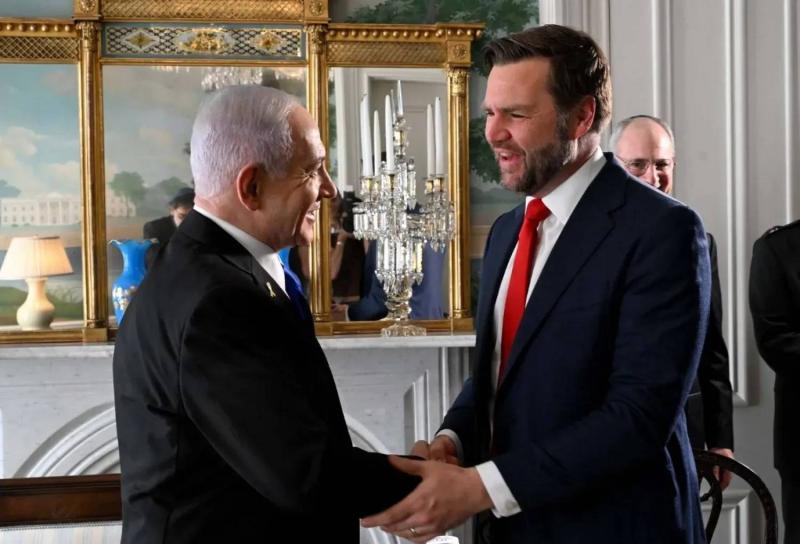
The fallout from the Qusra village incidents is extending beyond the field to strain the core of Israel-U.S. relations. Israeli warnings have been issued, suggesting that images emerging from the West Bank are eroding confidence in the White House, particularly affecting U.S. Vice President J.D. Vance. Reports cite a senior U.S. administration official sending a stern message to Israelis: "You're losing your minds."
According to a report by Radio "103FM," the anger in Washington over Qusra's events continues to engage Israeli political circles, as the U.S. closely monitors developments in the West Bank.
In a related discussion, Dr. Kobi Barda, a historian specializing in American politics, mentioned during an interview with Nasim Mishal and Anat Davidov on "103FM" that such incidents could further erode the U.S.'s trust in Israel, particularly affecting Vice President J.D. Vance's view.
Barda explained that Vance had previously expressed frustration over Israel's handling of similar events, stating, "We are discussing the same Vice President who conducted a rebuking call with Benjamin Netanyahu for Israel's incapacity to prevent these events."
The ambassador, a Christian Zionist committed to "Greater Israel," labeled the perpetrators as "Jewish terrorists" and demanded their exclusion. Barda noted, "We are losing what trust we have left with Vance and the American media."
Discussing how the visuals from the region are influencing U.S. public opinion, Barda added: "Broadcasts are continuous, 24/7, and people are sitting at home witnessing a place with no authority or control. They ask themselves: What is happening here?"
Barda also criticized how Israeli Prime Minister Benjamin Netanyahu has addressed the crisis, suggesting that his silence exacerbates the issue.
He stated: "It's a disastrous series of genuinely poor management. Years ago, Netanyahu would not have allowed such an event to occur. I'm certain he understands the implications when he receives such phone calls."
Barda concluded that the atmosphere within the White House is more intense than what public messages from the U.S. administration suggest.
Barda revealed that he received a message after the incidents from a U.S. administration official saying: "You're losing your minds."
He shared, "I conveyed that to my readers, and within a few hours, the media storm had begun. We are only at the start; we haven't seen anything yet."
Touching upon President Donald Trump, Barda suggested that Israeli relations may encounter additional friction points in the foreseeable future.
He said: "Trump will face a series of events he won't be pleased with. He has previously shared a fringe source claiming to possess documents preventing Netanyahu's election. As the saying goes, he has placed the gun before us in the first act."
Barda also addressed the departure of White House spokesperson Karoline Leavitt, considering it a loss of a pro-Israel voice within the U.S. administration.
He commented: "It's disheartening. She consistently defended Israel at every available microphone. However, as we approach the midterm elections, many positions will inevitably change. It's a renewal process that occurs periodically; this won't be the last change."
Thus, the Qusra incident's implications aren't confined to a transient field event, as warnings from within Israel itself indicate that the crisis is impacting the trust reserve with Washington. The characterization of the situation merely as the 'beginning of the storm' suggests that the American issue's reverberations have yet to reach their peak.