


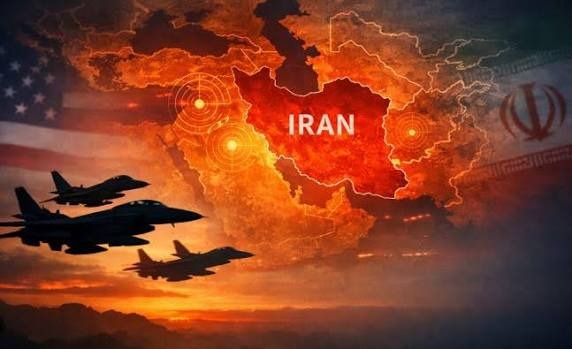
The standoff between the United States and Iran has devolved into a protracted war of attrition, as neither nation can claim a decisive victory nor see a clear path to end the conflict, according to a Bloomberg assessment.
The analysis suggests the conflict has entered a cycle of repeated military operations and temporary pauses, without either Washington or Tehran being able to secure a final advantage to end the standoff on their terms.
Currently, there are no strong indications that the war's end is near, and prospects for a lasting resolution remain slim due to ongoing fundamental disagreements between the two countries.
Even if negotiations succeed in reaching a truce or temporary understanding, as Bloomberg notes, this may not suffice to eliminate the underlying causes of the conflict, leaving open the possibility of renewed confrontation after a lull.
One likely scenario is the continuation of the war at a relatively low intensity, punctuated by more intense rounds of military strikes, followed by fragile truces that fail to address the crisis's root causes.
This scenario places the region in a prolonged conflict with no clear endpoint, as military and economic pressures persist and both sides attempt to raise the conflict's cost for the other.
The Strait of Hormuz remains a critical pressure point in this equation, with the potential for repeated blockades or disruptions to shipping routes, directly impacting global trade and energy markets.
President Donald Trump previously asserted that the United States controls the Strait of Hormuz, pledging to maintain this control, countered by Iranian claims that Tehran still holds the upper hand in the strategic waterway.
This clash of narratives highlights the stalemate, as each side strives to demonstrate control over the conflict's trajectory without having the means to impose a definitive conclusion.
Since the war's onset on February 28, 2026, both parties have suffered human and material losses, with mounting pressures on U.S. military stockpiles, especially air defense missiles heavily utilized in operations.
The persistent conflict has also affected navigation through the Strait of Hormuz, reducing ship traffic and adding pressure to energy markets, sparking concerns about global supply stability.
Domestically, the Trump administration faces criticism over the ongoing war failing to achieve all declared objectives, amid reports of pressure on some munitions stocks, potentially impacting Washington's strategic options if the conflict persists.
Conversely, Iran continues to leverage its geographic position and ability to threaten Hormuz navigation as a pressure point, hinting at the potential disruption of one of the world's key energy passages.
This equation complicates military resolution, as Washington can inflict significant damage on Iranian capabilities while Tehran retains tools to elevate the cost of war for the U.S., its allies, and the global economy.
Without a political settlement addressing the core disputes, the most perilous scenario is not one side's victory but rather the war's persistence in waves of escalation and de-escalation, keeping the region and energy markets under the threat of a new round at any time.