


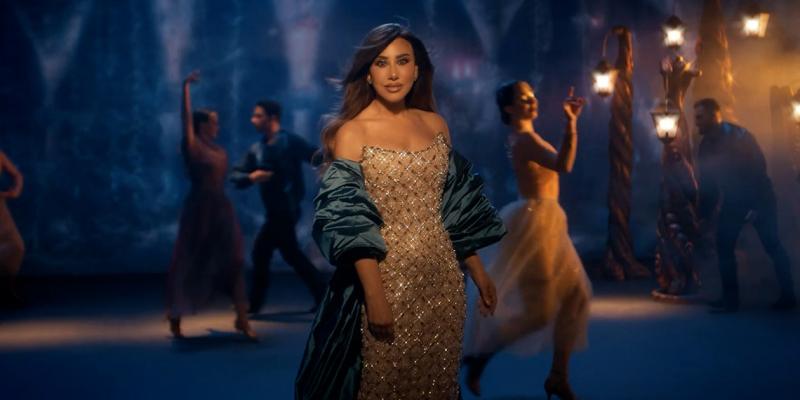
Over more than three decades, Najwa Karam has become one of the most prominent names in Lebanese music. She has successfully maintained her artistic identity amidst significant transformations in the Arab music industry.
Since her early days, her voice has been closely associated with the Lebanese mountain style, becoming an integral part of her artistic image.
Najwa Karam's journey to stardom was not short. She began in talent discovery programs during the 1980s, moved on to professional album releases, and achieved widespread success, establishing herself as a leading Lebanese artist in the Arab world.
When Was Najwa Karam Born?
Najwa Karam was born on February 26, 1966, in Zahle, Lebanon. She grew up in an environment closely linked to Lebanese culture and mountain music.
Her connection to Zahle was evident in her artistic identity, as she maintained the Lebanese dialect and several popular musical styles that characterized her songs.
How Did Najwa Karam's Musical Career Begin?
Najwa Karam took her first steps in the music world during the 1980s, with her participation in the program “Layali Lebanon” being one of the milestones of her beginning.
She won a gold medal in the rural singing category during the show, providing her with significant encouragement to pursue her artistic path.
Before fully dedicating herself to music, Najwa worked in education and studied music at the Lebanese National Conservatory of Music before deciding to focus solely on singing.
What Was Najwa Karam's First Album?
Najwa Karam released her first official album in 1989 titled “Ya Habayeb”, marking a new phase in her music career.
She continued to release music, with the album “Shams El-Ghinnyeh” in 1992, which later earned her the famous nickname.
Why is Najwa Karam Known as the Sun of Lebanese Song?
The nickname “The Sun of Lebanese Song” is attributed to Najwa Karam due to her strong presence in Lebanese music and her commitment to the Lebanese dialect and popular musical styles.
Throughout her career, she presented numerous songs based on Lebanese styles like dabke, mejana, dalouna, and ataba, blending these with modern music.
This fusion became one of the distinctive features that set her work apart from other artists of her generation.
What Are Najwa Karam's Most Notable Songs?
Throughout her career, Najwa Karam has produced a wide range of songs that achieved Arab popularity. Some of the most notable ones include:
“Maloun Abou Al Ashq”
It is one of the standout songs in Najwa Karam's modern repertoire, achieving wide acclaim and becoming closely associated with her name in recent years.
“Heida Haki”
This song reflects the Lebanese influence in Najwa Karam's work and highlights her style of performing songs in the Lebanese dialect.
“Sho Hala”
This song is among the works that maintained Najwa Karam's presence in the music scene, offering a blend of Lebanese touch and contemporary rhythm.
What Distinguishes Najwa Karam's Music Career?
Najwa Karam's career is distinguished by its continuity and her ability to maintain her artistic identity, as she never abandoned the Lebanese style despite the diversity in Arab music.
In recent years, she has kept up with changes in the music industry by producing music videos and concerts and maintaining a presence on digital platforms.
Has Najwa Karam Participated in Talent Shows?
Yes - Najwa Karam has participated in several talent discovery programs, most notably “Arabs Got Talent”, where she served as a judge for several seasons.
She also appeared on the judging panel of “The Voice: Senior”, transitioning from being an artist to evaluating new talents.
How Long Has Najwa Karam's Musical Career Lasted?
Najwa Karam's music career spans over 35 years since her first official album was released in 1989.
During this time, she released numerous albums and songs, performed concerts in Lebanon and various Arab and foreign countries, and maintained a wide fan base.
Najwa Karam in 2026
Entering 2026, Najwa Karam continues her presence in the Arab music scene, having built a long-standing career that made her one of the most prominent Lebanese artists.
Reaching her sixth decade marks a new phase for an artist who has managed to maintain her artistic presence for over three decades while continuing to be closely associated with Lebanese music.
Also see:
Lebanese Stars Living in Europe