


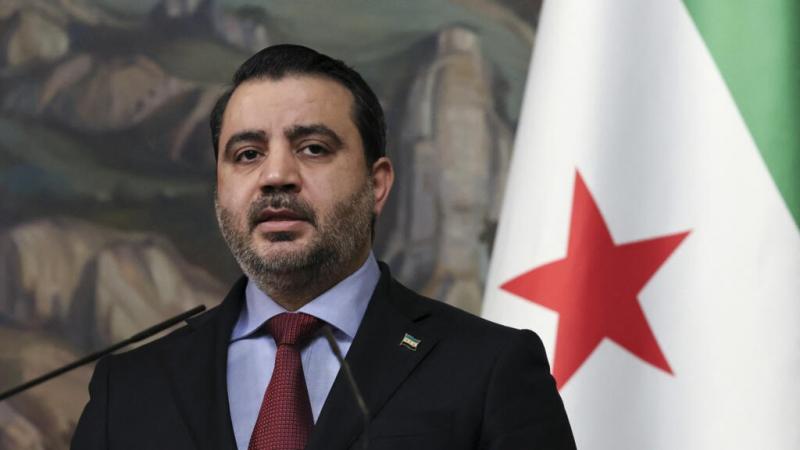
Sources have revealed that Mossad, Israel's foreign intelligence agency, head Roman Gofman had a phone conversation with Syrian Foreign Minister Asad Al-Shibani about the Turkish military presence in Syria, just days before Israeli airstrikes targeted Abu al-Duhur military airport in Idlib province.
According to three informed sources quoted by Reuters, the discussion took place on August 14, with the two sides deliberating on Turkish military activities within Syria—an issue of growing sensitivity as Israel suspects the potential deployment of Turkish forces or military capabilities in areas it considers strategically critical.
This interaction signifies a higher level of direct communication between Israel and the new Syrian authorities, particularly involving direct dialogue between the Mossad chief and Syria's foreign minister amid escalating military tensions.
The call occurred days before the Tuesday airstrikes on Abu al-Duhur airport, with Israel accusing Damascus of allowing Turkish military movements there.
Following the attack, Israel's Prime Minister’s office stated that Syria was on the brink of violating agreements by permitting Turkish forces to deploy at an airbase near Aleppo.
Israel views the positioning of Turkish troops or advanced military capacities in certain Syrian locations as potentially threatening, whereas Ankara and Damascus reject Israeli justifications for the strikes.
The exposure of the Gofman-Shibani conversation adds a new dimension to the Abu al-Duhur attack, indicating that Turkish presence discussions were directly addressed by senior officials before executing the strikes.
Conversely, U.S. envoy Tom Barrack warned that striking the Abu al-Duhur base risked sparking a military confrontation involving Israel, Turkey, and Syria, underlining the sensitivity of military overlaps among these parties.
Ankara condemned the Israeli airstrikes, calling for a stronger stance against Israeli military actions within Syrian territory, and rejecting the Turkish presence-related justifications.
Syria's Foreign Ministry also denounced the attack, asserting that ongoing Israeli strikes since December 2024, despite Damascus’s commitment to restraint and stability pursuit, are attempts to disrupt these efforts and escalate regional tensions.
Damascus blamed Israel for the escalation, urging international bodies and the UN Security Council to condemn the attacks and take a firm stance against repeated violations of Syrian sovereignty.
Syria's foreign ministry emphasized its commitment to defending national rights and interests through lawful means sanctioned by international laws and norms.
This revelation comes amid increasing complexities of Israeli and Turkish interests within Syria, with Ankara aiming to bolster military and security cooperation with the new Syrian authorities, while Israel works to block any military capabilities it sees as a threat.
The timing of the call raises questions about the messages Mossad's chief conveyed to Syria, including whether Israel directly warned Damascus against allowing Turkish military deployments in Abu al-Duhur before the airstrikes.
Between Mossad’s direct communication with Syria’s foreign ministry and the ensuing airstrikes, it’s clear that the Turkish presence issue has become one of the most sensitive topics in the emerging relations between Damascus and Tel Aviv, with concerns that any new military build-up could transcend Syrian borders, leading to a direct confrontation between Israel and Turkey.