


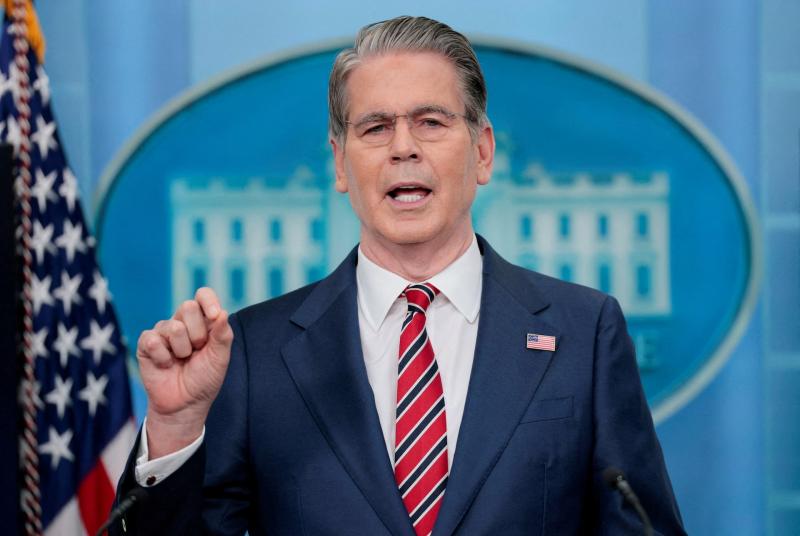
US Treasury Secretary Scott Bisent has announced a shift towards a policy of 'maximum economic pressure' on Iran, indicating a likely move away from immediate large-scale military actions. He unveiled plans for what he described as the most severe sanctions and economic isolation campaign in history.
Speaking to CNBC, Bisent revealed plans for a press conference on Monday, where he will detail measures outlined by President Donald Trump. The US is ramping up financial and trade pressure on Tehran, while maintaining a maritime blockade on Iranian ports.
Bisent stated that the US is coordinating a large-scale economic isolation of Iran, noting that oil markets may not fully grasp the nature of the upcoming economic strategy. He suggested that this economic focus could reduce the probability of rapid military escalation, reflecting a strategic shift after months of inconclusive conflict.
In a stern warning, Bisent cautioned countries and companies continuing to engage with Iran, asserting that the US will deploy its full economic powers against entities providing Tehran with trade or financial avenues.
He stated the US would impose measures on nations and entities persisting in business activities with Iran, whether through monetary transfers, oil purchases, or maritime operations.
Description of the plan as the 'most extensive coordinated economic isolation in world history' came from Bisent, confirming plans for 'the most severe sanctions in history.'
Bisent added that Washington would offer allies a stark choice: align with the US or stand against it. The US Treasury and government plan to use their 'full power and authority' to punish entities dealing with Tehran, involving oil transactions, cash transfers, or trade facilitation.
The new measures aim not only to weaken Iran's economy but also restrict Tehran's capacity to fund and support regional allies and proxies.
Bisent expressed confidence that nations, including China, have a vested interest in reopening the Strait of Hormuz to shipping, given the disruption to energy supplies and global markets.
Beijing's stance is crucial, due to its extensive economic ties with Iran and involvement in Iranian oil trade, significantly impacting Washington's ability to implement the isolation strategy.
Bisent rejected doubts about the sanctions' efficacy, noting they will operate alongside the ongoing American naval blockade of Iranian ports.
This approach combines the blockade and sanctions into a 'double blow,' signaling Washington's intent to tighten restrictions on Iranian trade from both sea and financial systems.
President Trump described the launch as 'the fiercest economic operation ever,' targeting a massive isolation of Tehran, offering Iran an agreement opportunity which they failed to seize, urging countries not to provide Iran any lifeline via financial or other means.
He reiterated calls to halt oil smuggling, barter trade, financial transfers, and the use of shell companies to circumvent sanctions, threatening significant economic repercussions for violators.
While Trump did not specify the nature of sanctions for countries continuing trades with Iran, the upcoming Bisent press conference will be pivotal in understanding the scope of these measures and their implementation.
Trump labeled the initiative as an 'economic D-Day,' appealing to US allies to rally behind Washington in isolating Iran.
The strategy coincides with the conflict entering its sixth month without military resolution or diplomatic breakthrough, with the Hormuz Strait crisis heavily impacting energy and global market dynamics.
This economic warfare pivot occurs ahead of the US midterm elections in November, amid internal pressure on Trump's administration over war costs and their impact on consumers and energy prices, alongside military burdens.
As discussions of avoiding rapid military operations blend with threats of 'the most severe sanctions in history,' Washington seems geared to shift its confrontation with Tehran from military strikes to a global financial and trade battle, with China and US allies playing crucial roles in its outcome.