


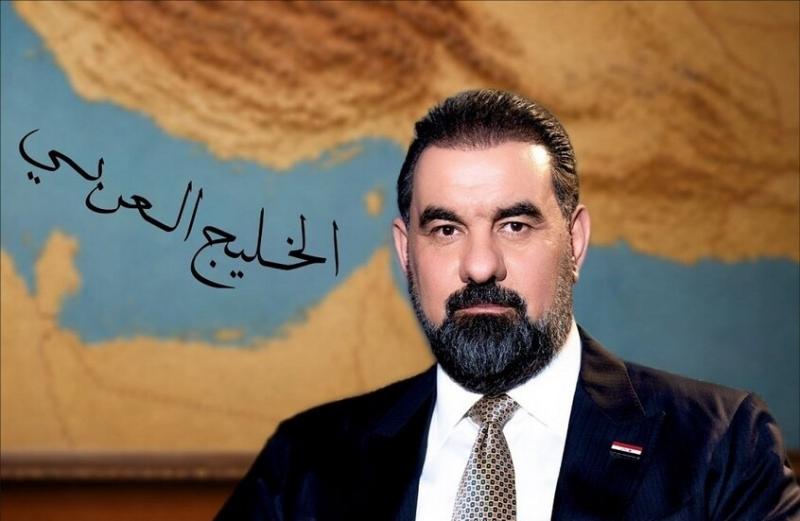
A political dispute has escalated between Baghdad and Tehran over the naming of the Gulf at a time when the region is experiencing heightened tensions concerning the Strait of Hormuz and shipping passage arrangements. Iran is seeking to impose conditions and fees on navigation through one of the world's most critical energy corridors.
The controversy ignited when Iranian Parliament Speaker Mohammad Bagher Ghalibaf shared an image featuring a map labeled as the 'Persian Gulf.' In response, Iraqi Parliament Speaker Mohamed Al-Halbousi posted a similar picture, but with a map marked 'Arabian Gulf.'
The exchange extended beyond maps and images, as Ghalibaf issued statements containing direct political messages, rejecting what he termed as dictates from Western capitals while emphasizing the historic, geographic, and ideological ties between Iran and Iraq.
Ghalibaf described Al-Halbousi's publication as a 'suspicious action,' asserting that history will show that peoples resisting external narratives will not let Western capitals determine their fate.
Alongside his criticism of Al-Halbousi's stance, Ghalibaf stressed the strong ties between the two countries, conveying greetings from Iranian leadership and the people to Iraq.
He praised Iraq's positions towards Iran, stating that attempts to create a rift between the two nations are met with further steps towards rapprochement, underlining the deep historical, geographical, and religious connections between them.
Ghalibaf linked the closeness between Tehran and Baghdad to what he described as a shared resistance to foreign capitals controlling their peoples' destinies, hinting at dimensions beyond the Gulf naming dispute to the broader political and regional balances in the area.
The timing of this exchange adds significance, coinciding with the peak of the crisis surrounding the Strait of Hormuz and attempts to regulate the movement of ships and oil tankers through it. Iran aims to impose arrangements involving paths dictated by Tehran and the requirement of permits and fees for passage.
Iraq finds itself in a delicate position due to its heavy reliance on the Gulf for oil exports, despite having a narrow coastline of about 58 kilometers at the country's southernmost end.
Iraq’s maritime outlet is located in Basra Province, particularly in the Al-Faw area and villages overlooking the Arabian Gulf, hosting the country's main ports, including Umm Qasr Port and the Grand Al-Faw Port.
Baghdad primarily depends on its southern ports for crude exports, making navigation stability in the Gulf and Strait of Hormuz directly linked to Iraq's economic security and state revenue.
During his meeting with Ghalibaf in Baghdad, Al-Halbousi called for Iraqi oil exports to be granted 'special consideration' when passing through the Strait of Hormuz, which respects the nature of bilateral relations and preserves Iraq's economic interests.
The simultaneous emergence of the Gulf naming dispute and the Hormuz crisis highlights the sensitive relationship between the neighbors, combining broad economic and political interests with contentious issues related to sovereignty, identity, and regional priorities.
Between the 'Arabian Gulf' as presented by Al-Halbousi and the 'Persian Gulf' maintained by Ghalibaf, a symbolic conflict has surfaced, illustrating how the importance of the Gulf extends beyond nomenclature, as control over ship and energy movement through Hormuz has become a major regional and international confrontation issue.