


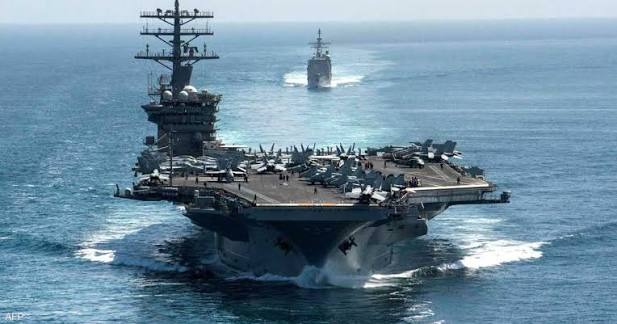
The United States military announced on Thursday the arrival of the aircraft carrier USS George Washington and its strike group in the Middle East. This deployment replaces the USS Abraham Lincoln, which had been involved in extended operations associated with U.S. military actions against Iran, sparking debate within the U.S. about the conditions for sailors aboard.
In a statement, the U.S. Central Command (CENTCOM) explained that the George Washington strike group began operations in the Middle East after reaching the command's area of operations, describing the move as part of a 'scheduled deployment.'
The arrival of the USS George Washington positions a new U.S. carrier at the center of a region experiencing ongoing military tensions. This comes amidst the confrontation with Iran and continued U.S. pressure on Tehran, along with the risks to maritime navigation in strategic waterways.
The replacement follows an extraordinary period at sea for the USS Abraham Lincoln, which departed San Diego last November for a scheduled deployment only to be redirected towards the Middle East to support U.S. military operations linked to the conflict with Iran.
The carrier houses approximately 5,000 sailors and marines and participated in supporting Washington's operations in the region during its extended deployment.
The prolonged time at sea became an issue in Congress, with Democratic lawmakers demanding answers from the Department of Defense concerning the crew's conditions, especially given that over 200 days passed without the carrier docking at any port.
Families of some sailors expressed concerns over the extended deployment's impact on crew members, particularly regarding mental health and the pressures of extended sea duty.
In response to these criticisms, U.S. military leaders sought to provide a different narrative regarding conditions aboard the carrier.
Brad Cooper, the commander of U.S. Central Command, visited the USS Abraham Lincoln and praised the 'resilience' of its crew, describing their performance as 'inspirational.'
Cooper noted that the Abraham Lincoln recorded the fewest mental health issues among the U.S. Navy's 11 aircraft carriers, commending the ship’s leadership for its focus on mental health and the crew's ability to withstand deployment pressures.
Defense Secretary Pete Heghseth dismissed reports on deteriorating onboard conditions, calling them a 'completely misleading portrayal' of the situation.
President Donald Trump also weighed in, downplaying concerns over the lengthy deployment, asserting that the time spent at sea was 'not long enough at all.'
The arrival of the USS George Washington provides the U.S. Navy with an opportunity for rotation after the USS Abraham Lincoln's extended deployment, while also underscoring Washington's continued reliance on substantial naval and air power in the Middle East, amid a lack of indicators for an imminent resolution with Iran.
This move extends beyond simply replacing one carrier with another, maintaining a strike group presence in the region alongside fighter jets, air defense capabilities, and accompanying ships, at a time marked by the sensitive state of maritime security and ongoing tensions in the Gulf.
With the arrival of the USS George Washington and the controversy surrounding the Abraham Lincoln's historic deployment, the U.S. Navy enters a new phase of its Middle East operations, with the duration of the new carrier’s stay likely contingent on the trajectory of the conflict and tensions with Iran.