


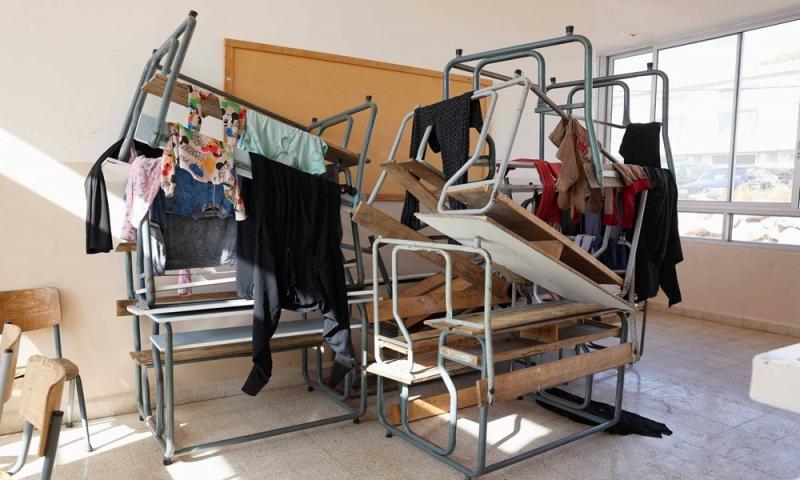
For many families in southern Lebanon, deciding to enroll their children in school is no longer a straightforward choice finalized at the end of the academic year. With September approaching, numerous families remain uncertain about which school their children will attend, carefully watching security developments and reflecting on the past two years when thousands of students were uprooted from their schools, families were displaced, and classes shifted from in-person to remote learning.
Families are exploring different options in response to the situation. Some have chosen to enroll their children in schools in displacement areas, while others are opting for public schools with low fees in anticipation of potential school closures. Meanwhile, some families are seeking schools in safer regions that remained open during the previous conflict.
Typically, most schools in Lebanon, especially private ones, complete student registrations by the end of the previous academic year to start the new year with full rosters. However, the current situation has led several schools to keep registration open for the first two weeks of September, amid parents' uncertainty and inability to make firm decisions.
Abir, a mother of three, expressed her confusion: “I've registered my children, but I haven't bought the books yet. Every day I look at the book lists, unsure whether to wait or buy them, fearing a repeat of the past two years. I'll wait until mid-September to decide.”
Mariam prefers proximity as her primary safety factor: “My son is in his first year, so I registered him at the nearby public school in the village. This way, I can quickly get him and leave at any moment if anything happens.”
Several families from border regions, not expecting to return home soon, are seeking schools in displacement areas. Others prefer public schools, known for their low fees, considering the potential loss if schools close again after paying high tuition.
Conversely, some families seek schools in safer areas with a prerequisite that these schools remained open for in-person learning during past conflicts, making them a preferred choice to avoid the remote learning experience.
Umm Ahmad notes: “We decided to stay in the area we moved to. So, I found a school that didn't close during the war and registered my children there. I believe face-to-face learning is more beneficial than remote learning, alongside the psychological impact on my children and us adults during the war. Hence, in-person learning is preferable as long as it's feasible.”
Schools are preparing for both scenarios
As parents deliberate, several schools outside the bombarded areas in the south are preparing for the school year, though they are not assuming in-person classes will be guaranteed throughout the year. A private school in Nabatieh informed parents in a letter that it plans to “adopt face-to-face learning whenever security conditions allow,” reflecting the schools' readiness to adapt based on ground developments.
This approach aligns with the Ministry of Education's plan for the 2026-2027 school year, focusing on educational continuity based on regional circumstances, with in-person learning where safety and readiness are assured and remote learning in areas affected by security situations.
Weighing school and home: Safety first
On the other hand, some families have opted entirely for remote learning as the safest choice.
Laila, whose children attended a secondary school in the town of Toul in the Nabatieh district, transferred them to another school in the town of Zbedin after the first school announced it would adopt in-person classes next year, while the new school committed to remote learning from the start. She says, “Keeping them home with me is the safer option.”
The Terhiny family chose to relocate to Africa since the war began and enrolled their children in a Lebanese school offering remote learning while waiting for stability.
The father comments: “The political and field realities are not promising, and it seems the war will inevitably return,” affirming that the family's choice offers more reassurance in this phase.
Source: Al Sharq Al Awsat