


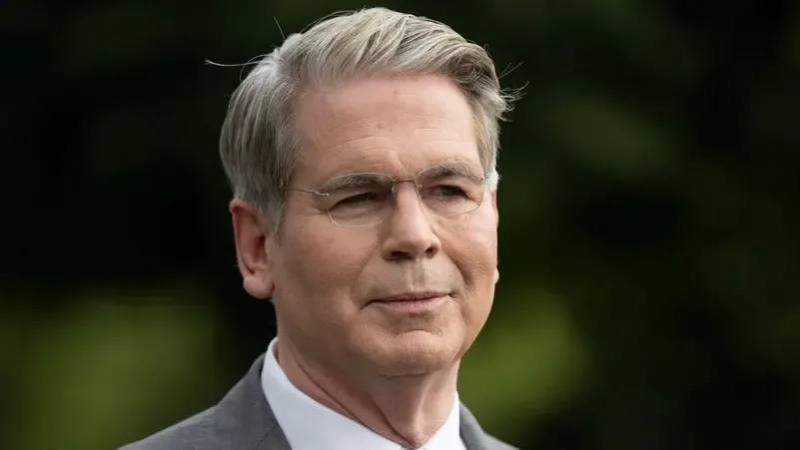
U.S. Treasury Secretary Scott Besant announced that the United States will initiate the "largest financial siege ever" against Iran.
In an opinion piece published in the "Financial Times," Besant stated that any country acting as a financial lifeline to Iran or facilitating the flow of funds to it "will share its isolation and should consider the consequences," adding that "any country supporting Tehran will be globally ostracized by Washington."
He emphasized that "countries continuing to support the Iranian regime exceed the limits of U.S. tolerance," questioning whether Tehran's allies are "prepared to bet on it."
Besant further noted that the financial isolation planned by the U.S. for Iran would "make Washington unnecessary to use (military) force."
"Cutting Every Economic Lifeline"
Besant explained that President Donald Trump had significantly damaged the Iranian economy to an unprecedented extent, asserting that the U.S. goal is to "cut every economic lifeline" for Iran.
He also warned that Trump would respond "swiftly and firmly" if Iran attacks U.S. forces or its neighbors in the Gulf.
"Sign of Desperation"
The U.S. Treasury Secretary, who will hold a press conference on Monday, had earlier threatened to impose the "toughest sanctions in history" on Iran.
In contrast, Iranian Foreign Minister Abbas Araghchi dismissed the threat of new U.S. sanctions, calling it a sign of desperation. He stressed that the expected American measures would not succeed in defeating Tehran.
Meanwhile, President Trump warned of economic repercussions for any country providing "any kind of vital support to Iran."
Significant Pressures
This comes at a time when Iran's economy is already under significant pressure due to recent international and U.S. sanctions, and the country's infrastructure has been repeatedly targeted since the United States and Israel launched attacks on February 28.
Yet, Tehran remains defiant nearly six months after the outbreak of war, which has led to an almost complete halt in shipping activities through the Strait of Hormuz by refusing unauthorized oil tankers passage through the vital waterway for global oil shipments.