


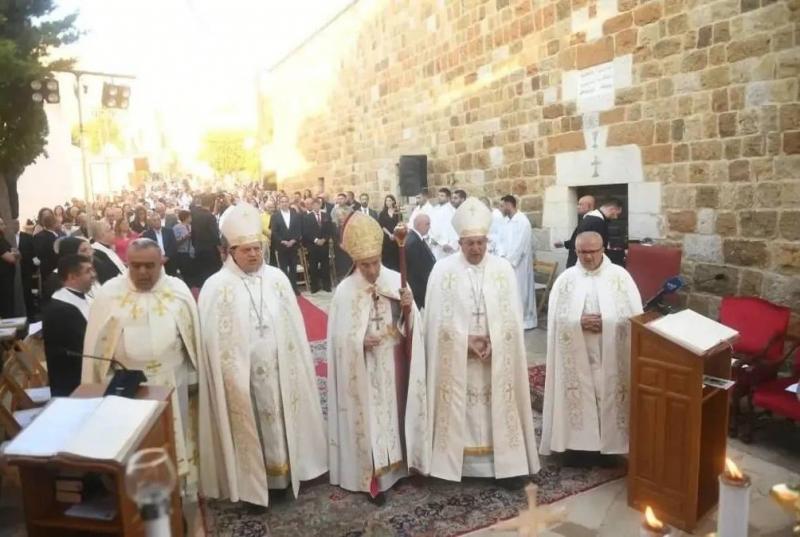
In a solemn address, Maronite Patriarch Cardinal Bechara Boutros Al-Rahi emphasized the vital importance of safeguarding residents in Lebanon's southern region and preventing further escalation of tensions. He urged the government to move from mere rhetoric and accusations to decisive actions that enhance sovereignty and restore the institutions' authority and the trust of the Lebanese people.
Al-Rahi's appeal came as he presided over a festive mass celebrating the feast of Saint Otel at the historic church of Kafarsghab in the Zgharta District. His sermon was delivered under the theme: "Sell All You Have… and Follow Me".
The Patriarch elaborated on the national significance of this call, indicating that nation-building requires individuals to recognize what must be sacrificed for the public good. This could mean letting go of narrow interests, personal privileges, sectarian calculations, or party gains that hinder reaching a significant national decision.
He asserted that Lebanon, at this juncture, needs clear priorities and a shift from statements to accountability.
Al-Rahi emphasized that in the southern regions, the primary focus should remain on protecting residents and preventing any escalation, so stability returns to towns and homes, ensuring people can live securely and with dignity on their land.
Highlighting the importance of negotiations producing clear results, he insisted on sincere implementation and adherence to agreements, pointing out that people now evaluate based on tangible outcomes rather than the frequency of meetings.
On the issue of sovereignty, Al-Rahi called for a robust governmental presence across the nation, a legitimate and decisive resolution, and institutions capable of upholding rights and enforcing laws. He declared, "Authority is not built on slogans, but on active presence and responsible decision-making."
He argued that it is time to move from blame-shifting to making genuine decisions that serve national interests. The Lebanese public seeks leaders who shoulder responsibility and initiate solutions, not those who simply assign blame.
Al-Rahi stressed that reform can no longer endure further empty promises, calling for concrete steps to restore public confidence in institutions and demonstrate that reform is not just rhetoric, but reflected in law, administration, and accountability.
The patriarch insisted that reconstruction and the return of displaced families remain top priorities, asserting that the areas impacted are not merely files, and that homes are not just statistics, but represent families, memories, and entire lives.
He added that rebuilding signifies restoring people to their land and future, emphasizing that national unity forms the base that ties all these priorities together.
Al-Rahi concluded by warning against letting disagreements evolve into sectarian rhetoric or new divisions, advocating for the adoption of a unifying national language that brings Lebanese together to defend their country, not divide it.