


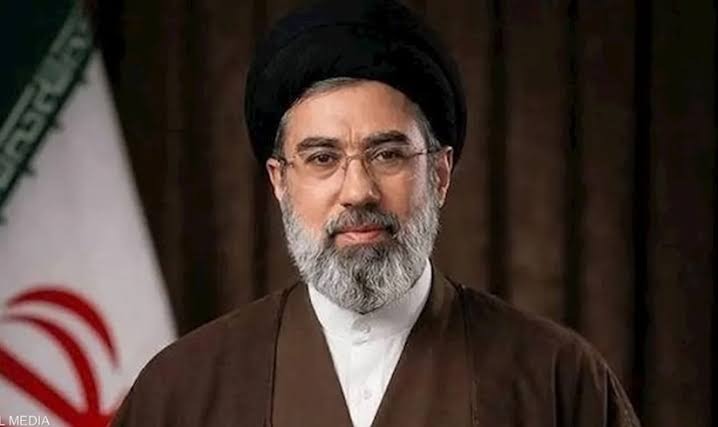
Iran’s Supreme Leader, Mojtaba Khamenei, declared on Friday that any actions that could harm social cohesion in Iran are “prohibited.” He urged officials to avoid rhetoric that incites despair or divisions during what he described as “dangerous and complex” times for the country.
Khamenei’s stance was expressed in a message marking “Government Week,” where he praised President Masoud Pezeshkian’s administration for its handling of sanctions, blockades, and the repercussions of war. He emphasized the need to work towards a “stronger Iran.”
Khamenei insisted that maintaining unity and social harmony should remain a top priority for the government and all state institutions, stressing the importance of considering the impact of political, economic, security, or cultural decisions on internal unity.
“War or negotiation”... Khamenei rejects “false dichotomies”
The Iranian Supreme Leader warned against rhetoric that “spreads despair and weakens national motivation” and criticized what he termed “illusory dichotomies,” citing examples such as “war or negotiation,” “conciliation or hardline,” and “conciliation or inclination towards war.”
Khamenei stated firmly: “I declare unequivocally: any action that harms social cohesion is prohibited.”
He simultaneously called on officials to highlight the strengths and capabilities of Iran, suggesting that publicly focusing on weaknesses during times of confrontation might boost the morale of the country's adversaries and cause concern among its allies and supporters.
He asserted that instead of highlighting weaknesses and domestic issues, plans and actions are needed to address them, noting that Iranians have shown a high level of solidarity against external pressures over the past six months.
Economy as a top priority
On the economic front, Khamenei urged the government to prioritize tackling inflation, unemployment, and controlling prices and markets, alongside increasing investment and stimulating production.
He also advocated for gradually reducing dependency on the dollar and enhancing policies known as “resistant economy,” considering increased reliance on domestic production a key solution to economic problems.
While recognizing the need for imports when local production falls short, he called for the management of imports and prices in a way that he said would gradually address economic imbalances.
Khamenei accused Iran’s adversaries of trying to persuade Iranians that development requires responding to foreign demands, asserting that Tehran should increasingly rely on its own capabilities and resources.
Priority as “above strategic”
He described culture, education, and upbringing as issues of “above strategic” importance, urging their consideration in the formulation of other state policies.
Khamenei underscored the vital role of teachers, university professors, religious institutions, as well as doctors, nurses, and homemakers in strengthening social and cultural values within society.
The message reflects Iran’s leadership focus on domestic fronts at present, combining calls for social unity, addressing economic pressures, enhancing local production, and minimizing politically polarizing rhetoric.