


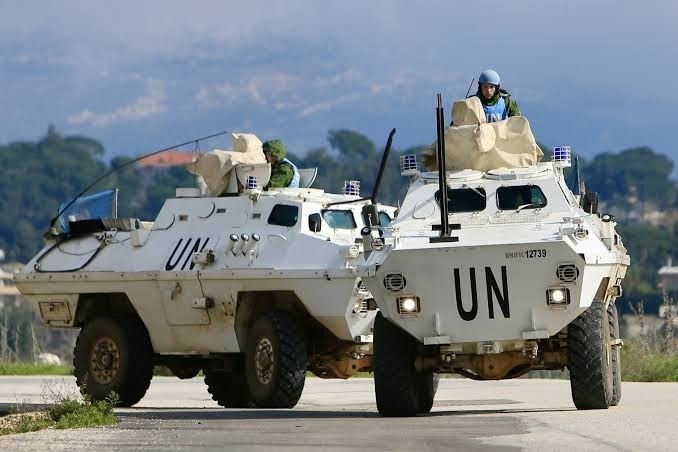
French diplomatic sources have disclosed a swift movement led by Paris and Rome to prepare a framework for international presence in Lebanon following the conclusion of the United Nations Interim Force in Lebanon (UNIFIL) operations. This comes as the scheduled withdrawal of the UN force from southern Lebanon approaches.
According to the French diplomatic source speaking to 'Al-Arabiya' on Tuesday, detailed discussions are ongoing between France and several of its partners in the United Nations Security Council regarding the future of international presence in Lebanon. France and Italy are developing a plan to ensure continued UN-supported international presence following the end of UNIFIL.
The French–Italian plan aims to ensure stability in Lebanon and maintain international coordination during the transitional phase, focusing on the form of future international presence and mechanisms for continued support for Lebanon. The source added that the stability effort also relates to continued efforts to disarm Hezbollah.
The French–Italian initiative extends a strategy officially announced by Paris and Rome on June 25, 2026, where they expressed their commitment to leading an 'international coalition' to support Lebanon post-UNIFIL. This includes advocating for a European mission in Lebanon under the European Union’s common security and defense policy.
French President Emmanuel Macron and Italian Prime Minister Giorgia Meloni announced their collaboration on a multinational format being coordinated with both the European Union and the United Nations. This would encompass support for Lebanese state institutions and the Lebanese Army after the current UNIFIL mission ends.
Under United Nations Security Council Resolution 2790, issued on August 28, 2025, UNIFIL's mandate was extended for the last time until December 31, 2026, with operations ceasing thereafter, followed by an organized, coordinated, and secure drawdown and withdrawal of personnel over up to a year, in consultation with the Lebanese government and troop-contributing nations.
The resolution also tasked the UN Secretary-General with examining potential options for continuing to implement Resolution 1701 after UNIFIL withdraws, including monitoring the Blue Line and supporting the Lebanese Army's deployment south of the Litani River.
Within this framework, the United Nations proposed several models for a smaller international presence post-UNIFIL, ranging from 2,000 to over 5,500 personnel, with varying geographic scope and operational capacity based on the structure size.
UNIFIL has operated in southern Lebanon since 1978 and currently includes thousands of military personnel from various countries. Its mission expanded following the July 2006 war under Resolution 1701 to support the Lebanese Army, monitor the cessation of hostilities, and assist in stabilizing the area of operations.
As the end of 2026 nears, international consultations continue to determine the mechanism that might accompany the next phase, whether through the United Nations or a new international and European format coordinated with Lebanese authorities.