


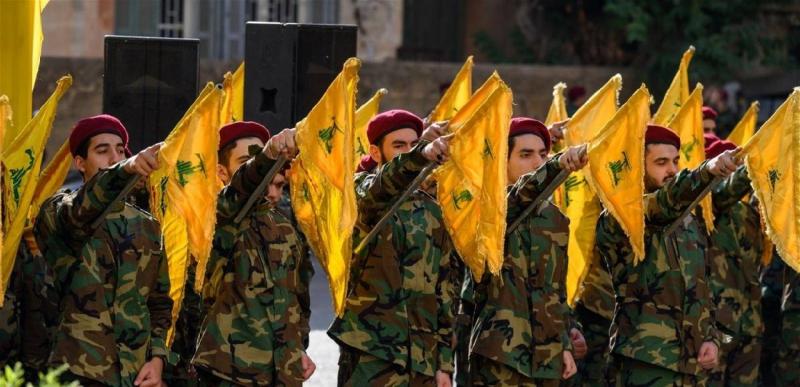
According to a recent study published by Israel's Alma Research and Education Center on August 30, 2026, Hezbollah is reportedly shifting its military structure and operations, following significant setbacks to its military and leadership structure.
The study, authored by researcher Tal Berry, is titled: ‘Hezbollah – Assessing the Situation: From a Large-Scale Terrorist Army to a Persistent and Distributed Threat’.
The report suggests that while Hezbollah has sustained considerable damage, it continues attempts to rebuild and adapt its military capabilities to the new circumstances in Lebanon and the region.
Transition from a Strong Military Force to Smaller Cells
Alma's assessment indicates that Hezbollah's military model prior to October 7, 2023, no longer exists in its previous form.
Plans for a broad offensive toward Galilee have been thwarted, with Hezbollah’s defense structures particularly in the region south of the Litani River taking heavy hits. The organization’s prior capacity to launch thousands of rockets has also been diminished.
The study notes that Hezbollah is adapting by adopting a smaller, more flexible military model based on:
Guerrilla warfare.
Small cells.
Limited and localized infiltrations.
Use of explosive devices.
Drone operations.
Distributed and sporadic rocket fire, aiming to sustain combat capability.
Alma concludes that while the ground threat has not disappeared, it is now less significant compared to the previously potential for widescale invasion.
Cells with Dozens of Operatives
The study highlights that Hezbollah might rely on cells of several dozen members for executing limited infiltrations.
These cells might target the security zone in South Lebanon or even enter Israeli territory.
The study also considers the possibility of what it calls ‘special activities’ – a secret, limited infiltration by individuals or small groups, citing the March 2023 Megiddo incident as an example.
Alma suggests this model grants Hezbollah further operational agility in an environment where Israel holds intelligence and air superiority, as small, dispersed cells demand less centralized military infrastructure.
Three Forms of Threat in the Security Zone
The study outlines three primary scenarios of threat within the security zone in Southern Lebanon.
The first is Hezbollah members potentially being 'trapped' in the area post-military operations, possibly hiding in buildings, installations, or underground areas.
The second involves limited infiltration attempts by cells intending to attack, plant bombs, or ambush forces.
The third concern involves significant stockpiles of weapons, with Israeli fears that some might be booby-trapped.
Drones at the Forefront of Rebuilding Force
The report places significant emphasis on drones, particularly FPV models.
Alma considers drones a key component in Hezbollah's efforts to rebuild its capabilities.
However, the study acknowledges there are challenges to this development, primarily the need for experienced operators, alongside the difficulty of operating some drones in complex scenarios, such as without a GPS system.
According to Alma, Israel is likely to target drone operators, trainers, storage, assembly facilities, and supply chains as countermeasures.
Missiles Still Pose Threat
Despite the reduction in arsenal size, the study believes Hezbollah's missile capabilities remain a threat.
Alma estimates the organization retains fewer than 15,000 missiles.
The report does not foresee this arsenal executing large-scale launches as before, but suggests it allows for dispersed launches from various locations against different targets, maintaining combat continuity.
Hezbollah's Personnel Strength
The study estimates Hezbollah’s regular forces number under 40,000, with reserve forces numbering in the tens of thousands.
It claims Israel has killed around 10,000 of Hezbollah's regular and reserve personnel.
The study argues that Hezbollah's losses extend beyond personnel to leaders, experts, trainers, and technicians, complicating the reconstruction of complex capabilities.
The Role of Iran
The study highlights Iran's continuing influence over Hezbollah's decision-making processes.
Alma specifically points to elements from the Lebanon Corps of the Quds Force, involved in armament and rebuilding decisions.
Conversely, it notes increased regional shifts and Israeli operations are hindering Iran’s ability to transfer arms and expertise to Lebanon.
Study's Conclusion
Alma’s main conclusion is that Hezbollah is transitioning from a 'large army' model to a more dispersed and flexible force.
Instead of relying on large formations and extensive invasion plans, the study anticipates a greater focus on:
Small cells, guerrilla tactics, limited infiltration, explosives, drones, and distributed rocket launches.
Alma suggests that although this model may reduce daily firepower intensity, it does not necessarily ease confrontations, as dispersed forces can maintain prolonged operational capabilities.
The study warns that allowing this status to persist may enable Hezbollah to gradually rebuild its capabilities, making it a strategic threat again, thus making the current period a critical opportunity to prevent their resurgence.
Note: All figures and estimates regarding Hezbollah's force size, arsenal, and reconstruction are based on assessments by the Israeli Alma Center as presented in their study.