


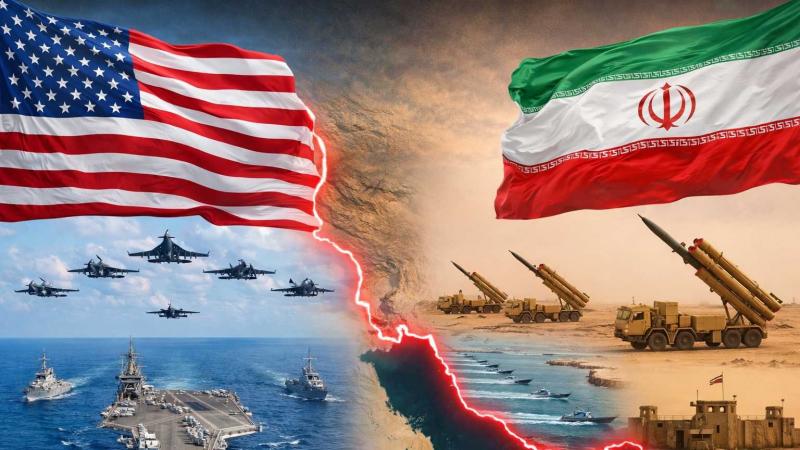
Four informed sources have revealed that President Donald Trump’s top advisors are advocating for keeping any conflict with Iran contained until after the midterm elections in November. The concern is that escalating conflicts might lead to electoral losses for the Republicans, especially as renewed attacks between Washington and Tehran are testing this strategy.
According to Reuters, these sources, who requested anonymity, indicated that White House officials might contemplate escalating military operations post the November 3 elections. However, this doesn't necessarily imply a full-scale war.
The sources added that the current U.S. administration is focused on intensifying economic pressure on Iran, aiming to extract concessions in any future negotiations, given the military operations in recent months haven’t accomplished this goal.
A White House official remarked, "We continue to put pressure on Iran... but November is a priority."
Three White House officials suggested that maintaining limited conflict until the elections could reduce political fallout for a war that lacks broad support in the U.S. Republicans are fighting to maintain their narrow congressional majority.
Restraining military operations could also allow U.S. forces to replenish some of the ammunition stocks that have been depleted in months of confrontation.
War Lacking Wide Support
Polls illustrate the political challenge for the Trump administration. A Reuters/Ipsos poll from late August indicated only 31% of Americans support the war, while about 63% oppose it, amidst voter dissatisfaction with rising gasoline prices.
The same poll shows Trump’s approval rating dropping from 40% to 33% since the war began.
Despite this, Trump has publicly minimized the impact of the November elections on his decisions regarding Iran, emphasizing that the electoral process doesn’t influence his strategy.
Nevertheless, sources highlighted that Trump is not inclined to escalate currently, though his stance could change depending on developments on the ground.
Concerns Over an "Escalation Spiral"
The strategy of containing the conflict faces a core challenge: the possibility of Iran continuing to target American interests, including military bases, ships, and energy infrastructure.
Analysts caution that any new Iranian attacks could pressure Washington to respond, risking an "escalation spiral" that might lead both sides into a broader conflict, even if the Trump administration doesn’t seek it.
Recently, the U.S. bombed missile launch sites in Iran's Larak Island, prompting Tehran to launch missiles towards Jordan. Washington targeted additional Iranian sites near the Strait of Hormuz, marking the largest wave of strikes since July.
Trump warned of further escalation if Tehran retaliated against the latest U.S. strikes.
"Timeline Has Changed"
As the conflict enters its seventh month, the political and logistical pressures on the White House are intensifying.
A senior administration official acknowledged, "The timeline has changed," while another noted, "The timing of significant events guides the Iran war," according to Reuters.
The Washington Post reported that military, navy, and air force leaders warned Defense Secretary Mark Esper in a written assessment that prolonging the war at its current pace is "unsustainable," as it may compromise the readiness of U.S. forces to handle potential crises worldwide.
Meanwhile, the Pentagon insists that the military has what it needs to accomplish its mission.
White House spokeswoman Olivia Wells stated that Trump "has destroyed Iran's military capabilities," and his administration is working to cripple the remaining Iranian economy through maritime blockades and sanctions, ensuring the president will continue defending U.S. interests and keeping Iran from obtaining nuclear weapons.
Keeping the War "Quiet" Until November
White House officials mention Vice President Mike Pence and Secretary of State Mike Pompeo have joined senior officials in supporting efforts to keep the conflict with Iran "quiet" until November.
The U.S. administration has intensified efforts recently to isolate Iran economically instead of primarily focusing on military options, threatening comprehensive sanctions on countries maintaining trade and financial relations with Iran, alongside blockading Iranian ports around the Strait of Hormuz.
However, the strategy faces obstacles, as Iran has long endured varying levels of U.S. and international sanctions without causing a fundamental change in its leadership's policies.
Additionally, U.S. Treasury Secretary Steven Mnuchin cautioned that increasing economic pressure might provoke Tehran into military retaliation, heightening the risk of expanded conflict.
Furthermore, a significant obstacle faced by Washington is the absence of major powers, notably China, in the efforts to economically isolate Iran, raising questions about the pressure campaign’s ability to achieve its goals.