


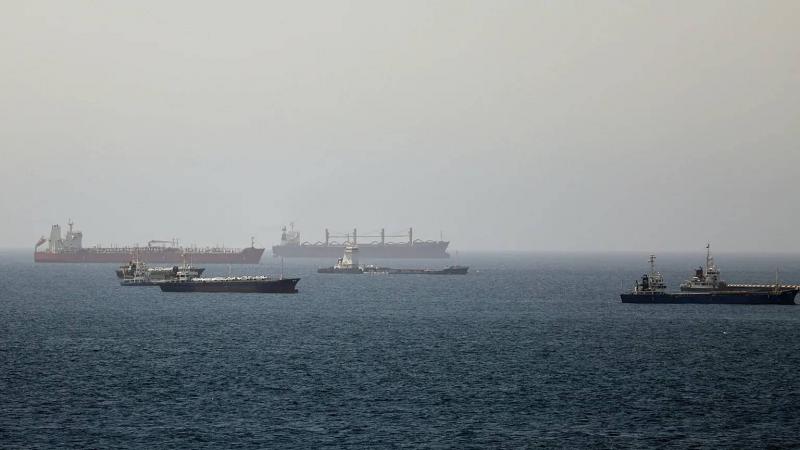
In an effort to ensure navigation freedom in the Strait of Hormuz, South Korea is examining practical options, including potential military measures. However, the South Korean presidency has denied any decision to deploy military assets in the region.
A presidential official stated on Friday that reports claiming a final decision on sending forces or military equipment to the strait were inaccurate. Instead, Seoul is considering various options to participate in maritime protection efforts.
The official dismissed claims that South Korea refused to provide assistance in this matter, highlighting ongoing discussions with the United States, which have seen little progress, particularly concerning semiconductor issues.
Meanwhile, South Korean media, citing government and military sources, reported that Seoul is preparing for a possible military deployment to support free navigation in the Hormuz Strait by the year's end.
According to reports, the government is finalizing procedures for parliamentary approval, potentially submitting a formal request by September after a Cabinet review.
Options include deploying a maritime patrol aircraft, a logistical support ship, and a unit specialized in detecting and removing naval mines. Consultations on the scope and nature of possible contributions are underway with the US, UK, and France.
Military sources mentioned a package under consideration, featuring P-8 Poseidon maritime patrol aircraft, alongside an explosive ordnance disposal team and a South Korean Navy logistical support vessel.
These developments follow US President Donald Trump's criticism in August, citing South Korea's stance on US demands for Hormuz Strait security as a reason for scaling down some joint military exercises between the countries.
The Hormuz Strait is a crucial maritime corridor for global energy and trade, making navigation security a focal point for ongoing military and diplomatic activity, especially amid recent regional tensions.