


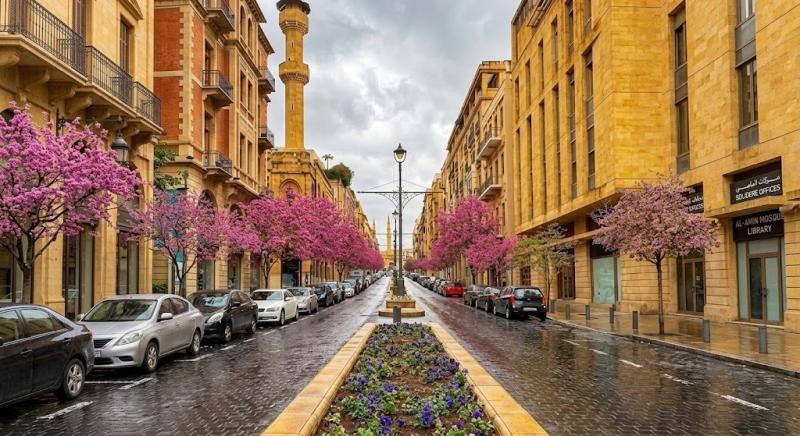
Foch Street is situated in the heart of downtown Beirut, nestled within the historic Foch-Allenby area, which is a notable part of the city's old center. Initially, this region formed part of the port and its related activities before undergoing significant restructuring in the early 20th century.
Today, the area features a mix of historical buildings, shops, restaurants, cafes, and offices, seamlessly connecting with various streets and landmarks that form the nucleus of Beirut's downtown.
Architectural sources indicate that the Foch-Allenby district was one of the earliest sectors for offices and businesses in Beirut, with its modern features emerging prominently during the 1920s.
Why is it Named Foch Street?
The street bears the name of French Marshal Ferdinand Foch, a prominent military leader during World War I. The name was given as part of the downtown Beirut reorganization during the French mandate, a period marked by significant urban transformations.
In 1919, the names Foch and Allenby were assigned to two main axes in the area, with the aim of linking the port to the city and showcasing Beirut's modern urban image.
The History of Foch Street
The groundwork for the area's re-planning dates back to late 19th century plans by Beirut's municipality to modernize the port and the city. Plans to develop the city center and port emerged in 1878, and evolved with the political and urban shifts during the French mandate.
Street construction began in 1919 and largely completed by 1927, aiming to provide a corridor linking the port with the city center as Beirut was becoming a significant regional trade hub.
This planning was not solely about establishing a new road; it was part of a broader urban project that included shaping buildings, facades, and surrounding streets.
In 1920, Beirut's municipality launched a competition to determine the architectural style of buildings along Foch and Allenby, aiming to transform the area into a modern architectural showcase of Beirut at the time.
Architectural Highlights of Foch Street
Architecture is one of the key elements giving the street its unique character, influenced by classic European styles, notably French, with elements inspired by Greek, Renaissance, and 18th-century European architecture.
However, the buildings are not mere replicas of European designs; they incorporate classical elements and local details, such as arches, stonework, and decorations reflecting Beirut’s architectural specificity.
Studies on Beirut’s downtown history indicate that the Foch-Allenby area is a significant example of mandate-era architecture, retaining a number of historical buildings that have been later rehabilitated.
What is Foch Street's Connection to Beirut’s Port?
The connection to the port was a fundamental reason for the street's importance. The Foch-Allenby area was part of the old port precinct, with new axes paved in the early 20th century acting as connectors between the port and the city heart.
The arrival of visitors and traders via the sea was a key factor in the area's design, making the street one of the main entrances to the city for those coming from the port. Therefore, the surrounding buildings and facades were meticulously designed to form an impressive urban gateway.
Studies suggest that the Foch-Allenby area was among the parts that represented Beirut’s modern commercial facade during that period, alongside Allenby Street and Weygand Street.
Impact of the Civil War on Foch Street
Beirut's downtown was not spared from the effects of the Lebanese Civil War from 1975 to 1990, with large parts of the commercial area experiencing destruction and stagnation.
Nevertheless, the Foch-Allenby area retained many of its buildings and urban fabric compared to other parts of downtown, making it an integral part of post-war reconstruction efforts and historical preservation of certain elements.
Restoration efforts on several buildings began post-war, part of a broader project to revive downtown Beirut. Architectural studies show that the preservation and restoration efforts that started in the 1990s contributed to re-establishing the area as a pedestrian-friendly environment.
What Can You Find Around Foch Street?
The area’s significance doesn’t end with the street itself, as visitors can explore several landmarks of downtown Beirut in one walking tour.
Nejmeh Square
Nejmeh Square stands as one of the significant historical points in downtown Beirut, characterized by urban planning from the city's early 20th-century reorganization era. It features historical buildings and important institutions and religious landmarks around it.
Beirut Souks
A visit to the street can be combined with a tour of the Beirut Souks, part of the modern commercial scene in the capital's heart, bridging between the historical area and shopping centers, eateries, and public spaces.
Martyrs' Square
Martyrs' Square is situated within Beirut’s wider central area and is linked to the city’s political and social history, making it a suitable stop within a tour exploring the capital’s center.
Religious and Historical Landmarks
The area is surrounded by various mosques, churches, and historical sites, reflecting the religious and architectural diversity that defines Beirut’s center. The heritage path in downtown connects several of these landmarks, continuing toward Foch-Allenby and the old port.
Is Foch Street Worth a Visit?
The experience of visiting the street varies according to the visit's purpose. It is not just a commercial street but part of an area laden with multiple layers of Beirut’s urban history.
The street is appealing for architecture, photography, and history enthusiasts, especially when combined with surrounding streets and squares. Its proximity to major landmarks in downtown Beirut allows turning the visit into a longer tour rather than a mere street passage.
Foch Street: Between Past and Present
The street’s importance lies in its ability to showcase Beirut's transformation from a city with a traditional urban structure to a modern capital with wide streets and commercial and administrative buildings influenced by European architecture.
At the same time, the remaining historical buildings and facades reveal that downtown Beirut hasn't entirely lost its urban memory despite wars, reconstruction, and changes the area underwent.
Therefore, Foch Street can be seen as part of downtown Beirut's memory, not merely a passage or shopping hub, especially given the surrounding area's blend of historical buildings and modern commercial and cultural life.
See Also:
Foch Street in Beirut: Your Guide to One of the Most Famous Streets in the Capital
Acre Fortress: Key Facts about the Famous Historical Site
Tour in Foch Street: What to Do in One Day in Downtown Beirut?