



Scientific discoveries continue to unravel new secrets in the world of nature. Occasionally, remarkable species emerge, adding to the roster of the strangest newly discovered animals. These discoveries affirm that Earth still harbors numerous enigmatic creatures unknown to humans, especially in remote areas, deep seas, and harsh environments.
With the evolution of scientific technologies and modern exploration tools, researchers can now access areas previously out of reach for biological studies for decades. Moreover, these expeditions have led to the discovery of new species with unique characteristics and extraordinary adaptation abilities to seemingly inhospitable conditions.
Why Do Newly Discovered Animals Excite Scientists?
New species offer a window into understanding evolutionary mechanisms and environmental adaptations. Each new discovery provides scientists with additional data on how living organisms survive in extreme environments. It also aids in studying biodiversity and protecting endangered ecosystems.
Furthermore, studying some of these creatures can lead to developing new medical research and biotechnologies inspired by their unique natural abilities.
The Most Bizarre Deep-Sea Creatures
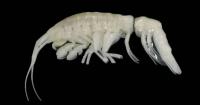
The Deep Atacama Trench Predator
This predatory crustacean lives in the Atacama Trench at depths reaching around 7,900 meters below the sea surface, a region almost entirely devoid of light.
Characterized by specialized appendages that enable it to detect and capture prey with high precision despite the pitch-black darkness and immense pressure, this creature reflects a remarkable ability to adapt to one of the harshest marine environments on the planet.
The Emperor Dumbo Octopus
The Emperor Dumbo Octopus is among the most intriguing marine creatures, inhabiting depths exceeding 4,000 feet in the North Pacific Ocean. It is distinguished by side fins resembling the iconic cartoon character Dumbo's ears, giving it a unique appearance among known octopuses. Furthermore, it relies on a calm swimming technique that helps it navigate in deep, energy-limited environments.
The Pygmy Seahorse
The Pygmy Seahorse is one of the most peculiar marine discoveries due to its extremely small size compared to its traditional seahorse relatives.
Found in the cool temperate waters surrounding New Zealand, it camouflages itself among marine plants. On the other hand, its minute size makes spotting it extremely challenging, even for specialized researchers.
The Rare Amphibious Mouse
This mammal stands out as one of the rare species adapted to live both on land and in water effectively, offering it a unique ecological advantage. Its discovery highlights the existence of unknown mammalian species in the globe's remote regions.
The World's Smallest Reptiles and Amphibians
Recent studies have shown that some new creatures are not only remarkable due to their behavior but also their incredibly small sizes.
The Brookesia Nana Chameleon
Classified as the smallest known reptile in science, the Brookesia Nana Chameleon is no larger than a human fingertip, drawing global attention since its discovery.
Additionally, its diminutive size facilitated its evolution within limited-space environments unsuitable for larger organisms.
The Metallic-Hued Poison Frog
This rare frog inhabits isolated areas of the Amazon rainforests, notable for its light blue color with shiny metallic spots, granting it a unique look.
Despite its small size, it possesses defensive toxins to protect itself from predators, while its vibrant colors serve as a warning signal to other creatures.
Cave and Extreme Environment Dwellers
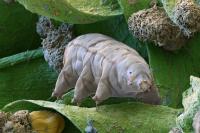
The Pink, Eyeless Arthropod
This creature was found in isolated caves with high concentrations of toxic hydrogen sulfide gas. Over thousands of years, it lost the need for vision due to permanent darkness.
Instead, highly efficient alternate senses have developed to help it find food and navigate its complex environment, providing a fascinating example of evolution tailoring an organism's anatomy to its environmental needs.
The Lut Desert Water Cricket
In one of the hottest and driest places on Earth, this aquatic insect has developed an extraordinary survival strategy. Its eggs can enter a state of dormancy lasting several years, only hatching when rare rains form transient lakes in the Lut Desert. It stands as a remarkable model of adaptation to unpredictable habitats.
The Tiny Marine Tardigrade
This creature belongs to the famous tardigrade group, known for their exceptional resilience in harsh conditions, discovered on Indian coasts. It exhibits substantial survival skills across varying salinity levels, further enduring dramatic environmental changes that make it impossible for many other organisms to survive.
What Do These Discoveries Reveal About the Future of Biology?
These new species reveal that scientists are just beginning to understand Earth's true biological diversity. Deep oceans, isolated caves, and remote forests are home to an immense number of yet-to-be-studied organisms.
Furthermore, these discoveries help in understanding the impacts of climate changes on wildlife and support efforts to protect rare species before they face extinction risks.
In conclusion, the newly discovered bizarre animals clearly indicate that nature still has the capacity to astound us in limitless ways. With ongoing scientific expeditions worldwide, coming years are expected to bring more discoveries that will alter our understanding of life on Earth, unveiling new secrets we never imagined existed.
See Also
Top Tourist Destinations in Lebanon to Visit in 2026