


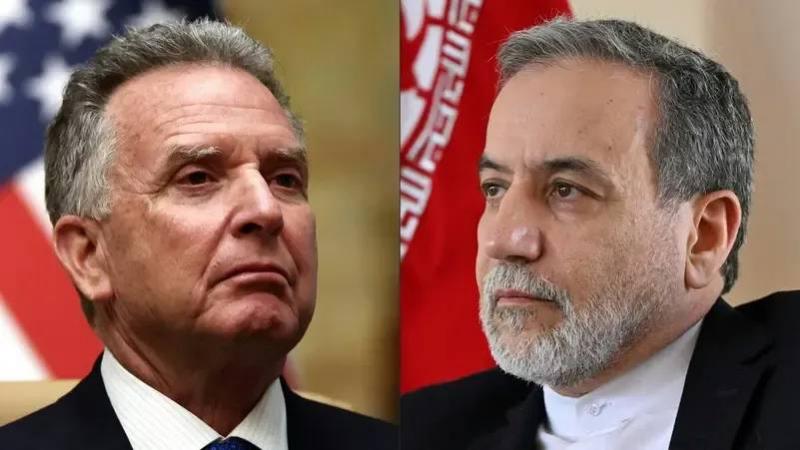
Just a day after the anticipated U.S.-Iran talks at the luxurious Bürgenstock resort were postponed, Iranian Foreign Minister Abbas Araghchi is reportedly set to travel to Switzerland.
A knowledgeable source mentioned that Araghchi plans to head to Switzerland this Saturday, though the plan remains flexible, according to 'Axios'.
A source from one of the mediating countries confirmed that the Iranian minister informed several of his counterparts on Friday that the ceasefire in Lebanon is crucial for Iran and serves as a decisive factor for the success or failure of the U.S.-Iran negotiations.
Another source from another mediating country stated that the Iranians emphasized their desire to see the ceasefire fully enacted before proceeding to Switzerland for technical discussions with the U.S.
Simultaneously, U.S. envoy Steve Witkov has also headed to Switzerland, ready to engage in talks with Iran regarding a potential nuclear agreement. This move underscores Washington's commitment to the diplomatic path despite complications surrounding the launch of the initial technical negotiation round.
According to Reuters, as cited by 'Axios', Witkov is en route to Switzerland, where discussions were expected to start in the past few days before security developments in Lebanon postponed them.
Furthermore, a well-informed source revealed that the Director-General of the International Atomic Energy Agency, Rafael Grossi, is already in Switzerland to assist with the technical aspects of the nuclear talks, before the potential arrival of senior negotiators. The source added that Grossi met with U.S. technical teams there yesterday.
The U.S. move comes a few hours after the White House announced that Vice President J.D. Vance will not travel to Switzerland due to logistical challenges related to the next negotiation phase, while the American administration maintains readiness to commence once arrangements are complete.
The initial round of technical talks aimed to delve into details of implementing the recent memorandum of understanding between Washington and Tehran, covering Iran's nuclear program, international oversight mechanisms, and sanctions issues. However, escalating tensions on the Lebanese front led both parties to delay the scheduled negotiations.
It remains unclear if a new date for talks has been set or if other U.S. officials will join Witkov in Switzerland. Nonetheless, his movement is viewed as a sign of continued communication and behind-the-scenes preparations.
Crucial Phase
These talks represent the first practical test of the memorandum of understanding recently struck between the U.S. and Iran, which granted both parties a deadline to negotiate a more detailed agreement on the future of Iran's nuclear program.
Washington insists its goal is to ensure Iran does not acquire a nuclear weapon and that its nuclear activities are subject to stringent international scrutiny, while Tehran seeks sanction relief and economic benefits within any final agreement.
Witkov's relocation to Switzerland highlights the American administration's determination to keep negotiation channels open, as critical contentious issues between the two sides still require complex settlements in the coming weeks.